Author: xpress xpress

  • The Body Part You Wash First While Bathing Reveals Your Personality

    The Body Part You Wash First While Bathing Reveals Your Personality

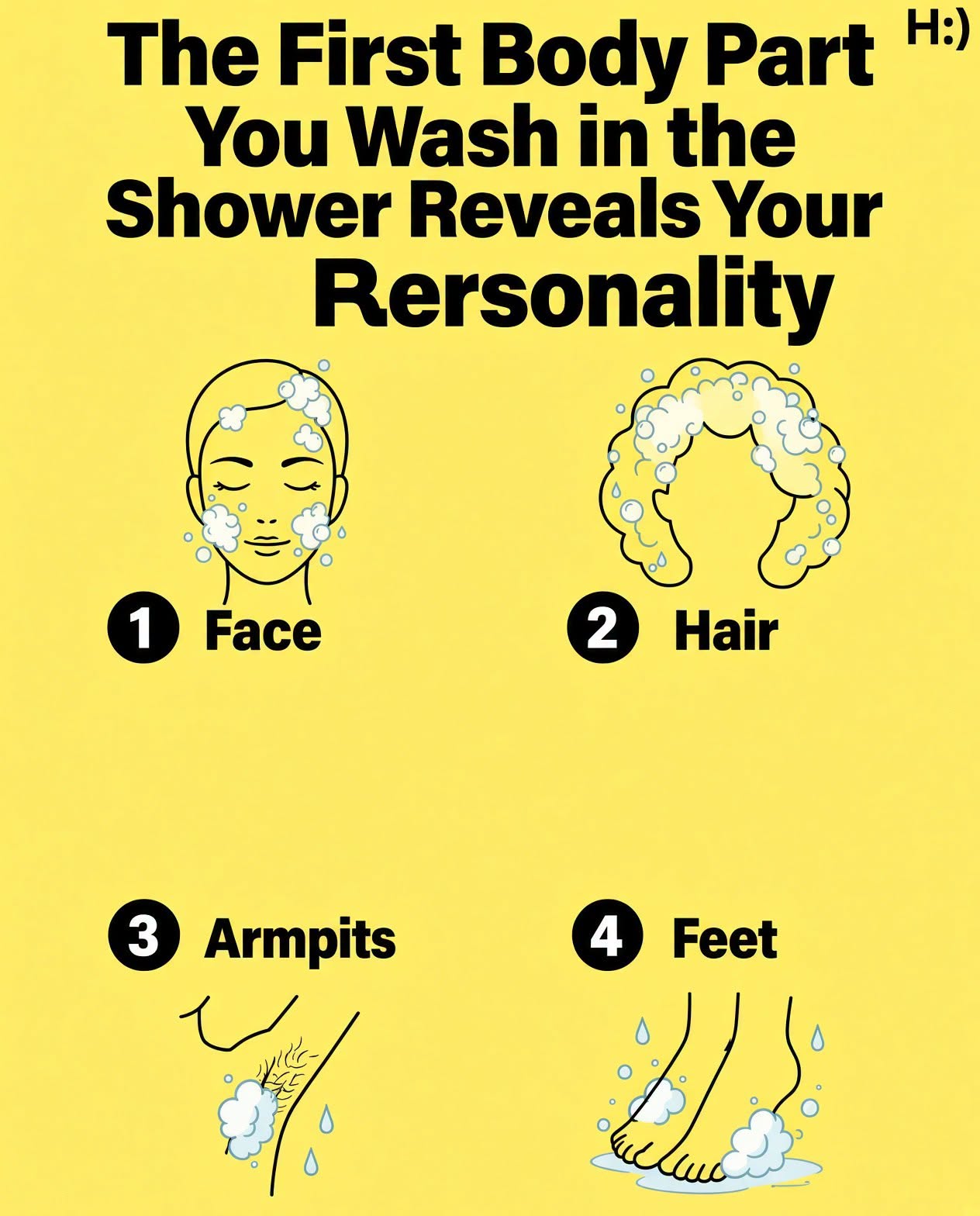
    The sequence in which a person washes different parts of their body in the shower can offer subtle insights into their personality traits. In particular, starting with either the hair or chest reveals different values and behavioral patterns.

    When someone washes their hair first, it suggests that they are a person who thrives on discipline, order, and structure. The head is the highest part of the body and symbolizes intellect and control. This action often reflects a strong, practical mindset.

    Individuals who begin with the hair tend to have firm opinions and are known for their punctuality. They manage their time well and prioritize intelligence over financial or superficial gains when choosing companions or friends.

    These people are likely to be rational thinkers who believe in logic and planning. Their preference for organization may extend to all areas of life, including work, relationships, and personal goals. They function best in stable, structured environments.

    On the other hand, those who wash their chest first display a personality grounded in self-confidence and authenticity. The chest, being central to the body, symbolizes self-assuredness and openness.

    Such individuals are typically independent, assertive, and not afraid to express themselves clearly. They dislike ambiguity and prefer to approach life directly, often embodying leadership qualities.

    They possess an “alpha” mindset—driven and decisive, they are comfortable taking control of situations. Their straightforward attitude can make them excellent communicators, unafraid to state their views firmly.

    Whether starting with the head or the chest, these habits hint at how people view themselves and interact with the world. They reflect deeper patterns in behavior, preference, and personal philosophy


  • Wheel of Fortune” Contestant Delivers Impressive Bonus Round Solve

    Wheel of Fortune” Contestant Delivers Impressive Bonus Round Solve

    A recent episode of Wheel of Fortune turned unexpectedly memorable when contestant Delinda Rood stepped onto the stage and delivered a performance that steadily built into a standout moment. Representing Rosemount, she competed against players from Palo Alto and Chattanooga in a game that began calmly, with cautious spins and evenly matched progress. Early rounds featured careful letter selections and a few missed chances, giving little hint that the episode would soon capture viewers’ attention long after the credits rolled.

    Rood described herself as an ambivert, balancing introverted focus with outward confidence, and that blend shaped her strategy. Instead of chasing risky opportunities, she watched the board closely, timing her moves with intention. Securing a key toss-up puzzle shifted momentum in her favor. From there, she selected letters deliberately, solved puzzles efficiently, and gradually built a commanding lead. Her measured pacing and concentration positioned her for a coveted place in the Bonus Round.

    The tension peaked in the final challenge. With standard letters revealed and her chosen consonants and vowel in place, Rood paused briefly to analyze the board. Then, almost instantly, she announced the correct solution. The speed of her answer surprised the audience and drew a visible reaction from host Ryan Seacrest, who acknowledged the impressive timing. Applause erupted as the prize was unveiled, pushing her total winnings to $65,650 and sealing one of the episode’s most exciting moments.

    More than the monetary reward, it was Rood’s composure that resonated. Game shows test nerves as much as knowledge, and her calm presence under pressure stood out. Online clips of her swift Bonus Round victory quickly circulated, with viewers praising her poise and sharp recall.

    What began as a routine competition transformed into a compelling example of preparation meeting opportunity. Rood’s steady confidence demonstrated how patience, strategy, and self-trust can elevate an ordinary appearance into an unforgettable success on a national stage.

  • Girls in the 1970s: What Detail Do You Notice First in This Vintage Photo?

    Girls in the 1970s: What Detail Do You Notice First in This Vintage Photo?

    Photographs from the 1970s have a special way of transporting us to a time when everyday life looked remarkably different. Fashion, hairstyles, social habits, and entertainment all reflected the unique character of the decade.

    In this photograph, the clothing immediately catches the eye. Slim trousers, polo shirts, simple coats, and solid colors were common choices. The styles were practical yet carefully put together, allowing people to express themselves without the endless trends available today.

    Hairstyles also reveal the era. Natural-looking hair, longer cuts, and simple arrangements were popular among many young people. Combined with the clothing, these hairstyles create the unmistakable visual identity that makes 1970s photographs so recognizable.

    Perhaps the most striking difference is what is missing. There are no smartphones, tablets, wireless headphones, or glowing screens competing for attention. People gathered together without digital distractions, spending their time talking, laughing, listening to music, or simply enjoying one another’s company.

    Photography itself was different too. Film had a limited number of exposures, so taking pictures required more thought. People could not instantly review an image or take dozens of nearly identical shots. A photograph could therefore feel more special, often becoming part of a carefully preserved family album.

    Of course, the 1970s were not perfect, and every generation has its own challenges. Modern technology has brought enormous benefits, making communication easier and allowing people to preserve and share memories instantly.

    Yet old photographs remind us how quickly ordinary habits can change. What seems completely normal today might someday look just as unfamiliar as the 1970s does to us now. Every era leaves behind small clues in the way people dress, interact, and spend their free time.

    That is what makes this photograph more than an old picture. It is a small window into another world, capturing people, fashion, and everyday life before smartphones and social media. Years from now, perhaps someone will look at our photographs with the same curiosity—and wonder what our ordinary lives were really like.

  • The Timeless Tool That Reflects the Ingenious Resourcefulness of the Past

    The Timeless Tool That Reflects the Ingenious Resourcefulness of the Past

    There is something special about holding a heavy cast-iron kitchen tool that has been doing the same useful job for more than a century. One of the best examples is the vintage hand-crank apple peeler, a simple invention designed long before electric appliances and modern food processors. In the late 1800s, preparing large quantities of apples for pies, applesauce, or drying could take hours. This tool made the work much faster by clamping to a table and using a hand-crank to rotate the apple against a curved blade.

    With a few turns of the crank, the apple can be peeled, cored, and sliced into a continuous spiral in seconds. Its cast-iron construction made it strong enough to survive decades of regular use, while its precise design helped minimize waste. These tools represent an era when products were made to last rather than be quickly replaced. As the original article puts it, **”resourcefulness” meant building things that would never need to be replaced.**

    The tool can also be used with firm pears and for creating attractive potato spirals. Beyond its practical purpose, using a hand-crank tool can make cooking feel slower and more deliberate. The repetitive movement encourages you to focus on the task instead of rushing through it. That hands-on experience is part of what makes vintage kitchen tools appealing today, connecting everyday cooking with the craftsmanship and resourcefulness of earlier generations.

    Keeping an antique peeler in good condition is relatively simple. Wipe it clean after use and apply a small amount of food-grade mineral oil to help protect the cast iron from moisture and rust. Moving parts should also be kept clean so the crank continues to operate smoothly. Rather than hiding these tools away, they can be displayed in the kitchen as reminders of practical design and history. Teaching younger family members how they work can also turn an old object into a hands-on lesson about the past.

    Vintage kitchen tools show that useful design does not always need electricity, plastic, or complicated technology. The hand-crank apple peeler remains a beautiful example of how a simple mechanical idea can solve an everyday problem efficiently. By preserving and using these tools, we can appreciate the craftsmanship of earlier generations while bringing a little more simplicity into modern kitchens. **”A beautiful, daily reminder of the resourcefulness of the women who came before us.”**

  • Your Sleeping Position Determines How Lazy You Are

    Your Sleeping Position Determines How Lazy You Are

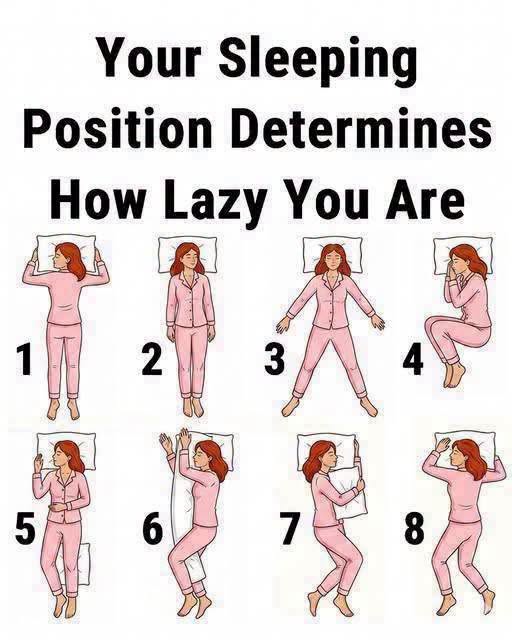
    1. The “Arms Up” Sleeper: You lie on your back with your arms raised near your pillow.
      Lazy level: 3/10. You’re mentally active and open to challenges. You like comfort, but you’re not lazy—you just prefer doing things your own way.
    2. The Straight Sleeper: Flat on your back with arms by your sides.
      Lazy level: 5/10. You value routine and structure. You may seem unmotivated at times, but once you start, you’re steady and reliable.
    3. The Starfish: You spread out and take up lots of space.
      Lazy level: 7/10. You enjoy comfort and relaxation. You may avoid extra effort, but you’re also easygoing and generous.
    4. The Curled-Up Ball: You sleep tightly on your side.
      Lazy level: 4/10. You’re thoughtful and conserve energy. You may seem reserved, but you’re just selective about where you put your effort.
    5. The Casual Side Sleeper: Relaxed on your side.
      Lazy level: 6/10. You balance work and rest. You’ll do what’s needed but won’t overdo it, especially if there’s an easier way.
    6. The Pillow Hugger (Face Down): Partly on your stomach, hugging a pillow.
      Lazy level: 8/10. You love comfort and may struggle to get moving without a strong reason.
    7. The Dedicated Pillow Hugger (Side): Curled on your side holding a pillow.
      Lazy level: 6/10. You value emotional comfort and do best when you feel secure.
    8. The Half-Turn Sleeper: Between back and side.
      Lazy level: 5/10. You’re adaptable and go with the flow. Overall, sleep position doesn’t define laziness—it just reflects comfort preferences.
  • Why More Drivers Are Displaying Upside-Down State Flags—and What It Means

    Why More Drivers Are Displaying Upside-Down State Flags—and What It Means

    If you’ve driven through the Pacific Northwest, you may have noticed an upside-down outline of Washington State on some vehicles. It often looks like a mistake at first, but it’s usually intentional.

    The design has become a subtle symbol among people who have lived in Washington but moved elsewhere. It reflects a continued emotional connection to the state rather than an error in sticker placement.

    Washington’s landscapes—mountains, forests, coastlines, and national parks—leave a strong impression on many residents. For some, the sticker represents those memories carried forward after relocation.

    The upside-down orientation is often interpreted playfully. It can suggest distance from home, a change in perspective, or simply life moving in a new direction.

    There is no official meaning or organization behind it, which is part of why the symbol remains flexible and personal. Different people attach their own interpretations to it.

    Outdoor enthusiasts and travelers especially tend to use it, often displaying it on vehicles used for camping, skiing, or long road trips.

    The sticker also works as a conversation starter. People who recognize it often share stories about Washington, favorite places, and past experiences in the region.

    Ultimately, the upside-down Washington decal is less about geography and more about identity. It quietly reflects where someone has been, what they value, and how certain places continue to shape them even after they’ve left.

  • My Neighbor Charged Her Electric Car From My House Every Night Without My Permission – I Didn’t Call the Authorities, but I Did Something Better to Teach Her a Lesson

    My Neighbor Charged Her Electric Car From My House Every Night Without My Permission – I Didn’t Call the Authorities, but I Did Something Better to Teach Her a Lesson

    At 64, Eleanor had spent years keeping the peace with her neighbors. But when her electricity bill suddenly reached $227, nearly double its usual amount, she knew something was wrong. After checking her appliances and meter, she eventually discovered the reason: her neighbor Monica had been secretly charging her Tesla using an outlet attached to Eleanor’s garage.

    Eleanor confronted Monica one night and asked her to unplug the cable. Monica showed little remorse, arguing that Eleanor lived alone and couldn’t possibly need that much electricity. She even offered ten dollars and called Eleanor greedy. Instead of arguing, Eleanor quietly went back inside and decided she was finished tolerating Monica’s behavior.

    It wasn’t the first time Monica had crossed a boundary. Months earlier, Eleanor’s garden gnome disappeared and later appeared in Monica’s yard with a fresh coat of blue paint. A lawn mower had also mysteriously disappeared and returned a week later damaged and empty of fuel. Eleanor had always stayed silent, telling herself that keeping the peace was easier.

    The next morning, she retrieved her stolen garden gnome and placed it beside the garage outlet. She then prepared a small surprise for Monica. That evening, Monica returned with her Tesla and once again approached the outlet with her charging cable, apparently believing Eleanor would continue allowing it.

    As Monica moved the gnome, a hidden mechanism triggered, dumping bright pink paint directly onto her head and clothes. Her scream brought neighbors outside, many of whom immediately began recording. Eleanor calmly confronted her about the stolen electricity and reminded everyone that Monica had already been taking things without permission.

    The situation became even more embarrassing when other neighbors began sharing their own stories. One man revealed that Monica had borrowed his ladder and kept it for months. Eleanor realized she wasn’t the only person who had been quietly tolerating her behavior.

    But the consequences didn’t end with the paint. Two weeks later, Eleanor learned from Monica’s landlord that her lease would not be renewed. An investigation had uncovered unpaid utility bills, property damage, and unauthorized repairs.

    A month later, Monica packed her belongings and moved away. Eleanor watched from her porch as her garden gnome returned to its rightful place. For the first time, she understood that keeping the peace did not mean remaining silent. She hadn’t needed revenge—she simply needed to set boundaries and refuse to let someone else take advantage of her kindness again.

  • The Silent Night I Turned Their Christmas Scheme Into The Trap That Ended It

    The Silent Night I Turned Their Christmas Scheme Into The Trap That Ended It

    I stayed in the garden long enough to record everything on my phone, including Danielle’s father confidently explaining their plan. Then I slipped away, checked into a hotel, and made three calls: to my attorney, my private banker, and Rosalie. I left my wife one message: “I’m home. I heard everything. Say nothing. Trust me until morning.”

    What they did not know was that the estate had never been mine to sell alone. Years earlier, my attorney and I had placed the entire property into an irrevocable trust. Neither Rosalie nor I could transfer it without the required legal consent. Their entire plan had been built around something they could never take.

    At seven the next morning, I returned home with my attorney and two folders. Julian’s face went pale when he saw me. Danielle looked terrified, while her parents stood frozen in the kitchen. Rosalie came downstairs, saw me, and finally released the breath she seemed to have been holding for days.

    I calmly placed the first folder on the table. My attorney explained the trust protections and made it clear that any signature obtained through coercion could be challenged. Then I opened the second folder, placed my phone beside it, and played the recording. Danielle’s father’s voice filled the room: “She’s much easier to influence, especially when she’s by herself.”

    Everything changed instantly. Danielle cried and blamed Julian. Julian blamed Danielle. Her parents blamed the wine. I watched them turn against one another before telling Danielle’s parents they had one hour to leave my property. They were gone in forty minutes.

    Julian was harder. He was still my son, and I could see the good man he had once been. I refused to disown him, but I told him that trust cannot be repaired with apologies alone. He had chosen ambition over his mother’s security, and rebuilding that trust would require years of actions, not promises.

    He and Danielle left before noon. That Christmas, Rosalie and I remained alone beside the tree we had decorated together for thirty-eight years. The house felt unusually quiet, but for the first time in weeks, we felt safe.

    I had come home expecting to surprise my wife. Instead, I discovered something far more important: sometimes betrayal reveals exactly who belongs in your life. I held Rosalie’s hand beside the Christmas tree and knew that whatever happened next, we would face it together. And for us, that was enough.

  • The Ring You Pick Will Reveal Your Truest Trait

    The Ring You Pick Will Reveal Your Truest Trait

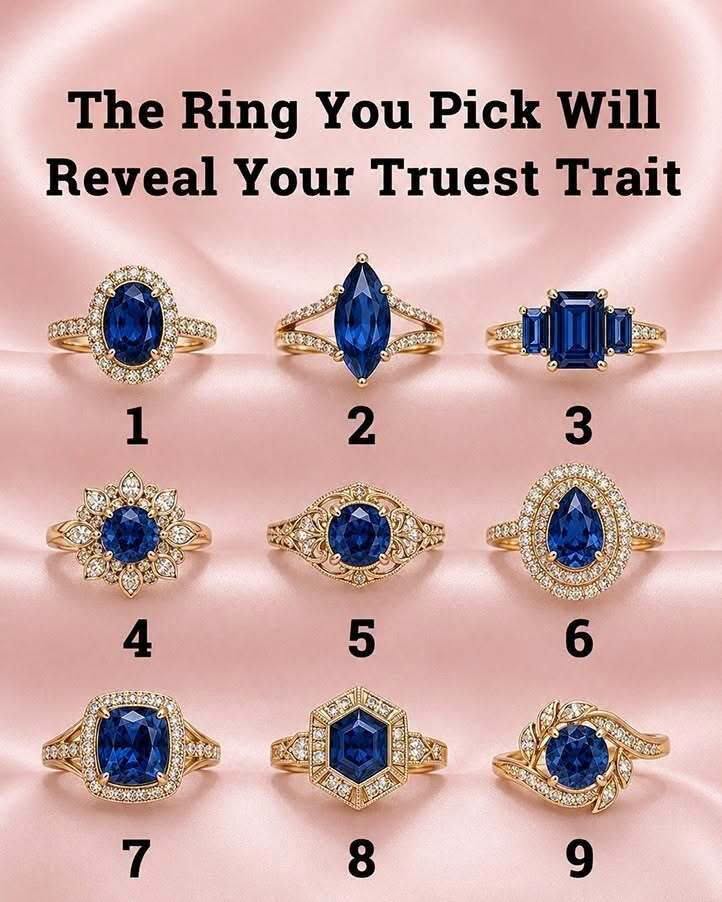
    Sometimes, the smallSometimes, the smallest choices can reveal the qualities we value most. In this entertaining personality quiz, you will choose one of nine purple gemstone rings. Your first instinct may offer a playful clue about your personality.

    If you select Ring 1, you may be dependable and trustworthy. You take promises seriously and try to be someone friends and family can rely on when they need support.

    Ring 2 may appeal to people with imaginative minds. You could be a dreamer est choices can reveal the qualities we value most. In this entertaining personality quiz, you will choose one of nine purple gemstone rings. Your first instinct may offer a playful clue about your personality.

    If you select Ring 1, you may be dependable and trustworthy. You take promises seriously and try to be someone friends and family can rely on when they need support.

    Ring 2 may appeal to people with imaginative minds. You could be a dreamer

    Choosing Ring 3 may suggest a romantic and sensitive nature. You might appreciate beauty, meaningful moments, and genuine emotional connections with the people who matter most.

    Ring 4 represents confidence and leadership. If it is your favorite, you may be comfortable taking charge, facing difficult situations, and making decisions even when the path ahead is uncertain.

    Ring 5 is associated with passion and enthusiasm. You may throw yourself wholeheartedly into your interests and have a natural ability to inspire others with your positive energy.

    Ring 6 symbolizes peace and harmony. You may prefer calm surroundings, dislike unnecessary conflict, and often try to understand different viewpoints before reaching a conclusion.

    Ring 7 reflects independence. You may enjoy making your own choices, trusting your instincts, and following your personal path instead of simply doing what everyone else expects. Ring 8 represents the protector, suggesting loyalty, courage, and a strong desire to defend and care for loved ones.

    Finally, Ring 9 is linked with ambition and determination. You may set challenging goals for yourself and view obstacles as opportunities to become stronger. Remember, this quiz is for entertainment and self-reflection, not scientific personality analysis. Your choice might reveal something about you—or simply show which quality you admire most.

  • A 7.1 magnitude earthquake also caused a tsunami in the city of… See more

    A 7.1 magnitude earthquake also caused a tsunami in the city of… See more

    The sea is already roaring before Barbara arrives. Winds tear at palm trees, sirens echo in coastal towns, and families stare at a darkening horizon, wondering if tonight their homes will still stand. Shelters fill, rivers swell, and one wrong decision could mean the differen… Continues…

    Along Mexico’s central Pacific coast, Hurricane Barbara has transformed daily life into a tense countdown. In Jalisco, Colima, Michoacán, and Nayarit, people rush to secure roofs, move valuables to higher ground, and decide whether to stay or evacuate. Authorities warn that the greatest danger may not be the eye of the hurricane itself, but the combination of torrential rains, swollen rivers, saturated hillsides, and violent waves hammering the shore for hours.

    Barbara’s path offshore offers no guarantee of safety; its spiral bands reach far inland, turning ravines into torrents and streets into channels of mud. At the same time, Tropical Storm Cosme lurks in the open ocean, a reminder that this hurricane season is only beginning. For many, Barbara is not just a storm, but a stark sign of a warming ocean and a future where “once in a lifetime” disasters arrive again and again.