Blog

  • It Was Never Too Late to Choose Myself

    It Was Never Too Late to Choose Myself

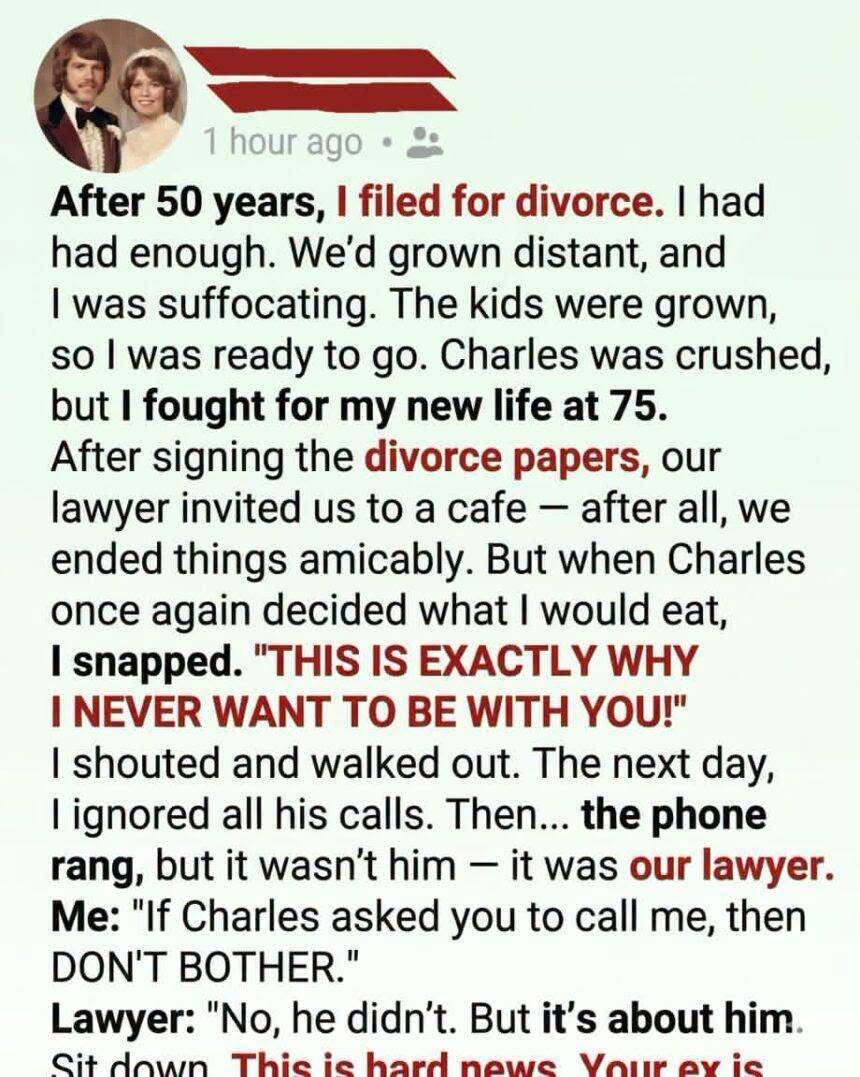
    After fifty years of marriage, I filed for divorce. Even at seventy-five, saying those words felt unreal. Charles and I had built what everyone called a perfect life: a comfortable home, grown children, and decades of stability. But behind closed doors, I felt like a stranger in my own life.

    Charles wasn’t cruel. He simply believed he knew best. He chose what I wore, what I ate, and how our days should unfold. At first, I called it compromise. Later, I convinced myself that changing anything after so many years was impossible.

    One afternoon, standing alone in our silent house, I looked in the mirror and barely recognized the woman staring back. I realized I had spent so long pleasing everyone else that I had forgotten how to please myself. So I filed for divorce, terrified but determined to reclaim my voice.

    After signing the papers, we went for coffee at our lawyer’s suggestion. Charles automatically ordered my usual drink without asking. Something inside me shifted. For the first time in fifty years, I told him what I actually wanted. It was a small choice, but it felt enormous.

    The next day, he called. I didn’t answer. Soon afterward, our lawyer informed me that Charles had suffered a massive stroke. He survived, but his independence was gone. I didn’t visit immediately. I was afraid that seeing him would pull me back into the life I had just escaped.

    A week later, a letter arrived in his shaky handwriting. Charles admitted he had mistaken control for love. He had believed protecting me meant making decisions for me, never realizing he had silenced me. He didn’t ask me to return. He only wanted me to live freely.

    I visited him the following day. He looked fragile, and tears filled his eyes. “I ordered soup today,” he whispered. “By myself.” I smiled and told him I was proud. We never reunited, but we finally learned to speak honestly, without pretending the past could be undone.

    Now, at seventy-seven, I live in a sunlit apartment filled with colors I chose myself. I eat spicy food, take art classes, and make decisions without asking permission. I once believed it was too late to begin again. Now I know the truth: it is never too late to reclaim your life.

  • With Heavy Hearts, A Beloved Fan Favorite Is Saying Goodbye… See more

    With Heavy Hearts, A Beloved Fan Favorite Is Saying Goodbye… See more

    Every locker could reward Darrell Sheets with a fortune or leave him counting the cost. On Storage Wars, “The Gambler” put money and pride behind bids nobody could guarantee, while his son Brandon stood beside him through the uncertainty. But behind the booming confidence was something no auction could ever price: the bond that would help define his lega… Continues…

    Darrell “The Gambler” Sheets made uncertainty his signature on Storage Wars. Faced with storage units full of unanswered questions, he trusted his instincts and bid aggressively, chasing value beneath the dust and clutter. His larger-than-life personality gave ordinary auctions an unmistakable charge. Each purchase carried consequences: a promising discovery could validate his judgment, while a disappointing locker could turn confidence into an expensive lesson. Viewers watched him take those chances with his reputation on display.

    Yet the story was never solely about what he could uncover or sell. Working alongside his son, Brandon, Sheets brought a family relationship into a fiercely competitive business. Their partnership made room for shared experience and lessons that stretched beyond the auction floor. That human connection gives his television story its lasting warmth: a father and son navigating uncertainty together, with the risks of the trade becoming part of the life they shared on screen.

  • What These Skin Reactions May Reveal About Your Body

    What These Skin Reactions May Reveal About Your Body

    Allergy Testing: What These Skin Reactions May Reveal About Your Body

    Allergies affect millions of people worldwide, sometimes causing symptoms that range from mild skin irritation to serious medical emergencies. While many individuals recognize common allergy symptoms such as sneezing, itching, or watery eyes, fewer understand how doctors identify the substances responsible for allergic reactions.

    The image shows an arm with several raised, reddish bumps arranged in numbered rows. This appearance is consistent with a type of allergy examination known as skin prick testing, which helps specialists identify potential allergic triggers.

    But what do these bumps mean, and should they be a cause for concern?

    What Is a Skin Allergy Test?

    A skin prick test is a commonly used diagnostic procedure that helps doctors investigate immediate allergic reactions to substances such as pollen, dust mites, animal dander, and certain foods.

    During the examination, a healthcare professional places tiny amounts of suspected allergens on the skin, typically on the forearm or upper back.

    The skin is then gently pricked so the substances can interact with the immune system.

    If a person is sensitized to a particular allergen, a small, raised, itchy bump called a wheal may develop, often surrounded by redness.

    Why Do These Bumps Appear?

    When the immune system recognizes an allergen, it may trigger the release of histamine and other chemicals.

    Histamine can cause blood vessels to become more permeable, producing swelling, redness, and itching.

    These reactions often become visible within approximately 15 to 20 minutes.

    The size of each bump is measured and compared with positive and negative controls.

    However, a larger bump does not necessarily mean that someone will experience more severe allergic symptoms.

    What Does the Image Show?

    The photograph appears to show multiple testing sites, each marked with numbers to help healthcare professionals identify the substance applied.

    Several sites display noticeable swelling and redness, suggesting positive skin responses.

    However, it is impossible to determine which allergens were tested or whether the results confirm a specific allergy from the photograph alone.

    A positive skin prick test indicates sensitization, but it does not always mean that exposure to the substance causes symptoms.

    Doctors interpret the results alongside medical history and reported reactions.

    Common Symptoms of Allergies

    Allergic reactions can affect different parts of the body. Common symptoms include:

    • Sneezing, nasal congestion, and a runny nose.
    • Itchy, watery, or swollen eyes.
    • Skin redness, hives, and itching.
    • Coughing or wheezing.
    • Digestive discomfort following certain foods.

    In rare cases, allergies can cause anaphylaxis, a life-threatening reaction involving breathing difficulties, throat swelling, or a sudden drop in blood pressure.

    These symptoms require immediate emergency medical attention.

    Can Allergies Be Treated?

    Although not every allergy can be permanently eliminated, many can be managed effectively.

    Depending on the allergen and severity, doctors may recommend avoiding specific triggers, taking antihistamines, using nasal sprays, or receiving allergen immunotherapy.

    People at risk of anaphylaxis may also need prescribed epinephrine auto-injectors.

    Final Thoughts

    Skin allergy testing can provide valuable information about how the immune system responds to different substances.

    The raised bumps shown in the photograph may look alarming, but localized reactions are expected during this type of examination and usually fade.

    The important takeaway is that allergy test results should always be interpreted by a qualified healthcare professional.

    Understanding your allergic triggers can help you reduce symptoms, avoid unnecessary exposure, and make informed decisions about your health.

  • The Way You Carry Your Bag May Reveal Something About Your Personality – Which One Are You?

    The Way You Carry Your Bag May Reveal Something About Your Personality – Which One Are You?

    The Way You Carry Your Bag May Reveal Something About Your Personality – Which One Are You?

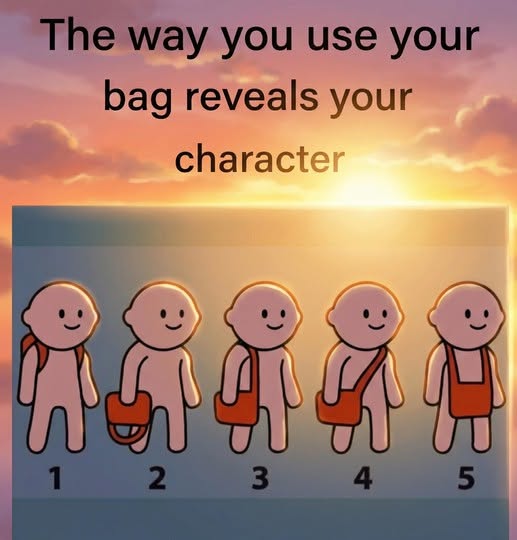
    Have you ever noticed how differently people carry their bags? Some prefer wearing a backpack, while others casually hold a handbag or wear it across their body. Although these choices might seem insignificant, body language enthusiasts often suggest that everyday habits can offer interesting clues about personal style and behavior.

    A popular personality quiz circulating on social media asks people to choose between five different ways of carrying a bag.

    While there is no scientific evidence that bag-carrying styles reliably reveal someone’s character, this playful test offers an entertaining way to reflect on your personality.

    Look at the picture, choose the number that best represents you, and discover what your choice might suggest!

    Number 1: The Independent Adventurer

    If you usually carry your bag over one shoulder, you may identify with someone who values independence and freedom.

    People who prefer this style are often described in personality quizzes as adventurous, spontaneous, and comfortable making their own decisions.

    You might enjoy exploring new places, meeting interesting people, and approaching life with curiosity.

    Your greatest strength could be your willingness to step outside your comfort zone.

    However, your independent nature might sometimes make it difficult to ask others for help.

    Number 2: The Relaxed and Confident Personality

    If you prefer carrying your handbag in your hand, you may see yourself as a calm and confident individual.

    This style is often associated with people who appreciate simplicity and dislike unnecessary complications.

    You may enjoy living at your own pace and avoiding stressful situations whenever possible.

    Friends might describe you as easygoing, approachable, and pleasant to be around.

    Your biggest strength could be your ability to remain composed when others become overwhelmed.

    Number 3: The Organized and Practical Thinker

    If you carry your bag on your shoulder with the bag resting comfortably beside your body, you may relate to someone who enjoys organization.

    You probably appreciate routines, planning, and having everything you need within easy reach.

    People who identify with this description often enjoy creating structure in their personal and professional lives.

    Your practical approach can help you handle responsibilities efficiently.

    However, you may occasionally benefit from being more spontaneous and allowing unexpected experiences into your life.

    Number 4: The Energetic and Goal-Oriented Individual

    If you prefer wearing your bag diagonally across your body, you may identify with an active and determined personality.

    Crossbody bags are popular among people who want their hands free while moving comfortably throughout the day.

    In this playful interpretation, your choice suggests that you appreciate efficiency and independence.

    You may enjoy setting goals, staying productive, and making the most of your time.

    Your determination can be a major strength, although remembering to relax is equally important.

    Number 5: The Creative and Expressive Personality

    If you wear your bag in front of your body, you may identify with someone who enjoys expressing individuality.

    This style can reflect practical preferences, personal fashion choices, or the desire to keep belongings visible and accessible.

    In personality quizzes, it is often associated with creativity, originality, and confidence.

    You may enjoy experimenting with different styles and finding your own approach to everyday situations.

    What Does Your Choice Really Mean?

    Although these descriptions are entertaining, psychologists do not consider bag-carrying habits a scientifically reliable personality test.

    Comfort, clothing, convenience, safety, and the type of bag often explain why people carry their belongings differently.

    Still, these little observations can spark fun conversations about how we see ourselves.

    So, which number are you: 1, 2, 3, 4, or 5? Share your choice and see whether the description matches your personality!

  • Creative Ways to Reuse Old Plates

    Creative Ways to Reuse Old Plates

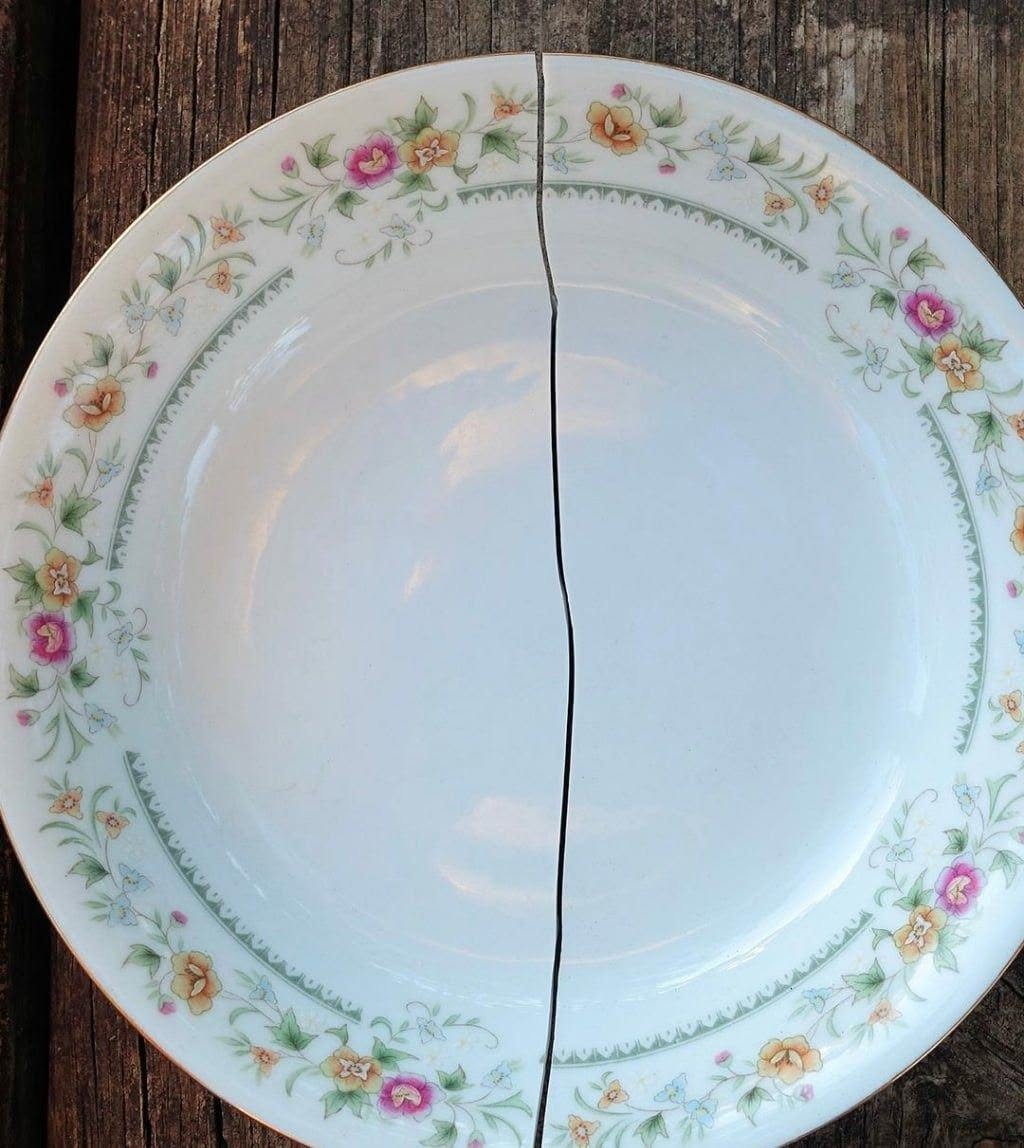
    If you have many old plates stored away at home, there is no reason to throw them out. Instead of ending up in the trash, these forgotten dishes can be reused creatively and transformed into beautiful decorative or artistic objects. Recycling old plates is not only an eco friendly choice, but also a wonderful opportunity to express creativity and give new life to items that once served a practical purpose.

    Before you begin, take a moment to think about what you would like to create. Old plates can be reused in countless ways, depending on their size, color, and design. Some projects are purely decorative, while others can be functional or even wearable. Below are several inspiring ideas that show how old dishes can be transformed into unique home decor pieces and handmade art.

    Pendants

    One creative idea is to turn old plates into pendants or hanging decorations. Broken or chipped plates with interesting patterns are perfect for this purpose. When transformed into pendants, they become eye catching elements that can be used as jewelry, wall hangings, or even outdoor decorations.

    To make a pendant, you will need an old plate, a pendant hook or wall hook, and basic tools. Carefully create a small hole in the plate or shard, making sure the edges are smooth. Attach the hook securely, then hang the piece on a wall or display it as part of a decorative arrangement. Each pendant will be completely unique, reflecting the original design of the plate.

    Christmas decorations

    Old plates can also be transformed into festive holiday decorations. During the Christmas season, they can be decorated to resemble trees, wreaths, or seasonal scenes. This idea can easily be adapted for other holidays by changing colors and ornaments.

    To create Christmas decorations, gather old plates, ribbons in red or yellow, and small ornaments or decorative elements. Arrange the decorations directly on the plate, creating a balanced and festive design. Once finished, the plate can be hung on a wall or placed on a stand as part of your seasonal decor.

    Mosaics

    Creating mosaics is one of the most artistic ways to recycle old plates. This project allows you to explore color, texture, and pattern in a creative way. Plates can be broken into small fragments and arranged into detailed designs.

    To make a mosaic, carefully break the plate into small pieces. Arrange the fragments into your desired pattern, combining different colors and shapes. The finished mosaic can be used to decorate tabletops, garden paths, picture frames, or wall art.

    Painted plates

    An old plate can also become a painted artwork. Even plain or damaged plates can be transformed into elegant decorative pieces with a little paint and imagination.

    Using paints or markers, decorate the plate with original designs, floral patterns, quotes, or abstract art. Once finished, hang the plate in a visible area of your home or display it on a shelf. Painted plates add personality and charm to any room.

    Decorative plate walls

    One of the most striking ideas is creating a decorative plate wall. A collection of old plates arranged thoughtfully can completely transform a living space and give it a vibrant, artistic feel.

    To create a plate wall, you will need old plates and wall hooks or mounting supports. Secure the plates carefully and arrange them in different shapes or patterns. Mixing sizes, colors, and designs adds depth and visual interest.

    Reusing old plates is a simple yet powerful way to combine sustainability with creativity. With a little imagination, these everyday objects can become meaningful decorations that reflect your personal style while reducing waste.

  • Men prefer short women because these have…

    Men prefer short women because these have…

    Men Prefer Short Women Because They Have These Attractive Qualities, According to Psychology

    When it comes to romantic attraction, everyone has different preferences. Some men are drawn to taller women, while others find shorter women particularly attractive. But why does height sometimes play a role in choosing a romantic partner?

    Psychologists suggest that physical attraction is influenced by a combination of personal experiences, cultural expectations, individual preferences, and biological factors.

    Interestingly, some men associate shorter women with certain qualities that they find appealing in relationships.

    1. A Sense of Closeness and Affection

    One reason some men prefer shorter partners is the physical dynamic that a height difference can create.

    Activities such as hugging, holding hands, or resting someone’s head against a partner’s chest may feel especially comforting to certain couples.

    For some individuals, these small moments of affection contribute to feelings of emotional intimacy.

    However, affection and emotional closeness depend on the relationship rather than the height of either partner.

    2. The Protective Feeling

    Some men enjoy feeling protective toward their romantic partners.

    A noticeable height difference may reinforce that feeling, particularly in cultures where men are traditionally expected to be taller.

    Psychologists recognize that social expectations can influence romantic preferences.

    Nevertheless, being shorter does not mean a woman needs protection or is less independent. Healthy relationships involve mutual support, regardless of physical size.

    3. Perceptions of Cuteness

    Shorter stature is sometimes associated with a youthful or cute appearance.

    Certain men may find this physical characteristic appealing, just as others prefer different body types, facial features, or styles.

    These associations are subjective and shaped partly by cultural beauty standards.

    Importantly, height does not determine someone’s personality, maturity, or emotional intelligence.

    4. Comfortable Physical Compatibility

    For some couples, height differences create physical interactions that both partners enjoy.

    A shorter woman and taller man might develop affectionate habits, such as standing on tiptoe for a kiss or wrapping their arms around each other in a particular way.

    These gestures may feel romantic, but they are personal preferences rather than universal advantages.

    Couples of similar height or with a taller female partner can experience equally satisfying physical chemistry.

    5. Traditional Beauty Expectations

    Media, movies, and popular culture frequently portray romantic couples with a taller man and shorter woman.

    Repeated exposure to these images may influence what some people consider an ideal height difference.

    Research on partner preferences has found that many heterosexual individuals favor relationships in which the man is taller, although preferences vary considerably.

    Cultural influences help explain these patterns, but they do not determine whom someone will love.

    6. Personality Matters More Than Height

    Although appearance can influence initial attraction, long-term relationships rely on much more than physical characteristics.

    Kindness, trust, communication, shared values, emotional stability, and mutual respect often become increasingly important as relationships develop.

    A person’s height cannot predict whether they will be loving, loyal, confident, or compatible with a partner.

    Final Thoughts

    Some men prefer shorter women because they enjoy particular physical dynamics, find shorter stature attractive, or have been influenced by familiar cultural expectations.

    However, there is no scientific basis for claiming that shorter women are inherently better partners or possess superior personality traits.

    Ultimately, genuine attraction is about far more than centimeters or inches. The strongest relationships are built on connection, respect, understanding, and the unique qualities that make two people compatible.

  • The Aluminum Foil Trick in the Freezer: Does It Really Work?

    The Aluminum Foil Trick in the Freezer: Does It Really Work?

    The Aluminum Foil Trick in the Freezer: Does It Really Work? 🤔👀

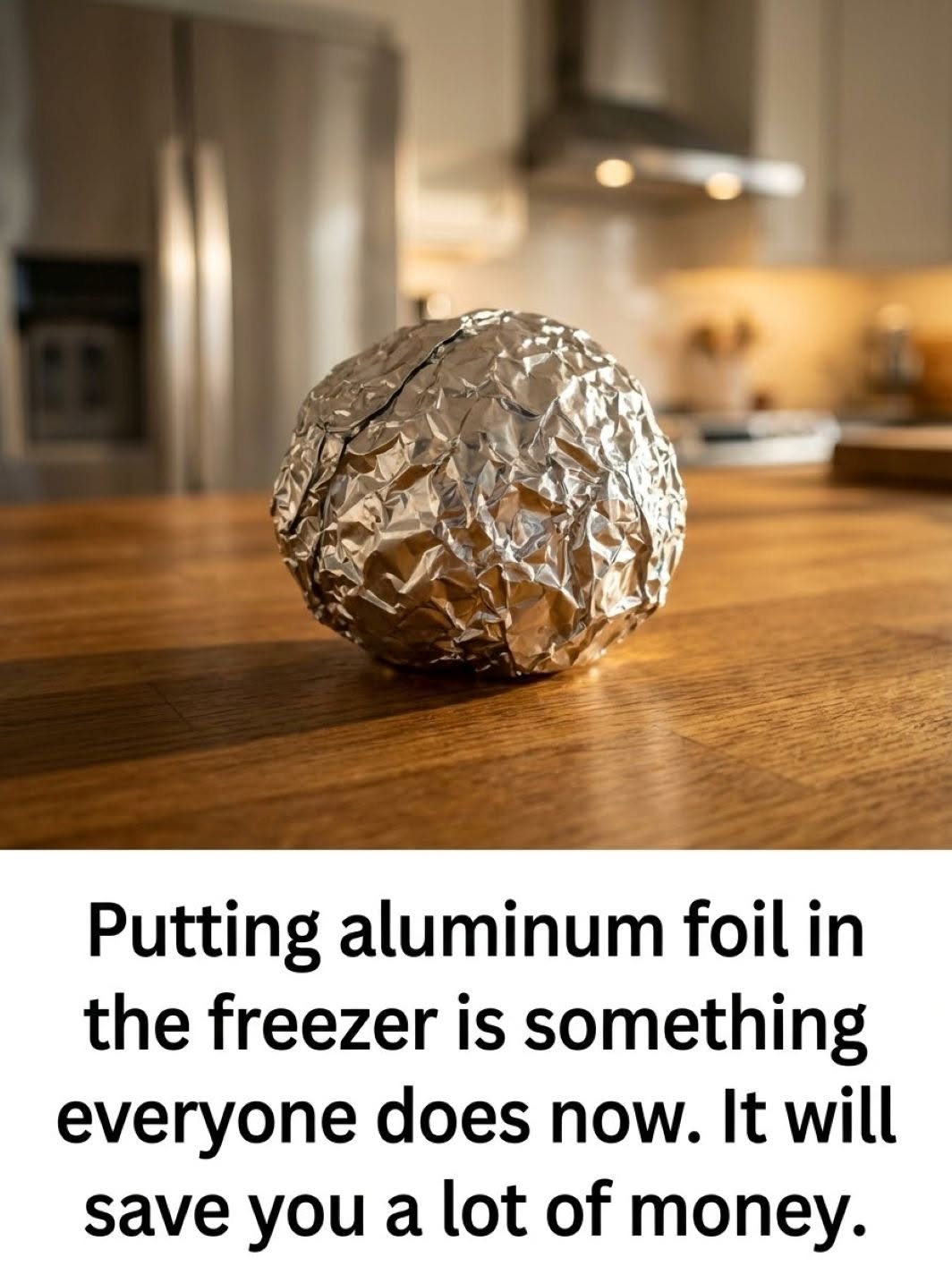
    Household cleaning tricks often go viral on social media, promising to make everyday chores easier, faster, and cheaper. One surprising method that has recently attracted attention involves using aluminum foil inside the freezer.

    According to online claims, this simple kitchen item can help remove stubborn ice buildup, improve freezer performance, and make cleaning less frustrating. But does the aluminum foil trick actually work, or is it another internet myth?

    Let’s take a closer look.

    Why Does Ice Build Up in the Freezer?

    Before understanding the trick, it’s important to know why freezers develop layers of ice.

    Frost forms when warm, humid air enters the freezer and moisture freezes on cold surfaces. This commonly happens when the freezer door is opened frequently, the door seal is damaged, or warm food is placed inside.

    Over time, excessive ice accumulation can reduce available storage space, interfere with airflow, and make the appliance less efficient.

    For freezers that require manual defrosting, removing this ice is an essential maintenance task.

    What Is the Aluminum Foil Trick?

    The popular method involves placing sheets of aluminum foil against icy freezer surfaces or using foil during the defrosting process.

    Some online demonstrations suggest that aluminum foil can help loosen ice because aluminum conducts heat efficiently.

    Others claim that lining freezer compartments with foil prevents frost from forming or makes future ice removal easier.

    However, these claims should be treated carefully because not all versions of the trick are equally effective or safe.

    Does Aluminum Foil Actually Remove Ice?

    Aluminum is an excellent conductor of heat, meaning it can transfer thermal energy efficiently.

    However, aluminum foil does not generate heat on its own.

    Simply placing foil inside a frozen compartment will not magically melt thick layers of ice.

    During manual defrosting, foil may transfer heat from a warmer surrounding surface, but there is limited evidence that it significantly accelerates the process compared with conventional methods.

    Additionally, covering freezer walls, shelves, or ventilation openings with foil may interfere with normal airflow or appliance operation.

    Therefore, aluminum foil should not be considered a reliable solution for preventing frost buildup.

    A Safer Way to Defrost Your Freezer

    Instead of relying on viral household hacks, appliance experts generally recommend following the manufacturer’s instructions.

    A safe defrosting routine includes:

    1. Turn off and unplug the freezer before beginning.
    2. Remove frozen foods and store them in an insulated cooler.
    3. Place towels around the appliance to absorb melting water.
    4. Allow the ice to melt naturally, keeping the freezer door open.
    5. Wipe down interior surfaces and dry them thoroughly before restarting.

    Never use sharp metal objects to scrape ice, as they may puncture refrigerant lines or damage the freezer.

    Avoid pouring boiling water directly onto frozen surfaces because sudden temperature changes may damage plastic components.

    How to Prevent Frost From Returning

    Preventing ice buildup is usually easier than removing it.

    Check that the freezer door closes properly and that its rubber seals remain clean and undamaged. Avoid leaving the door open unnecessarily, and allow hot food to cool before freezing it.

    Keeping food organized can also reduce the time the freezer remains open.

    Final Verdict: Is the Trick Worth Trying?

    The aluminum foil freezer trick sounds clever, but its benefits are often exaggerated.

    While aluminum conducts heat, foil alone cannot effectively eliminate frost or guarantee better freezer performance.

    For most households, proper defrosting, good door seals, and regular maintenance remain the safest and most dependable solutions.

    Sometimes, the simplest household advice is not a viral trick but taking proper care of the appliances we use every day.

  • I Secretly Bought A New House And Found My Brother’s Family Moving Into It Uninvited

    I Secretly Bought A New House And Found My Brother’s Family Moving Into It Uninvited

    Laurel’s family confrontation escalated when Danielle slammed a folder onto the kitchen island, insisting their parents had promised the family that Laurel’s property was a gift for the children. Their mother nervously held a trembling vase while their father finally admitted he had only suggested Laurel might help with a rental. Danielle had misunderstood—or chosen to believe—something entirely different, and their parents had allowed the misunderstanding to continue. Laurel calmly ordered everyone to remove their belongings by the following evening.

    Danielle laughed, claiming they already had plans for the carriage house. Moments later, a young couple arrived with suitcases and an Airbnb confirmation, expecting to stay there. Laurel discovered that Danielle had listed the carriage house online two weeks earlier using photographs from Laurel’s real estate listing. She had collected deposits from four separate bookings, planning to use the money to finance their new life. The couple standing at Laurel’s door had paid $900, and Laurel apologized while showing them the property deed. They immediately contacted the rental platform.

    Laurel’s attorney, Janelle Ortiz, arrived within an hour and explained that renting property Danielle did not own constituted fraud. She insisted that all four guests receive full refunds by Monday. Danielle’s confidence disappeared as her relatives began carrying boxes back to the truck. Mitchell, her husband, was stunned to discover that she had listed the property without telling him. For the first time, he looked directly at Laurel and sincerely apologized.

    By the following evening, the movers had returned everything to the truck. Danielle refunded all four guests after the platform banned her account. Laurel’s parents secured a three-bedroom rental across town, finally using their own savings. Her mother cried in the driveway and admitted she had allowed the situation to continue because she feared Danielle’s temper. Mitchell’s children hugged Laurel goodbye, and she assured them they could always visit as guests.

    Laurel’s father eventually apologized as well, bringing her a housewarming plant that began to thrive. Mitchell took a second job and started supporting himself rather than depending on Laurel’s property. Slowly, the family began facing the consequences of its choices, while Laurel regained control over her home and her future.

    A month later, Laurel finally experienced a peaceful morning in her own house. Sitting on the porch with coffee, she watched the sunrise over Church Hill, with her old winter coat folded beside her. Inside, she hung a framed photograph on her freshly painted wall. The photograph was hers, symbolizing that her home, independence, and decisions finally belonged to her alone.

  • My Husband Cut Our Grocery Budget And Told Me To Work Miracles With Rice Daily

    My Husband Cut Our Grocery Budget And Told Me To Work Miracles With Rice Daily

    Rosalie discovered that Dustin had been stealing money from their children’s savings account, and the situation became even more disturbing when she recognized the woman standing behind him. Kendra Fields, a member services employee at Rosalie’s credit union, had processed the withdrawals despite knowing the family personally. Rosalie had visited her desk many times, depositing birthday checks and overtime earnings while Kendra smiled and complimented her children.

    When Dustin demanded his belongings, Ingrid opened the door with her phone recording. The new lock and packed boxes made it clear that Rosalie was no longer willing to tolerate his behavior. Ingrid confronted Kendra about notarizing a withdrawal form bearing Rosalie’s signature and asked whether Rosalie had been present when it was signed. Kendra eventually broke down, admitting that Dustin had claimed the money was his share and promised to provide Rosalie’s signed form later. She had notarized the document anyway.

    Ingrid immediately called the credit union’s fraud department. When Dustin attempted to grab the paperwork, Mrs. Albano blocked the doorway with her cane. That night, the credit union froze the account and began investigating. Within a week, most of the stolen money was restored because of the forged signature and the institution’s failure to follow its own requirement for both account holders’ authorization. Kendra lost her job and notary commission, while Dustin faced charges of forgery and theft.

    Because the Harbor Pointe lease was in Dustin’s name, he could no longer afford to maintain it. Kendra moved out within a month and later sent Rosalie a handwritten apology, although Rosalie remained uncertain whether she would respond. With Ingrid’s assistance, Rosalie filed for divorce and child support. The court also ordered Dustin to repay the remaining portion of the children’s savings through monthly installments.

    The recovery brought small but meaningful improvements to the family’s life. Rosalie bought Clara new sneakers and a winter coat, and the refrigerator was finally full again. The blue folder was eventually discovered in Dustin’s car, with the earrings still inside their box. Although Rosalie and her children sometimes still ate simple meals, their circumstances were no longer defined by constant financial anxiety.

    Mrs. Albano began joining the family for Sunday dinners, and Rosalie finally stopped counting every dollar. Felix kept his savings statement taped inside his closet beside a drawing of a stethoscope, checking the balance every month as it steadily increased. His growing savings represented more than money: they symbolized security, hope, and a future no longer threatened by his father’s betrayal.

  • The Hidden History Behind This Simple Hand Gesture

    The Hidden History Behind This Simple Hand Gesture

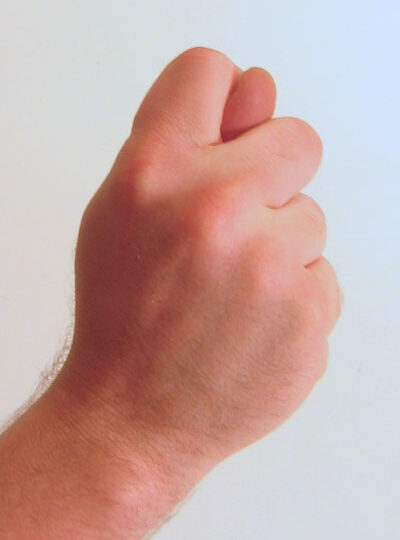
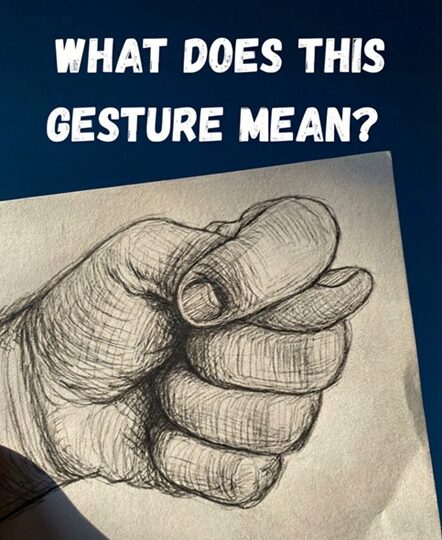
    At first glance, a hand held in a fist may appear simple, even ordinary. Yet, closer observation reveals a subtle, almost secretive detail: the thumb tucked tightly between the index and middle fingers.

    This small adjustment transforms an otherwise ordinary hand into a gesture that has carried significant meaning across cultures and centuries, known in English as “making a fig.”

    Long before modern communication allowed words, images, or emojis to instantly convey emotion, this discreet sign spoke volumes. With a single, fluid motion, a person could refuse a demand, express quiet defiance, or deliver a playful “not happening” without uttering a word.

    While it might appear humorous today, the fig gesture once played a serious social role, functioning as both a tool of communication and a subtle act of resistance.
    Origins and Early Cultural Context

    The fig gesture is ancient, with origins traced to multiple parts of Europe, particularly in Mediterranean and Eastern European societies. Its name in English—“the fig”—is thought to have been adopted during the 19th century, though similar gestures existed long before this period.

    In Italy, for example, the gesture is known as mano in fica, literally “hand in fig,” and was used both as a playful insult and a protective charm. In Russia, it is referred to as kuvyn’ka and historically carried connotations of refusing unfair requests or mocking authority.

    In a time when open confrontation could be dangerous, the fig gesture offered a discreet alternative. People could communicate dissent without raising their voices, without violating social norms, and without drawing public scrutiny.

    In 19th-century European villages, where community cohesion was important and conflicts could escalate quickly, this small hand sign became a socially acceptable outlet for expressing disagreement, frustration, or playful resistance.

    Symbolism Beyond the Gesture

    While the gesture itself is physical—a fist with a hidden thumb—it also carried layers of symbolic meaning. Anthropologists and folklorists studying European customs note that the closed fist represents concealed strength.

    The act of hiding the thumb, in particular, was sometimes thought to enhance the protective power of the hand, both in a literal and spiritual sense.
    Folk traditions often imbued the thumb with mystical significance. In many cultures, the thumb tucked between fingers was believed to guard against misfortune, envy, or the so-called evil eye.

    This belief intertwined the gesture’s social and protective functions: it could convey defiance, but also invoke a form of magical protection.

    The fig gesture, therefore, was more than just a playful motion—it was a symbol of resilience, a way for individuals to assert agency, and a subtle invocation of personal or spiritual strength.

    Social and Family Uses

    Over time, the fig gesture moved beyond public or communal expression and became embedded in family life. Grandparents and older relatives passed it down as a harmless and entertaining way to tease children, assert minor authority, or respond to lighthearted challenges.

    In childhood play, the gesture became a sort of secret language: it could convey refusal, courage, or solidarity without requiring confrontation or verbal explanation.

    In some cases, the gesture carried emotional significance. Children might use it to signal quiet bravery or determination, while parents or older family members might offer it as a gesture of reassurance during moments of uncertainty.

    For example, it could appear in farewells, in small acts of comfort before long absences, or in playful defiance when a child sought to stand their ground.

    The gesture’s dual role—as a playful social tool and an emotional symbol—made it a uniquely versatile form of communication.

    Humor, Defiance, and the Everyday

    One of the most enduring aspects of the fig gesture is its combination of humor and defiance. Unlike overt forms of protest or insult, which can provoke strong reactions, the fig gesture allowed individuals to resist or mock without risking serious conflict.

    In European villages, workers might make the gesture to politely reject unreasonable demands from landlords or authority figures. Siblings might use it to playfully tease one another.

    Markets, fairs, and local gatherings became settings where subtle gestures like this could communicate complex social dynamics without escalating tensions. In essence, the fig gesture was a social lubricant, helping people navigate interpersonal boundaries while maintaining harmony.

    Its effectiveness lay in its subtlety. The gesture could be easily hidden, quickly executed, and silently understood. It carried a clear message for those who knew the cultural code, yet appeared innocuous to outsiders. This duality—visible to insiders, invisible to others—was central to its enduring appeal.

    Global Variations and Interpretations

    While the fig gesture is most strongly associated with European traditions, similar hand signs appear in other cultures with comparable meanings.

    In parts of South America, Africa, and Asia, subtle hand movements have historically been used to convey refusal, mockery, or playful defiance.

    These gestures share common elements: compact hand positioning, a hidden component, and the capacity to communicate socially nuanced messages without words.

    Even within Europe, regional variations of the gesture developed unique connotations. In Italy, as noted, it could carry a mildly obscene or provocative implication, depending on context.

    In Russia and Eastern Europe, it was primarily humorous, sometimes used to reject bribes or dishonest propositions. In Turkey, the gesture—known as nah—often accompanied playful teasing or friendly banter.

    These nuances highlight how a single physical movement can evolve across time and geography, adapting to the social norms and cultural expectations of each community.

    The Gesture in Modern Memory

    With the rise of instant communication—text messages, emojis, and social media—the fig gesture has largely faded from everyday practice. Rarely seen in public today, it exists mainly in memory, folklore, or historical accounts.

    Yet its legacy is still felt. The gesture represents a time when human expression relied on subtlety, wit, and shared cultural understanding.

    For those who remember it, the fig gesture serves as a reminder of creativity in communication. It demonstrates how a simple movement could carry multiple layers of meaning: humor, defiance, protection, or emotional comfort.

    In an era dominated by rapid, digital communication, it stands as a symbol of a slower, more intimate form of interaction.

    Lessons in Nonverbal Communication

    The history of the fig gesture offers valuable insights into the power of nonverbal communication. Across cultures and centuries, gestures allowed individuals to navigate complex social situations, maintain relationships, and assert autonomy without conflict.

    Scholars studying historical gestures emphasize that nonverbal signals like the fig gesture are not merely ancillary to speech—they can be central to social interaction. They convey nuance, subtlety, and layered meaning that words alone cannot always capture.

    The fig gesture illustrates this principle perfectly: small, nearly invisible, yet loaded with social and emotional significance.

    Humor and Resistance: A Cultural Constant

    One of the most striking aspects of the fig gesture is its enduring association with humor. Playful defiance, gentle teasing, and ironic refusal have always been easier to accept when delivered with subtle wit rather than blunt force.

    By combining humor with a clear social message, the gesture allowed people to challenge authority, assert personal boundaries, or navigate complex social hierarchies without provoking serious conflict.

    This combination of humor and resistance is not unique to the fig gesture, but its longevity and cross-cultural presence underscore its effectiveness.

    Across centuries, it has reminded people that strength need not always be loud, that resistance can be expressed elegantly, and that small actions can communicate powerful ideas.

    From Playful Gesture to Cultural Artifact

    Today, the fig gesture is often studied as a cultural artifact rather than a living practice. Historians, anthropologists, and folklorists cite it in studies of social behavior, childhood play, and the evolution of nonverbal communication.

    Its appearance in literature, art, and oral histories reinforces its significance as a window into the values, humor, and daily life of past generations.

    Even when rarely practiced, the gesture continues to inspire reflection on human creativity and resilience. It illustrates how communities historically found subtle yet effective ways to negotiate power, emotion, and interpersonal dynamics—without resorting to confrontation or explicit verbal conflict.

    Conclusion: Subtlety as Power

    In the modern world, where communication is dominated by speed, volume, and visibility, the fig gesture serves as a reminder of the enduring value of subtlety.

    Small and easily overlooked, it reflects a timeless idea: sometimes the most powerful messages are delivered not with words, but through quiet, deliberate action.

    The gesture’s history—from European villages to family play, from folk traditions to symbolic protection—demonstrates that human expression is as much about creativity as it is about clarity.

    It reminds us that humor, defiance, and resilience can coexist in a single, understated movement.

    Though largely replaced by text messages, emojis, and social media reactions, the fig gesture remains a cultural touchstone.

    For those who remember it, it continues to symbolize ingenuity in communication, the clever navigation of social boundaries, and the enduring human desire to express thoughts, feelings, and resistance with subtlety, charm, and wit.

    In a world where words are everywhere, the fig gesture teaches us an important lesson: sometimes, silence speaks louder than speech—and a small, hidden thumb can say more than a thousand sentences.