Blog

  • A Quiet Grandmother Paid Her Rent On Time For Three Long Years, Kept One Small Insurance Paper In A Drawer, And Then A Stranger In Rubber Boots Asked Her Family A Question Nobody Could Answer

    A Quiet Grandmother Paid Her Rent On Time For Three Long Years, Kept One Small Insurance Paper In A Drawer, And Then A Stranger In Rubber Boots Asked Her Family A Question Nobody Could Answer

    At seventy-four, Helen Marsh had spent three years living in her daughter Brooke’s basement, paying $750 monthly for a small bedroom and bathroom. She had sold her own house because her failing hip made the stairs difficult, believing Brooke’s invitation meant she would finally have a comfortable place with family. Instead, she felt like an unwanted guest. What Brooke and her husband Trevor did not know was that Helen had quietly paid $2,350 for a year of homeowner’s insurance after discovering their coverage had lapsed. She arranged for the policy to be issued in her own name and kept the documents safely in her nightstand.

    One freezing March night, a pipe burst above Helen’s bed, flooding the basement and destroying her photographs, handmade quilts, cedar chest, and wedding dress. When the insurance adjuster arrived, Trevor insisted Helen was merely a tenant and that her belongings were not covered by his homeowner’s policy. He even produced a rental agreement claiming she had signed it. However, the adjuster, Mr. Ellison, discovered that Helen herself was the policyholder because she had purchased and paid for the insurance. The policy included coverage for her belongings, making her the person entitled to the contents settlement rather than Trevor or Brooke.

    The situation became even more serious when Mr. Ellison examined the supposed rental agreement. He noticed its revision date was newer than the original agreement date. Under questioning, Brooke admitted she had never seen her mother sign it. Trevor had printed the document after the flood and forged Helen’s signature by tracing it from a birthday card. Brooke finally confessed because she could no longer participate in his deception. Mr. Ellison documented the evidence and referred the suspicious paperwork to the insurance company’s special investigations unit. He also explained that Helen’s contents claim would be paid directly to her.

    After the inspection, Trevor admitted he had been frightened by overdue mortgage payments and undisclosed golf club expenses. He had hoped to use the insurance claim to solve his financial problems. Helen refused to accept his excuses. Her longtime friend Ruth Calloway, an attorney, helped her calculate the $27,000 in rent she had paid over thirty-six months and demanded repayment. Helen left the basement that night and stayed with Ruth while the insurance claim was processed. Six weeks later, she received the full $19,400 contents settlement. A conservator also restored most of her family photographs, and a specialist repaired her mother’s quilts, although the wedding dress could not be saved.

    Trevor agreed to repay all $27,000 in monthly installments and cooperate with the insurance investigation. Brooke later visited Helen, bringing three photographs she had rescued from the flooded basement. She admitted she had allowed Trevor to mistreat her mother because she had convinced herself the rent and paperwork were reasonable. Helen told her that love and trust were different, and although she still loved her daughter, trust would take longer to rebuild. Brooke eventually left Trevor, found a library job, and began living independently.

    That summer, Helen moved into her own sunny apartment with a porch, three blocks from Ruth. She bought a brass lock for her important documents and placed a geranium on the porch, grateful to have a home that belonged to her. Months later, Brooke visited with peach cobbler, and they shared a quiet meal while acknowledging the hurt between them. Helen reflected on the years she had spent accepting unfair treatment because she feared being a burden. She finally understood that she had never needed to pay rent for dignity or permission to take up space. The most important thing she reclaimed was her independence and the courage to speak for herself.

  • A Strange Metal Rack Was Left Behind in Their New Kitchen, and Nobody Could Explain What It Was

    A Strange Metal Rack Was Left Behind in Their New Kitchen, and Nobody Could Explain What It Was

    When the Harris family moved into their new home, they expected to discover a few forgotten belongings. However, Daniel and his wife Claire were surprised to find a mysterious metal object hidden inside a kitchen cupboard.

    The strange item was nearly the size of an oven rack, with a flat, heavy surface covered in evenly spaced raised ridges. It had no handles, labels, or markings that could explain its original purpose.

    Daniel suspected it might be a component from an old kitchen appliance, while Claire wondered whether it was an unusual baking tray. They examined its edges, inspected the surface, and searched nearby cupboards for matching pieces.

    Despite their efforts, nothing provided an answer. The metal appeared aged but remarkably sturdy, suggesting it had been carefully manufactured. Although they considered throwing it away, curiosity convinced them to keep investigating its mysterious origins.

    The following morning, Daniel photographed the object and shared the pictures with friends and relatives. Suggestions arrived quickly, ranging from an oven component to a dish-drying rack or grilling accessory. Unfortunately, nobody could identify it confidently.

    Claire searched online through photographs of vintage kitchen equipment, comparing baking trays, cooling racks, and removable appliance parts. Meanwhile, Daniel measured the object and looked for attachment points, but discovered no screws, clips, or other obvious connections.

    Their elderly neighbor, Mrs. Palmer, remembered that the home’s previous owners had collected unusual kitchen tools and rarely discarded anything. Her husband, an experienced appliance repairman, examined the object but could only suggest that it might belong to an older cooker.

    Another friend proposed that the raised ridges might have been designed to create patterns on food. Although the theory seemed plausible, the couple still lacked evidence. With several possibilities but no definitive explanation, Daniel and Claire decided to preserve their unusual discovery until someone could finally identify its purpose.

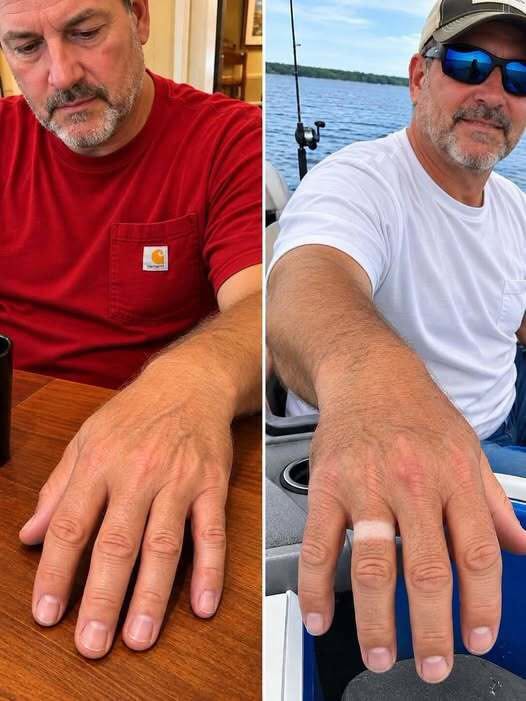
  • My Husband Came Home From a Fishing Trip With a Strange Ring Mark on His Finger – Then He Explained Why

    My Husband Came Home From a Fishing Trip With a Strange Ring Mark on His Finger – Then He Explained Why

    I noticed a pale, perfectly circular mark on my husband’s left ring finger as he reached for his water glass. After twenty-six years of marriage, I knew something was wrong. Mark hadn’t worn his wedding ring in twelve years.

    When I questioned him, he briefly froze before claiming the mark came from holding a fishing rod during his annual trip to Loon Lake. He quickly changed the subject, but the fear in his expression was impossible to ignore.

  • Every summer, my parents found an excuse I couldn’t join the family trip because my brother refused to go if I came. This year, they tossed me a $100 bill and flew to Maui without me. I packed my truck and moved 2,000 miles away. 9 years later…

    Every summer, my parents found an excuse I couldn’t join the family trip because my brother refused to go if I came. This year, they tossed me a $100 bill and flew to Maui without me. I packed my truck and moved 2,000 miles away. 9 years later…

    At 22, I worked 60 hours a week as an apprentice mechanic, helping my parents pay household bills. I even contributed $800 toward what I believed was a family vacation to Maui. But on departure morning, my father tossed a $100 bill onto the kitchen counter and told me I wasn’t invited. My mother claimed my younger brother Cyrus deserved a peaceful vacation without my “toxic attitude.”

    Ten minutes later, they drove away, leaving me standing in the kitchen with my packed bags. Furious and heartbroken, I searched my father’s office for my truck registration. Instead, I discovered the original February travel booking showing only three passengers: my parents and Cyrus. They had planned to exclude me for months while happily accepting my money.

    I confronted them by phone, but my mother accused me of being jealous and ruining their vacation. That afternoon, I visited my grandmother Loretta. After hearing everything, she told me something I would never forget: “A man does not beg for a seat at a table that does not respect his sweat.” She gave me $500 and encouraged me to start over.

    That night, I packed my tools, climbed into my old Chevrolet pickup, and drove nearly 2,000 miles to Idaho. An old friend offered me a mechanic’s job. I worked relentlessly, eventually becoming a business partner and opening Timberline 4×4, a successful off-road fabrication shop. I also met Fay, a wonderful woman who eventually became my wife.

    Nine years later, my grandmother suffered a heart scare and asked me to return to Kentucky. At the hospital, she revealed something shocking: my father had stolen $18,000 she had specifically given him for my technical college education. Instead, he spent most of it buying Cyrus a new truck. Grandma had kept every document as proof.

    Determined to correct the injustice, she changed her estate arrangements, transferring her valuable 40-acre apple orchard and farmhouse to me. When my parents arrived demanding $100,000 to save their financially collapsing household, I showed them the evidence of their betrayal and refused.

    Their favorite son had accumulated enormous debts and even forged documents to obtain loans. Eventually, their home was lost to foreclosure, and Cyrus faced criminal charges. Meanwhile, I continued building my business and supporting my grandmother.

    Standing in my orchard beside Fay, I finally understood: that $100 bill was never a measure of my worth. It was the price my parents paid to lose a son who would have done anything for them. Walking away had given me something far more valuable: a life built on love, respect, and independence.

  • Mary’s Three Day Supply List Started a Fight at the Library

    Mary’s Three Day Supply List Started a Fight at the Library

    A bottle rolls off the workroom table and stops against the red binder marked PUBLIC DISPLAY. Mary catches the next bottle before it follows.

    “That table has a lean,” Frank says. “I thought I had it fixed.”

    He folds a scrap of cardboard under one leg while Mary squares the corners of the papers beside the binder. At nine in the morning, the library is still quiet enough for her to hear the cardboard scrape across the floor.

    “Try it now,” Frank says.

    Mary sets the bottle upright. It stays where she puts it, but a handout slides from the stack and lands at her feet.

    The page describes Be Ready, a campaign in the United Kingdom that encourages households to prepare for at least three days of disruption. Mary reads the first paragraph, then looks at the bottles.

    “Could we make a display like this for people here?”

    Frank takes the page. “How many bottles do you want on it?”

    “Enough to show what a household might set aside. We would need to say how much water a person should have, not just put out a bottle and hope.”

    She picks up a second handout and aligns it with the first. “And food that doesn’t need much fuss. People could buy a little at a time.”

    Frank counts on his fingers. “Water, food, a flashlight. What else goes on the paper?”

    “Let’s find out before we print it.”

    The library charges ten cents a sheet at the copier. Frank, a retired printer, has already made a small stack of sample handouts for the volunteers, and he turns one over to use the blank side.

    “How many copies are you thinking?” he asks.

    “I need exact numbers before I agree to pay for any. How many people usually stop at a display?”

    “Depends what we put beside it. Cookies do better than pamphlets.”

    Mary smiles. “I don’t think cookies will keep for three days on that table.”

    “They won’t keep for three minutes if I’m standing there.”

    He writes water and food on the back of the handout. Mary adds a line about checking household needs, then stops with the pencil in her hand.

    “We should tell people this is a British campaign,” she says. “It’s a starting point, not an American government notice.”

    Frank nods. “And we can make the type big enough to read without putting your nose on it.”

    Mary points to the red binder. “Could that hold the handouts?”

    “It’s for the public display. David brought it in last week.”

    He opens the cover to show her the rings. Mary lays the British handout beside it, already thinking of the space near the library entrance.

    “I’ll ask Ruth about a table,” she says. “And David will know which volunteers want to help.”

    Frank taps the blank page with his pencil. “First we ought to decide what we’re asking them to do.”

    At ten, Mary finds Ruth Bell in the meeting room, lifting a folding chair by its back. The rubber feet are worn, and one catches on the floor as Ruth pulls.

    “Would you take that end?” Ruth asks.

    Mary grips the chair seat, and together they move it against the wall. Four more chairs stand between them and the cupboard.

    “We can stack these now or leave them for after lunch,” Ruth says. “Which works for you?”

    “Now. Frank and I want to ask about a display.”

    Ruth lifts the next chair. “The one with the water?”

    “Water, food, and a handout. Just a practical start for three days at home. Not a notice saying anything is about to happen.”

    Ruth sets the chair down. “Bring me a draft before we put it out. I’d like to see what people will be asked to share.”

    “We haven’t got that far.”

    “Then you can start with a blank page.”

    Ruth takes a sealed envelope from the pocket of her cardigan. Mary’s name is written across the front in Helen Ward’s careful hand.

    “That’s from Helen,” Ruth says.

    Mary puts down her chair. “Is she all right?”

    “Yes. She brought this to me herself.”

    Ruth turns the key in the cupboard and sets the envelope on a shelf. Mary sees that it has been sealed all the way across the flap.

    “She wants you to open it only when she asks,” Ruth says. “I can keep it here, or you can tell her you’d rather she kept it herself.”

    “Did she say when she’s going to ask?”

    “No.”

    Mary reaches toward the envelope, then draws her hand back. “I’ll do as she says. But why give it to you?”

    “She asked me to keep it safe.”

    Ruth closes the cupboard and locks it. The key goes back into her cardigan pocket.

    Mary picks up the last chair. “I’m seeing her this afternoon. She might tell me herself.”

    “She might,” Ruth says, and holds the door while Mary carries the chair through.

    At two, Helen has three cans on her kitchen table and a fourth in her hand. She is reading the date on the bottom.

    “This one can go at the front,” she says. “The beans have longer.”

    Mary moves a can of soup to make room. “What do you usually keep besides these?”

    “Bread in the freezer. Crackers, if I haven’t eaten them.”

    Helen sets down the fourth can and rubs her thumb along the edge of her watch. “If it is not too much trouble, I’d rather not have David come over and rearrange the whole pantry.”

    “I haven’t asked him to.”

    “He means well. He also puts the tea where I can’t reach it.”

    Mary opens the pantry door. The tea is on the middle shelf, behind a box of rice. She moves it to the front.

    “I can afford one extra item this week,” Helen says. “That’s what the grocery money allows.”

    “One can this week is still a start.”

    “Would you make me a list? A short one. If you write down twenty items, I’ll put the paper in a drawer and leave it there.”

    “We can start with what you use, then add one item when you can. How much water do you have?”

    “Two bottles in the refrigerator.”

    Mary writes that on the back of a grocery envelope. “A case at the store is $6.48. We don’t have to buy it today.”

    “And a loaf of bread is $3.29,” Helen says. “I looked yesterday and put it back.”

    Mary takes a can from the cloth bag at her feet. She brought it from her own cupboard, intending to use it as an example when she and Helen made the list.

  • When I turned 18, my parents demanded that I give my older brother the $23,900 I’d saved for nursing school so he could purchase an upscale condo. After I refused, my father left me at a truck stop 90 miles away from home. Mom’s parting words were, “Don’t come crawling back when you realize you need us.” I never called them or asked for help. But exactly one year later, they found me, desperately seeking my assistance. And their request was far more unexpected than money…

    When I turned 18, my parents demanded that I give my older brother the $23,900 I’d saved for nursing school so he could purchase an upscale condo. After I refused, my father left me at a truck stop 90 miles away from home. Mom’s parting words were, “Don’t come crawling back when you realize you need us.” I never called them or asked for help. But exactly one year later, they found me, desperately seeking my assistance. And their request was far more unexpected than money…

    My mother spoke those words with an unsettling sense of calm.
    We were sitting inside my father’s Chevrolet Equinox, parked behind a quiet truck stop along Interstate 71 in Ohio.

    “My tuition is due in ten days,” I answered. “Classes start August twenty-fifth.”

    She dismissed my concerns with a gesture.

    “Brandon is building a career. You’re young, Kelly. You’ve always been resourceful.”

    My father, Dale, sat quietly behind the steering wheel.

    Eventually, he broke his silence.

    “If you won’t help your  family, you can learn to survive without us.”

    Plan Family Trips

    He released the lock on my door.

    “Get your bag from the trunk.”

    I stared at him, hoping for a smile or some indication that this was merely another attempt to pressure me into changing my mind.

    There was none.

    With sixty-two dollars tucked inside my sock.

    My phone battery showing thirty-one percent.

    And almost twenty-four thousand dollars in savings that my parents believed they could pressure me into handing over.

    Throughout childhood, I had understood that Brandon received special treatment.

    Thirteen framed photographs lined our staircase, celebrating nearly every significant milestone of his childhood.

    My photographs were stored behind the coats in our hallway.

    When Brandon needed money for his real estate licensing classes, my mother used the college savings envelope she had helped me establish.

    When he wanted an expensive vehicle, my parents praised his determination.

    When I accepted double shifts, they described it as fulfilling my obligations.

    But this situation felt entirely different.

    I placed my phone facedown on the table.

    For several hours that night, I stayed in the same booth.

    Eventually, the manager explained that I could remain inside, although sleeping in the dining area wasn’t allowed.

    So I stayed seated, keeping my belongings nearby as travelers entered and departed.

    Each time the automatic doors opened, I became uneasy.

    Every truck passing outside reminded me of the distance separating me from home.

    By sunrise, I had made myself a promise.

    My parents might have disrupted my plans, but they would not determine the direction of my entire future.

    At approximately 5:20 the following morning, a woman dressed in navy medical scrubs walked into the travel plaza.

    She ordered two coffees.

    As she walked past my booth, she paused.

    “You were sitting here when I stopped for gas last night,” she observed.

    I raised my head.

    She had closely cropped gray hair, wire-framed glasses, and an identification badge from a medical facility.

    Her name was Gail.

    She worked as a charge nurse at a dialysis clinic in Delaware, Ohio.

    “Are you waiting for someone?” she asked.

    I paused before answering.

    “I’m waiting for daylight.”

    Her gaze briefly settled on my duffel bag.

    Then she asked whether I needed transportation to somewhere safer.

    She explained that she couldn’t provide financial assistance or offer accommodation, but she could take me to the public library in Delaware.

    I agreed.

    During our drive, Gail asked about my previous employment.

    “I’ve worked with elderly residents since I was fifteen,” I explained. “I became a certified resident assistant at seventeen.”

    Then she asked why I had been traveling by myself.

    I answered truthfully.

    “My parents wanted my nursing school savings for my brother’s condo. I refused, so they left me at a truck stop.”
    Gail listened without interrupting.

    Afterward, she mentioned that her dialysis clinic regularly hired patient care technicians.

    The position paid $17.50 per hour initially.

    The clinic also provided training.

    “You already know how to work with older patients,” she said. “That matters.”

    When we arrived at the library, Gail wrote a phone number on the cardboard sleeve surrounding her coffee cup.

    The number belonged to Joan Albrecht, a retired English teacher who rented out a small apartment located above her garage.

    “She has strict rules,” Gail cautioned. “But she’s fair.”

    I expressed my gratitude.

    Then I entered the library and logged into my credit union account using one of its computers.

    My heart sank.

    ACCOUNT ACCESS TEMPORARILY RESTRICTED.

    My first thought was that my mother had interfered.

    Before leaving home, I had transferred my savings from an older joint account into a certificate of deposit held solely under my name.

    It appeared Carol had questioned the transaction.

    I visited a nearby credit union branch and described the situation.

    A teller named Martha assisted me in contacting my original branch and confirming my identity.

    After examining the account records, she explained that my mother had questioned whether the transfer had been authorized.

    However, the funds legally belonged to me.

    My savings were still secure.

    I withdrew sufficient money for immediate living costs and requested additional protections against unauthorized account activity.

    Then another difficulty emerged.

    My phone no longer had cellular service.

    My father had discontinued the  family mobile plan.

    Plan Family Trips

    I bought a prepaid SIM card and contacted Joan.

    Two hours afterward, I was standing inside her modest Victorian house.

    Joan was seventy-two, with observant gray eyes and the confident presence of someone accustomed to managing classrooms for decades.

    “The apartment costs six hundred dollars monthly,” she explained. “Utilities and internet are included.”

    Then she described her expectations.

    No excessive noise late at night. No untidy shared spaces. No visitors arriving without notice. And absolutely no dishonesty.

    I placed twelve hundred dollars on the table.

    The first month’s rent and security deposit.

    She examined me thoughtfully.

    “Where are your parents?”

    “Ninety miles south,” I replied. “Waiting for me to run out of money so they can buy my brother a condominium.”

    Joan said nothing for a moment.

    Then she passed me a brass key.

    “The lock sticks sometimes. Turn it gently.”

    That evening, I rested on a freshly made bed inside my little apartment.

    For the first time since arriving at the truck stop, I felt secure enough to relax.
    I logged into my nursing school portal.

    A notification appeared on the screen.

    ENROLLMENT CANCELED — TUITION DEPOSIT NOT RECEIVED.

    My original enrollment opportunity had disappeared.

    The payment deadline had passed while I was arranging housing and resolving the restrictions on my bank account.

    I sat staring at the notification.

    Then tears finally came.

    Not because I wished to return to my parents.

    But because I had devoted years to a dream they had treated as though it could easily be postponed.

    Before going to sleep, however, I made myself another promise.

    They had interrupted my education.

    They would not prevent me from completing it.

    By October, my circumstances had changed considerably.

    I had started working at Gail’s dialysis clinic, dressed in green scrubs and helping care for patients undergoing treatment for kidney failure.

    The responsibilities were substantial.

    I learned how to prepare equipment, observe patients under supervision, identify concerning changes, and assist people spending several hours receiving dialysis multiple times each week.

    Gail maintained high standards.

    She insisted on precision, compassion, and treating every patient with dignity.

    I respected her enormously.

    Among my regular patients was Walt Hennessy, a sixty-eight-year-old former electrician.

    Walt had undergone dialysis treatments for six years.

    Years of medical care had taken a noticeable toll on his energy and physical condition.

    Nevertheless, his humor remained intact.

    “Careful, kid,” he would joke whenever I approached. “These veins have survived worse than you.”

    I would grin.

    “Then try not to make my job harder.”

    He would laugh.

    Gradually, we developed a friendship.

    One rainy afternoon in November, Walt shared something I hadn’t expected.

    His grown daughter had previously volunteered to donate a kidney.

    Doctors had assessed her suitability as a potential living donor.

    The initial findings were encouraging.

    But Walt had declined.

    “Why?” I asked.

    He turned toward the window.

    “She has three little boys. A husband. A whole life ahead of her.”

    Get Marriage Tips

    He fell quiet briefly.

    “I couldn’t stand the thought of asking her to take a risk for me.”

    His daughter had been deeply upset.

    She interpreted his decision as refusing her generous offer.

    Walt admitted that he had even attempted to persuade the medical team to reconsider the possibility of transplantation.

    “I wanted her to think it wasn’t possible,” he explained. “That way, she wouldn’t blame herself.”

    I took a moment before responding.

    “You were protecting her.”

    He gave a small nod.

    “That’s what being a father means to me. You don’t bring children into the world so you can spend their futures keeping yourself comfortable.”

    I continued thinking about his words afterward.

    That evening, back in Joan’s apartment, I opened an old photograph saved on my phone.

    It contained medical information my father had once attached to our refrigerator.

    I had taken the photograph before leaving home, even though I hadn’t fully understood its significance then.

    With my new medical experience, several details stood out.

    My father had been diagnosed with chronic kidney disease.

    His estimated kidney filtration rate was considerably reduced, while diabetes and hypertension added further complications.

    His physician had prescribed medication as part of a treatment plan intended to help preserve his remaining kidney function.

    Farxiga.

    I remembered seeing the pharmacy package on our kitchen counter.

    I also remembered my mother expressing concern about the expense.

    And I recalled how my father’s ankles sometimes appeared swollen after his long delivery shifts.

    I began wondering whether he had continued following his prescribed treatment plan.

    I opened social media.

    Brandon had uploaded a photograph of himself standing outside his recently purchased condominium in Cleveland.

    He was dressed in an expensive suit, proudly displaying a polished brass key.

    His caption said:

    Closed and funded! Forever grateful to my incredible parents for helping make this dream possible.  Family first.

    Plan Family Trips

    I studied the photograph.

    Brandon had purchased his condominium.

    My parents had somehow provided the financial assistance.

    But where had they obtained the money?

    They certainly hadn’t kept twenty-four thousand dollars readily available in savings.

    My father earned his living as a delivery driver.

    My mother coordinated appointments at a dental practice.

    The financial details didn’t seem to add up.

    And I started wondering whether helping Brandon purchase his dream property had placed a much greater burden on our  family than anyone acknowledged.

    Plan Family Trips

    By the next summer, I had restored much of the stability I’d lost.

    I had earned a ninety-four percent score on my clinical hemodialysis technician certification examination.

    My pay had risen to $20.50 per hour.

    I had bought a dependable secondhand Honda Civic outright.

    And I had been accepted into an evening practical nursing program beginning in September.

    With documentation explaining my family situation, I had also pursued financial assistance based on independent student eligibility.

    My savings remained secure.

    My housing expenses were covered.

    And at last, I was progressing toward the profession I had dreamed about since childhood.

    Then, exactly one year after my parents left me at that truck stop, I exited the clinic and noticed my mother waiting near the parking area.

    Carol Lenhardt.

    She was wearing designer sunglasses and an embroidered blouse.

    Her appearance was remarkably similar to the evening she had left me beside the interstate.

    “Kelly!” she called.

    She hurried toward me with her arms extended.

    I remained where I stood.

    She hugged me despite my hesitation.

    “Oh, sweetheart. Look at you! We always knew you would succeed. You’ve always been our strong girl.”
    I didn’t embrace her in return.

    “Why are you here, Carol?”

    Her expression became strained.

    Then she gestured toward a familiar silver Chevrolet.

    It was my father’s vehicle.

    Only this time, he wasn’t behind the wheel.

    He occupied the passenger seat.

    I walked toward the window.

    And stopped in astonishment.

    Dale appeared much older than I remembered.

    His face looked noticeably thinner.

    Deep shadows framed his eyes.

    His complexion appeared unusually pale and gray.

    But my attention immediately moved to his left arm.

    A clearly visible dialysis access fistula extended along his forearm, with a dressing covering an area recently used for treatment.

    He was experiencing advanced kidney failure.

    “Hey, Kel,” he murmured.

    His voice sounded almost unfamiliar.

    Carol quickly joined me.

    “Your father has been receiving dialysis since March,” she explained. “Three days a week. It’s been absolutely terrible.”

    She described the treatment expenses, dietary requirements, and mounting financial pressures.

    Then she explained that Dale had stopped working and was receiving disability benefits.

    “We want to take you to dinner,” she said. “It’s time to heal this family.”

    Plan Family Trips

    I studied my father’s face.

    He avoided looking directly at me.

    Eventually, I agreed to meet them at a diner the next Wednesday.

    “One hour,” I told her. “I’ll drive myself.”

    My mother offered a pleased smile.

    “Of course, sweetheart.”

    But I suspected their sudden appearance involved more than repairing our relationship.

    They wanted something from me.

    And I was determined to understand exactly what it was.

    My parents reached the diner shortly before six o’clock.

    Dad appeared extremely tired.

    Mom immediately started discussing Brandon’s approaching wedding.

    He was engaged to Lauren Whittaker, whose relatives were financially comfortable and socially influential.

    Their ceremony was planned for an exclusive yacht club near Lake Erie.

    “Brandon really wants you there,” Carol insisted. “Our family isn’t complete without you.”

    Plan Family Trips

    I slowly stirred my coffee.

    “Brandon hasn’t spoken to me in over a year.”

    She continued as though she hadn’t heard me.

    I turned my attention toward my father.

    “Dale, what happened to your kidney medication?”

    He became visibly uncomfortable.

    “What?”

    “The prescription Dr. Patel gave you last summer. Were you still taking it after I left?”

    Carol spoke before he could answer.

    “Your father’s medical care is private.”

    “I’m asking him.”

    For the first time I could remember, my father asked my mother to stop speaking.

    “Carol, stop.”

    She stared at him in surprise.

    He kept his gaze lowered toward the table.

    “We stopped paying for that prescription in October.”

    I felt a sudden heaviness.

    “Why?”

    He took several moments to respond.

    “We couldn’t afford everything.”

    “What couldn’t you afford?”

    His eyes closed briefly.

    “The loan payments.”

    My mother immediately tried to justify their decision.

    “Brandon needed help closing on his property! Your father withdrew money from his retirement account to support him!”

    I looked at her without speaking.

    Dad had used retirement savings to help Brandon purchase a condominium.

    The resulting financial pressure had then become part of their decision to discontinue a medication included in his kidney treatment plan.

    I studied my father’s exhausted expression.

    “You should have discussed the medication costs with your doctor instead of simply stopping it,” I said softly.

    He remained silent.

    Carol leaned across the table, her frustration evident.

    “If you’d shared your savings like a decent daughter, none of this would have happened!”

    I could hardly believe what I was hearing.

    Even with my father facing a serious medical condition, she continued blaming me for protecting the money intended for my education.

    Then her attitude suddenly shifted.

    “What’s done is done,” she declared. “We need to focus on the future.”
    She opened her handbag and removed a thick blue folder.

    The cover displayed the name of a prominent transplant center in Columbus.

    She pushed it across the table.

    Inside was a questionnaire for potential living kidney donors.

    My name had already been entered at the top.

    Kelly Anne Lenhardt.

    My birth date.

    My bl00d type.

    I examined the documents.

    “What is this?”

    Carol offered a reassuring smile.

    “You and your father have the same blood type. That means you might be an excellent donor candidate.”

    I gripped the folder more firmly.

    She kept explaining.

    “The procedure is manageable. You’re young and healthy. You could take a semester off school and recover before January.”

    I raised my eyes toward her.

    “You want me to donate a kidney?”

    “Of course,” she answered. “He’s your father.”

    I turned toward Dale.

    He continued gazing out the window.

    Then I asked what had been troubling me.

    “What about Brandon?”

    Carol responded without hesitation.

    “He wasn’t considered suitable.”

    Her answer came almost instantly.

    As though she had practiced it.

    I examined the paperwork once more.

    Then Walt came to mind.

    His daughter.

    And his belief that parents should protect their children’s futures rather than expect them to make sacrifices.

    I slipped the folder into my bag.

    “I’ll attend an information session,” I replied. “That doesn’t mean I’m agreeing to anything.”

    Carol’s face brightened immediately.

    “I knew you’d eventually remember your responsibilities.”

    But she had misunderstood my intentions.

    I wasn’t getting ready to give in.

    I wanted to understand what information my  family had been keeping from me.

    Plan Family Trips

    I arranged a meeting with an independent living donor advocate at the transplant facility.

    Her name was Ellen Brandt.

    She explained that living organ donation had to be an entirely voluntary decision.

    Neither relatives, healthcare providers, nor transplant recipients could require someone to become a donor.

    Anyone considering donation could decide against proceeding at any stage.

    The transplant team could also maintain the person’s confidentiality if they chose not to continue.

    I paid close attention.

    Then I asked what happened when a prospective donor changed their mind.

    Ellen explained that the team could provide a general explanation of donor ineligibility without revealing confidential personal details.

    I remembered that information.

    Later that evening, I telephoned Brandon.

    Judging by the background noise, he appeared to be dining at an upscale restaurant.

    “Brandon Lenhardt speaking.”

    “Hello, Brandon.”

    Silence followed.

    “Kelly?”

    I went directly to my question.

    “Were you a possible kidney donor for Dad?”

    He paused.

    “Who told you that?”

    “Nobody. I want the truth.”

    He released an irritated sigh.

    “You don’t understand. My business is commission-based. I can’t just disappear for weeks recovering from surgery.”

    I allowed him to continue.

    “Lauren and I have an expensive wedding coming up. Her father already put down a huge deposit.

    If something happened to me, everything could fall apart.”

    “So you were evaluated?”

    “Yes!”

    “And you withdrew?”

    He muttered in frustration.

    “Dad told me not to do it! He said he’d already sacrificed enough for me!”
    “Then what happened?”

    “Mom said she’d find someone else.”

    I felt a heaviness in my chest.

    Brandon wasn’t finished.

    “She said you were nineteen, unmarried, and hadn’t started your career. She said you owed Dad for raising you.”

    I shut my eyes briefly.

    Now I understood.

    Brandon’s plans were apparently too valuable to disrupt.

    Mine, however, were considered flexible enough to sacrifice.

    Then I shared something he hadn’t known.

    “Dad stopped paying for his kidney medication because of the debt from your condo.”

    “That isn’t true!”

    “Ask him.”

    His voice became uncertain.

    “Mom said insurance was covering everything.”

    I ended our conversation.

    For a long while, I remained seated alone in Joan’s garden.

    My parents had demanded my savings, left me at a distant truck stop when I refused, and returned hoping I would agree to become a living organ donor.

    Their sudden interest didn’t seem centered on reconnecting with their daughter.

    It appeared they needed something else from me.

    Eventually, I opened a group conversation that included my parents and Brandon.

    I wrote:

    Saturday. Ten in the morning. The truck stop off Interstate 71. I’ll give you my answer there.

    Then I set my phone aside.

    I wanted to speak to them at the very place where they had decided to leave me behind.

    The travel plaza appeared almost exactly as I remembered.

    The same aging booths. The same bright fluorescent lighting. The familiar sound of diesel engines outside.

    But I was no longer the same person.

    Joan had insisted on coming along.

    She remained in my Honda Civic with a newspaper.

    “Someone needs to witness things when people start rewriting history,” she’d explained.

    At 9:58, my parents pulled into the parking lot.

    Dad carefully stepped out of the passenger side.

    Mom held her usual oversized handbag.

    Two minutes afterward, Brandon arrived in his BMW.

    The three entered together.

    My mother took the seat opposite mine and smiled.

    “How appropriate,” she remarked. “We’re finally putting that terrible misunderstanding behind us.”

    “It wasn’t a misunderstanding, Carol. You left me here.”

    Her smile faded slightly.

    She laid the donor documents on the table.

    Next to them, she placed an old photograph showing Dad holding me shortly after my birth.

    “He loved you from the moment you were born,” she said softly. “Families take care of each other.”

    I studied the picture.

    Then I faced Brandon.

    “Tell Mom what happened during your donor evaluation.”

    His cheeks flushed.

    “Kelly, not here.”

    “Tell her.”

    Carol immediately stepped into the conversation.

    “Your brother wasn’t medically suitable!”

    “Brandon,” I repeated, “tell the truth.”

    He covered his face with both hands.

    At last, he answered.

    “I withdrew. All right? I couldn’t risk missing work before the wedding!”

    Carol went still.

    “What?”

    “I have a life, Mom! Lauren and I have commitments. Her  family already paid for the reception!”

    Plan Family Trips

    My mother looked at him in astonishment.

    She had believed that he had been ruled out as a potential donor.

    Now she was learning that he had personally decided not to proceed.

    Then my father finally spoke.

    “And Kelly is nineteen.”

    His words were almost a whisper.

    Carol turned sharply toward him.

    “Dale, stay out of this!”
    “No.”

    He carefully rested his dialysis access arm on the tabletop.

    “We left her here with sixty dollars, Carol.”

    My mother responded with visible frustration.

    “She had nearly twenty-four thousand! That money should have helped our family!”

    Plan Family Trips

    I moved slightly forward.

    “Where are my debit cards, Carol?”

    The table became quiet.

    She blinked in confusion.

    “What?”

    “The replacement debit cards mailed to your house after I moved my savings. Where are they?”

    Her expression shifted.

    Then my father reached into his jacket pocket.

    He took out two unopened envelopes.

    Both carried my name and address.

    Both had been delivered several months earlier.

    My hands shook slightly.

    Dad placed the envelopes before me.

    “They were hidden in the utility drawer,” he said quietly. “Carol said that if you couldn’t access your money, you’d come home within two days.”

    Brandon turned toward our mother.

    “You hid her bank cards?”

    Carol’s composure finally slipped.

    “I was trying to keep this family together!”

    Plan Family Trips

    Her voice grew louder.

    “You have no idea how embarrassing this has been! People ask questions about Dale being on disability and Kelly disappearing! Brandon’s business needed support! I did what I had to do!”

    I watched her carefully.

    “You didn’t keep the family together, Carol.”

    She stopped talking.

    “You expected everyone else to make sacrifices so Brandon could maintain his lifestyle.”

    I turned toward my father.

    “You lost your job. You stopped paying for important treatment. You’re now dependent on dialysis.”

    Then I faced Brandon.

    “And you allowed them to risk their future so you could maintain yours.”

    No one responded.

    My mother moved the donor questionnaire closer to me.

    “Please, Kelly. He’s your father.”

    I reached for the pen.

    For a brief second, her expression became hopeful.

    She apparently believed I was ready to agree.

    Instead, I flipped the questionnaire over.

    On its empty reverse side, I wrote information about transplant center assistance programs, financial support services, and resources available to dialysis patients.

    Then I passed it to my father.

    “There are medical and financial options you can discuss with your care team,” I explained. “You need qualified advice and a plan that doesn’t depend on pressuring another person to donate.”

    I turned toward Brandon.

    “If you genuinely want to help, you can explore your own choices with the transplant team.”

    He looked down at the table.

    Then I rose from my seat.

    My mother extended a hand toward me.

    “Kelly, don’t do this.”

    I moved back slightly.

    “You left me here because I wouldn’t give you my money.”

    My voice stayed calm.

    “Now you’re asking me to donate part of my body while treating my future as less important than Brandon’s.”

    Tears gathered in her eyes.

    I gently shook my head.

    “I am your daughter. Not your emergency savings account. Not your backup plan. And certainly not a supply of spare parts.”

    I left five dollars on the table to cover my coffee.

    Then I headed toward the exit.

    No one came after me.

    Outside, Joan lowered her newspaper when I climbed into the car.

    “Did you tell them everything?”

    “Yes.”

    She gave a small nod.

    “Good. Then let’s go home.”

    I switched on the engine.

    Before pulling away, I reset the trip odometer.

    The display cleared.

    0.0.

    The dashboard reading that had once represented the distance my parents left me from home now symbolized the start of a different journey.

    Six weeks afterward, I was sitting in a classroom at the Delaware Area Career Center.

    My first semester in practical nursing school had finally started.
    Students of various ages and experiences filled the room.

    Some were pursuing entirely new professions.

    Others were resuming their studies after spending years raising families.

    And others, like me, were finally receiving the opportunity they had worked so hard to reach.

    Tucked inside my pharmacology textbook was proof of my tuition payment.

    $4,200 — PAID IN FULL.

    The money had come directly from my account.

    From my own work.

    For the future I had chosen.

    While I waited for our instructor, my phone buzzed.

    A message had arrived from Brandon.

    The condo sold on Friday. I transferred $27,000 toward Dad’s retirement-account debt and tax obligations.

    Lauren and I postponed the wedding. I’ve contacted the transplant center about being evaluated again for possible donation options.

    I’m sorry, Kelly. For everything.

    I read his words twice.

    I wasn’t ready to forgive him immediately.

    Rebuilding trust would require time.

    Still, I was relieved to see him finally acknowledging his responsibility.

    I sent a brief response.

    Make sure Dad follows his doctor’s instructions.

    Then I put the phone away.

    Three weeks after our meeting at the truck stop, my father had sent a package to Joan’s address.

    Inside were my birth certificate, Social Security card, and a small pewter music box my grandfather had given me when I turned seven.

    There was no accompanying letter.

    No explanation for what had happened. No request that I forgive him.

    Only personal belongings that should have remained in my possession all along.

    Maybe returning them was the closest he could come to expressing regret.

    I placed the music box beside my bed.

    Not because I had forgotten everything.

    But because building a new life didn’t require pretending my childhood had never existed.

    At the front of our classroom, the instructor welcomed everyone to the nursing program.

    She explained that providing care required compassion as well as an understanding of personal boundaries.

    I listened with particular attention.

    For years, my parents had taught me to associate love with giving up whatever they requested.

    My savings. My education. My sense of security.

    And eventually, even my physical well-being.

    But Gail, Joan, and Walt had introduced me to a different understanding of  family.

    Plan Family Trips

    One founded on kindness and encouragement instead of expectations and control.

    One in which people supported each other without claiming authority over their decisions.

    I glanced through the classroom window at the countryside beyond.

    Somewhere past those fields lay the interstate where my parents had left me.

    I remembered standing beside the gravel parking lot with sixty-two dollars tucked in my sock, uncertain how I would get through the night.

    At that moment, I had believed everything important was gone.

    Now I realized I had separated from people who seemed to measure my worth by what I could offer them.
    And without their expectations controlling my decisions, I had discovered how much I could accomplish.

    Our instructor began reading names from the attendance sheet.

    “Kelly Lenhardt?”

    I sat a little straighter.

    Both feet were planted firmly on the floor.

    My textbook lay open before me. My tuition had been paid.

    And I was finally responsible for choosing my own future.

    “Present,” I replied.

    Because the young woman they had left ninety miles from home had finally discovered that moving forward never required their approval.

    They weren’t merely requesting another financial favor.

    They were placing my education at risk.

    I watched the deserted highway until every sign of their vehicle was gone.

    Then I entered the travel plaza.

    I purchased an inexpensive turkey sandwich and found a seat beside an electrical outlet where I could recharge my phone.

    At 9:12 p.m., my mother sent a message.

    Your father changed the garage code. Don’t contact us until you’re ready to apologize to Brandon and show some humility.

    I read the message several times.

    They weren’t simply giving me time to reconsider.

    They seemed determined to make independence difficult enough that I would eventually agree.

    My mother pushed her passenger door slightly open.

    “Don’t come begging us to take you back.”

    I stepped outside.

    The heavy summer air surrounded me as I collected my canvas duffel bag from the trunk.

    By the time I turned back, my father was shifting the vehicle into gear.

    I remained standing there.

    Surely they weren’t seriously planning to leave me behind.

    But the Chevrolet moved across the gravel, raising a cloud of dust around my shoes.

    Its glowing taillights soon disappeared toward the interstate.

    And just like that, I was alone.

    Ninety miles away from home.

    Night was approaching.

    We were ninety miles away from home.

    And my parents had just informed me that unless I surrendered three years of savings, I would no longer have their support.

    I was nineteen years old.

    That money was intended to cover nursing school.

    I had earned every dollar through demanding shifts at Willow Creek Senior Living, collecting meal trays, helping elderly residents, and taking extra hours whenever they were available.

    While my friends spent weekends relaxing and enjoying school breaks, I worked.

    For three years, I had been preparing for the future I wanted more than anything.

    Now my mother, Carol Lenhardt, wanted me to give it up for my older brother, Brandon.

    “He needs the money for his condo down payment,” she explained. “His closing is Tuesday. You can always attend nursing school next year.”


  • Ellen Brings the Aluminum Citrus Press to the June Vote

    Ellen Brings the Aluminum Citrus Press to the June Vote

    The handle of Ellen’s aluminum citrus press shifts sideways as she lowers it over an orange half. Frank slides a tray beneath the spout.

    “Set that tray closer, please. The handle is moving.”

    Frank nudges the tray with his wrist. Juice falls into the pitcher without spilling, but Ellen stops before the handle reaches the bottom.

    “Does it always do that?” he asks.

    “Not that I can recall.” Ellen raises the handle and tries again. It moves slightly to the left, then comes down straight. “Will you hold the pitcher while I finish this one?”

    Frank holds it under the spout. The orange gives up another thin stream, and Ellen lifts the flattened half out of the cup.

    At 7:05 on May 31, the church kitchen is already busy with breakfast. Frank sets the pitcher beside the cups and looks back at the press.

    “We may have to take it out before the budget vote,” he says.

    Ellen puts the orange peel on a plate. “For how long?”

    “I can’t say yet. The inspector wants equipment checked, and we have a budget decision coming.”

    “Did the inspector say my press has to leave?”

    Frank picks up the tray and wipes the underside with his apron. “We need to be careful about what stays in the kitchen. The committee votes on June 21.”

    Ellen looks at the press. She brought it from home because the church didn’t have one, and it has a place beside the sink. “Will they decide whether it can come back?”

    “They’ll decide the equipment arrangement along with the budget.”

    Frank moves the pitcher toward the dining room door. Ellen sets another orange half in the press, but she waits until he returns before lowering the handle.

    This time it shifts only a little. She finishes squeezing the orange and pours the juice into the pitcher.

    “How much longer do we have for juice?” she asks.

    “Until 7:15. After that, I need the counter for coffee cups.”

    They work through the oranges together. Frank carries out the pitcher while Ellen rinses the cup of the press and sets it upside down to drain. The handle rests against the back of the machine.

    “Six dollars apiece. Coffee included.” Ruth sets the ticket in a saucer. “The children who only want toast can share with someone.”

    Ellen puts two cups inside a third. “Frank says the press may have to leave. Who decides whether it comes back?”

    Ruth stops stacking long enough to move a fork from one plate to another. “The kitchen committee has the budget on its June 21 agenda.”

    “Is that the same meeting where they decide about equipment?”

    “Yes. We need an arrangement we can pay for.”

    Ellen carries the cups to the end of the table. “Does the committee vote on every piece of equipment?”

    “Not usually. This one has a question attached.”

    “What question?”

    “According to the record, equipment used for breakfast needs to be checked.” Ruth reaches for another plate. “The committee papers will have the details.”

    Ellen takes the fork from the stack and drops it into the silverware tub. “Frank mentioned the inspector. I thought that meant the press had to go.”

    Ruth picks up the saucer of tickets. “The committee has to deal with the budget as well.”

    A cup has caught inside another cup. Ellen holds the lower one while Ruth twists the top one loose.

    “There,” Ruth says. “I thought we were going to have to sell breakfast in a double cup.”

    Ellen sets them apart. “Would we charge twelve dollars?”

    “Only if we fill both.”

    They carry the last plates toward the kitchen. Ellen leaves a clear space on the table for the next stack, though Ruth tells her breakfast service is nearly over.

    “Can you tell me what the committee has to pay for?” Ellen asks.

    “Come to the office when the plates are done. I’ll show you the breakfast ledger.”

    At 9:10, Daniel comes into the kitchen carrying a kettle by its handle. He sets it on the counter beside Ellen’s press.

    “I’ve brought the kettle back,” he says. “The switch works now.”

    Ellen plugs it in at the outlet near the sink. The little light comes on, and Daniel waits with her until the water begins to heat. He lifts the switch off before it boils

    “Frank will be glad to have that,” she says. “Can you look at this handle before you go?”

    Daniel steps beside the press. Ellen puts an orange half in the cup and lowers the handle far enough for him to see it move.

    “There’s a little travel in the joint,” he says. “Let it up once more.”

    She does, and he leans closer without touching the press. The metal washer at the joint has a rough, worn edge visible beneath the handle.

    “Is that washer supposed to look like that?” Ellen asks.

    “It’s worn. I can’t tell you from here whether it’s causing the sideways movement.”

    “Could you tighten it?”

    “Not until I get a better look. I’d want to open the joint and see what’s happening inside.”

    Ellen takes the orange out. “The inspector wants the equipment checked. Frank says the press may have to leave before the vote.”

  • The final walkthrough of the $800,000 mansion I was funding for my son was supposed to be a joyous milestone. Instead, it became the most humiliating moment of my sixty-five years.

    The final walkthrough of the $800,000 mansion I was funding for my son was supposed to be a joyous milestone. Instead, it became the most humiliating moment of my sixty-five years.

    For decades, I believed being a good mother meant sacrificing everything for my only son, Trent. I paid nearly $120,000 for his education, $50,000 for his wedding, and another $80,000 toward his house. Every time he needed money, I helped without hesitation.

    But everything changed when I arrived at the $800,000 mansion I planned to buy for Trent, his wife Norah, and my grandson Damon. Standing at the entrance, seven-year-old Damon looked at me and said, “You can’t come in. Mom says this house is for elite people, not peasants like you.”

    Norah stood behind him, smiling with a glass of champagne. Trent heard everything but remained silent. Heartbroken, I returned to my car. Moments later, he texted me: “Payment still due tomorrow.” I replied, “Ask the elites.”

    That evening, I canceled the $800,000 check. When Trent called furiously the next morning, I reminded him that his family had humiliated me while expecting me to purchase their dream home. Norah accused me of embarrassing them, but I finally refused to be their personal bank.

    Then came an even darker discovery. My bank uncovered seventeen suspicious inquiries into my finances and a forged power-of-attorney document bearing my name. With help from my attorney Eleanor, I secured my accounts, revoked questionable documents, updated my will, and reported the forgery.

    I also discovered that Trent had been preparing to gain control of my assets. His financial troubles were far worse than I imagined: he had accumulated more than $60,000 in credit card debt and lost his job after falsifying expense reports. Eventually, he was convicted of fraud and forgery and sentenced to eighteen months in prison. Norah filed for divorce.

    Despite everything, I established an education trust for Damon, protecting his future from his parents’ mistakes. I still loved my grandson, but I finally understood that love didn’t mean surrendering my independence.

    Six months later, I traveled through the Mediterranean, enjoying the freedom I had denied myself for decades. At sixty-six, I finally understood that family should be built on respect, not financial obligation. The mansion money remained mine, my future belonged to me, and for the first time, I was choosing myself without guilt.

  • A Husband’s Simple Brain Teaser Takes an Unexpectedly Funny Turn

    A Husband’s Simple Brain Teaser Takes an Unexpectedly Funny Turn

    A husband decided to test his wife with an unusual question. He asked her to imagine getting lost deep in a forest without a phone, GPS, or any way to contact the outside world. How would she find her way home? He expected a sensible answer involving landmarks, directions, or navigation skills.

    His wife thought for a moment before confidently answering. “I would look for a coyote and follow it.” Her husband raised his eyebrows, wondering how an unpredictable wild animal could possibly help her escape the forest.

    When he asked her to explain, she revealed that she remembered something her father had once told her. According to her understanding, a frightened coyote might run toward an area closer to civilization. She believed that following its direction could eventually lead her to a nearby town.

    Her husband stared at her in disbelief. He had expected an explanation involving the sun, familiar landmarks, or retracing her footsteps. Instead, his wife had presented a theory that depended entirely on the behavior of a wild animal.

    After a few moments of silence, he decided to respond dramatically. He walked over to his laptop, opened a folder containing his college documents, and pretended to reconsider everything he had learned during his years of education.

    “Somewhere along the way, I must have missed an important lesson,” he joked. His wife burst into laughter, delighted that her unusual answer had completely defeated his little challenge.

    Of course, the conversation was intended as a joke, not serious survival advice. Wild animals cannot provide reliable directions, and following or approaching them is never a dependable way to find your way home. In a real emergency, staying calm, using a map and compass, and contacting emergency services when possible are much safer choices.

    In the end, the husband had wanted to challenge his wife’s reasoning, but she gave him something better: a hilarious answer he never expected. Sometimes, the funniest moments in marriage happen when one person asks a perfectly serious question and the other responds with absolutely unexpected logic.

  • Four Hundred Cards and the Button on Ruth’s Dashboard

    Four Hundred Cards and the Button on Ruth’s Dashboard

    Ellen points to the little car on the blue card. Beside it, the instruction says to leave recirculation on for the whole trip.

    The Buick is running in the community center parking lot. Ruth takes the card from her sister and reads the sentence again.

    “Where did you get this?”

    “From the class last week. I put it in the visor so I could find it.”

    Ruth turns the card over. The back is blank except for the center’s name and phone number. She squares its corners against her palm.

    “Did you use that setting for a whole trip?”

    Ellen hooks a finger through her key ring. “Yesterday. When I went to see the quilt exhibit in Waterloo.”

    “All the way there and back?”

    “I stopped for lunch, but yes. It was what the card said.”

    Ruth looks through the Buick’s windshield at the button on the dashboard. There is nothing wrong with using it, but the instruction leaves out the other choice.

    “Who released these cards for distribution?” she asks.

    “Dan had a stack on the table. I thought you had written them.”

    “I wrote a draft for a card. I haven’t seen this one.”

    Ellen holds out her hand, and Ruth gives it back. The May 1 class begins at ten, and people are already crossing the parking lot toward the center door.

    “Four hundred of them,” Ellen says. “Dan told us he had four hundred printed. Is the card wrong?”

    “Is the card wrong? I don’t think it should say the whole trip. You need the choice of outside air, too.”

    Ellen looks down at the card. “You didn’t tell us that in class.”

    “I should have been clearer.”

    “Yesterday wasn’t a short drive. Should I have pulled over?”

    “No. You didn’t need to pull over. Let’s look at the controls before we go inside.”

    Ellen tucks the card into her jacket pocket instead of returning it to the visor. Ruth opens the passenger door and waits while her sister settles behind the wheel.At 9:20, the fan is blowing softly through the Buick’s vents. Ellen sets her key ring in the shallow tray below the dashboard, where a penny and an old parking stub have gathered.

    Ruth points to the recirculation button. Its symbol shows an arrow curling inside a car.

    “Press that once.”

    Ellen does. A small light comes on.

    “Now put your hand in front of the vent,” Ruth says.

    Ellen holds her palm up. “It’s still blowing.”

    “The air is still moving, but that is not the whole story. On this setting, the system reuses air from inside the car.”

    Ellen moves her hand to the next vent. “So it isn’t shut off.”

    “No. And there are good times to use it. If there’s an odor outside, for example, you might not want to draw that air in.”

    “Like when I get behind the truck carrying hogs on Highway 20?”

    “That would be one example.”

    Ellen presses her lips together. “You remember that truck?”

    “You called me as soon as you got home. I believe you mentioned it more than once.”

    “Three times. You counted.”

    Ruth smiles and points to the button again. “Try turning recirculation off.”

    Ellen presses it, and the little light goes out. The fan continues to blow.