Category: Uncategorized

  • The Number of Faces You See Reveals Your True Personality.

    The Number of Faces You See Reveals Your True Personality.

    Have you ever looked at a cloud and suddenly noticed a familiar shape, such as a face, animal, or object? Our brains naturally search for recognizable patterns, even when they appear in random shapes. This fun optical illusion test explores how many faces you can spot in the clouds and what your result may suggest about the way you see the world.

    Look carefully at the image and count every face you can recognize. Try not to overthink your answer or search too hard for hidden shapes. Instead, trust your first impression and see how many faces naturally stand out to you. Your result may offer a playful description of your observation style.

    If you found 1 to 3 faces, the test describes you as a big-picture thinker. You tend to focus on what matters most instead of becoming distracted by small details. You may be relaxed, practical, and able to remain calm when situations become stressful or complicated.

    Finding 4 to 6 faces suggests a balanced observer. You are described as someone who notices important details while still being able to step back and see the bigger picture. You may also be practical, reliable, and empathetic, with an ability to understand different points of view.

    If you spotted 7 to 9 faces, the test describes you as highly observant. You may be curious and analytical, with a tendency to notice small details that others overlook. You might naturally spend more time examining your surroundings and searching for interesting patterns.

    Finding 10 or more faces is associated with a highly creative imagination. According to the test, you may naturally recognize patterns, possibilities, and unusual ideas that others might miss. Creative activities such as art, music, writing, or storytelling may particularly appeal to you.

    Remember, this is only a lighthearted optical illusion and personality exercise, not a scientific assessment. People naturally notice different patterns in the same image, and attention, imagination, and expectations can influence what they see. There is no right or wrong answer. So, take another look at the clouds and count carefully. How many faces did you find?

  • Can You Spot the Mistake? Only Sharp Eyes Will Notice It

    Can You Spot the Mistake? Only Sharp Eyes Will Notice It

    Visual puzzles that ask you to “spot the mistake” have become widely popular because they challenge attention and observation. At first glance, these images or texts often appear completely normal, which is exactly what makes them so tricky.

    The main goal of such puzzles is to find a small inconsistency hidden within a larger pattern. This could be a missing detail, a misplaced object, or even a tiny spelling error that blends in with everything else.

    Many people focus on the obvious parts of the image and miss the real mistake. This happens because the brain tends to process familiar patterns quickly, sometimes overlooking subtle differences.

    In some puzzles, the mistake is not in the image itself but in the wording. For example, a repeated word or a small typo can be the actual answer, even though most people search for visual errors first.

    Other challenges hide the error in logic rather than appearance. Something may look correct visually but does not make sense in real life, such as missing shadows or unrealistic details.

    The difficulty of these puzzles comes from how easily the mistake blends into its surroundings. A number may look identical except for one character, or an object may be slightly different in shape or position.

    To solve these challenges, it helps to slow down and examine each part carefully. Breaking the image into sections or focusing on one detail at a time can make the hidden error easier to find.

    In the end, these puzzles are not just for fun. They also improve concentration, attention to detail, and problem-solving skills, making them a simple but effective way to train the brain.

  • Your Flower Choice Uncovers Your Deepest Trait

    Your Flower Choice Uncovers Your Deepest Trait

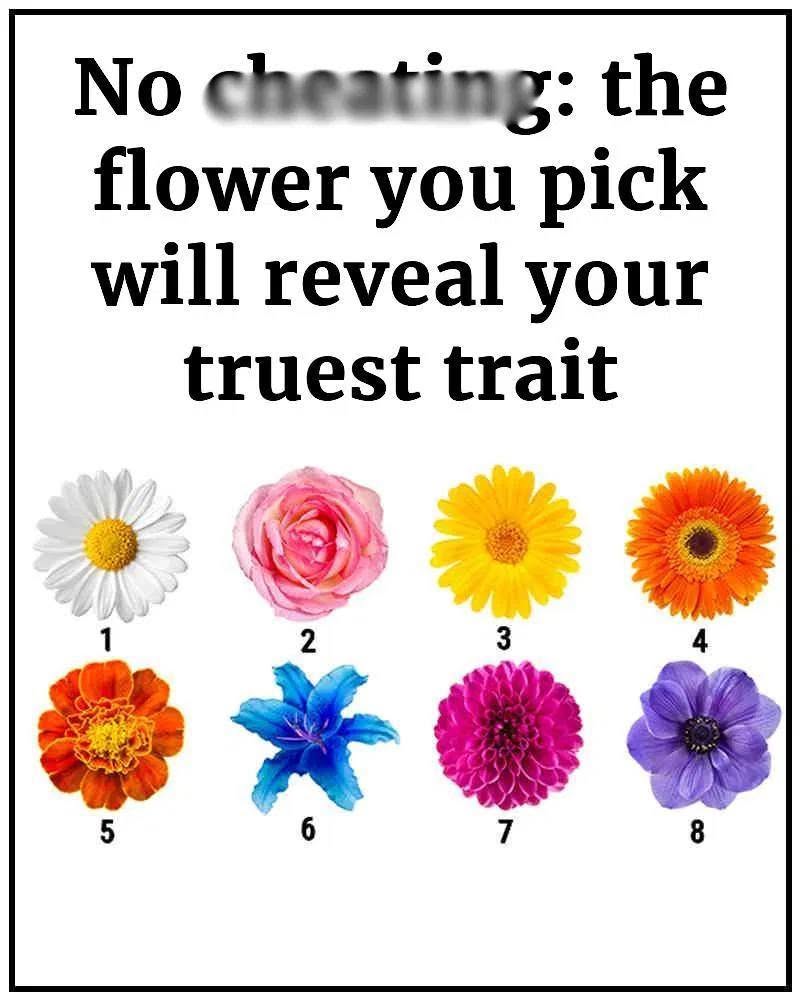
    Flowers are more than just decorations—they can reveal aspects of your personality! Your favorite bloom might offer insight into your character. Pick one and see what it says about you!

    1. Rose Personality – You value deep connections and tradition, striving for excellence in all areas of life. Elegant yet strong, you inspire those around you.
      Key traits: Passionate, romantic, sophisticated, caring, self-sufficient, confident.
    2. Daffodil Personality – A blend of creativity and ambition, you manage personal and professional life with ease. Social yet independent, you bring warmth and originality wherever you go.
      Key traits: Artistic, hardworking, organized, cheerful, sensitive, multitasker.
    3. Sunflower Personality – Radiating warmth and positivity, you light up any space. Naturally social and optimistic, you let go of negativity and uplift others.
      Key traits: Approachable, bubbly, friendly, comforting, pleasant, positive.
    4. Lily Personality – Graceful and respected, you take commitments seriously while maintaining a playful side. Your kindness and resilience make you a natural problem-solver.
      Key traits: Compassionate, calming, strong-willed, authoritative, nurturing, diplomatic.

    Which flower speaks to you the most? Let us know!

  • Charming Country Property on 3.1 Acres – 4 Bedrooms, 2 Bathrooms – Endless Potential

    Charming Country Property on 3.1 Acres – 4 Bedrooms, 2 Bathrooms – Endless Potential

    If you’ve been quietly dreaming of more space, this might be your moment. Not next year. Not “someday.” Now. A 4-bedroom home on 3.1 acres, priced under $140,000, sitting out in the country while buyers fight over tiny city lots. Land, privacy, and long-term potential in one package—but how long will it rema… Continues…

    Tucked away from crowded streets and noise, this 4-bedroom, 2-bath home on approximately 3.1 acres offers something buyers rarely find at this price: room to breathe and room to grow. Inside, the layout is practical and flexible, ready to adapt to family life, remote work, guests, or creative projects. The finishes are simple and serviceable, making it easy to live comfortably now while planning thoughtful updates over time instead of paying a premium for someone else’s choices.

    Outside, the land is the real difference-maker. Over three acres mean space for gardens, outdoor entertaining, pets, or future structures where permitted. It’s the kind of property you can truly grow into—financially and personally—as you renovate, improve, and shape it around your life. For first-time buyers, investors, families, or DIY enthusiasts, this isn’t just another listing; it’s a rare chance to build the lifestyle you actually want.

  • 5 Reasons Why Some Men Prefer

    5 Reasons Why Some Men Prefer

    Some men prefer slim women for a variety of reasons, often influenced by societal standards and personal lifestyle values.

    Slim women are frequently idealized in media, which portrays them as confident, elegant, and visually appealing.

    Their perceived agility and grace align with active lifestyles, making them attractive to men who enjoy physical activities like hiking or dancing.

    There’s also a common belief that slimness reflects better health, fitness, and lower risk of certain medical conditions.

    Although not always accurate, this perception can influence preferences—especially among health-conscious individuals.

    Additionally, some men associate slimness with fewer complications in pregnancy, believing it indicates fertility and physical readiness for childbirth.

    It’s important to note that beauty and health come in all shapes and sizes. While these views may explain certain preferences, true connection goes deeper than appearance. Attraction is personal and complex, shaped by both individual experiences and broader cultural influences.

  • Doctors reveal that eating onion causes

    Doctors reveal that eating onion causes

    Onions are far more than a simple garnish tossed onto a plate for flavor. For many people, they function as a quiet, daily dose ally for long term health. Used consistently and in moderate amounts, onions deliver a wide range of nutrients and protective compounds that work subtly in the background, supporting the body without demanding attention. They are inexpensive, widely available, and deeply woven into everyday cooking, which makes their benefits especially powerful over time.

    One of the most studied compounds in onions is quercetin, a flavonoid with strong antioxidant and anti inflammatory properties. Alongside fisetin, sulfur compounds, and vitamin C, quercetin helps neutralize free radicals that can damage cells and DNA. This cellular damage is linked to aging and the development of certain cancers, particularly those of the stomach and colon. By reducing oxidative stress, onions may help lower long term risk, not through dramatic intervention but through steady, repeated exposure.

    These same compounds play an important role in cardiovascular health. Quercetin and sulfur containing compounds support the flexibility of blood vessels, helping them relax and respond appropriately to changes in blood flow. This can contribute to healthier blood pressure and improved circulation. Reduced inflammation within blood vessels also lowers strain on the heart over time. For individuals concerned about heart health, onions act as a supportive food rather than a corrective one, reinforcing healthy systems already in place.

    Blood sugar regulation is another area where onions quietly contribute. Certain sulfur compounds and flavonoids can improve insulin sensitivity and slow the absorption of glucose after meals. While onions are not a treatment for diabetes, they can be a helpful companion when included as part of a balanced diet and proper medical care. Their effect is gentle but meaningful, especially when combined with fiber rich foods and adequate protein.

    The benefits of onions extend beyond metabolic health and into bone strength. Research has linked regular, moderate onion consumption with improved bone density and a reduced risk of osteoporosis, particularly in older adults. While the exact mechanisms are still being studied, antioxidants and sulfur compounds appear to influence bone remodeling, helping slow bone loss. This is especially relevant as bone density naturally declines with age, increasing the risk of fractures and loss of independence.

    Immune support is another understated advantage. Onions contain vitamin C, small amounts of zinc, and a range of flavonoids that help immune cells respond more efficiently to infections. Rather than overstimulating the immune system, these nutrients support balance, helping the body respond appropriately to viruses and bacteria. Regular onion intake has been associated with milder cold symptoms and improved respiratory resilience, especially during seasonal changes.

    Despite their benefits, moderation matters. Onions are potent foods, and more is not always better. Around thirty to fifty grams per day is enough to gain health benefits without stressing digestion. Excessive intake may irritate the stomach lining, particularly for people prone to ulcers, acid sensitivity, or digestive discomfort. Individuals with eye inflammation or low blood pressure should also be cautious, as onions can intensify these conditions in some cases.

    Listening to the body is essential. If discomfort, bloating, or unusual symptoms appear, reducing intake or seeking medical advice is wise. Onions are meant to support health, not challenge it. When used thoughtfully, they integrate seamlessly into meals, soups, salads, and cooked dishes without requiring special effort.

    What makes onions especially valuable is their consistency. They do not promise quick fixes or dramatic changes. Instead, they offer steady reinforcement to the body’s natural systems. Over months and years, this quiet support can add up to stronger immunity, steadier blood sugar, healthier bones, and reduced inflammation. In that sense, onions are not just an ingredient. They are a daily habit that gently works in favor of long term wellbeing.

  • Why Dogs Sniff Our Most Private Areas: Exploring the Science, Instincts, Emotional Intelligence, Communication Signals, Social Boundaries, and Deep Bonds Behind This Natural Canine Behavior, Revealing How Dogs Use Scent, Chemistry, and Sensory Awareness to Understand, Connect, and Interact With Humans in Ways That Often Surprise and Educate

    Why Dogs Sniff Our Most Private Areas: Exploring the Science, Instincts, Emotional Intelligence, Communication Signals, Social Boundaries, and Deep Bonds Behind This Natural Canine Behavior, Revealing How Dogs Use Scent, Chemistry, and Sensory Awareness to Understand, Connect, and Interact With Humans in Ways That Often Surprise and Educate

    Dogs experience the world through scent far more intensely than humans, and this difference shapes how they interact with us. While people rely on sight and language, dogs depend on smell to understand identity, emotion, and health. When a dog sniffs a person’s crotch, the behavior may feel awkward to humans, but for dogs it is a natural and informative greeting.

    This behavior is linked to apocrine glands, which release pheromones carrying biological details such as age, sex, stress, and emotional state. To a dog, these scents reveal more than any verbal introduction. The gesture is not inappropriate in the dog’s mind; it is simply their instinctive way of learning who someone is and how they are feeling.

    Even when we understand the science, the behavior can still feel surprising because humans have different ideas about privacy. Dogs, however, are guided by instinctive social patterns that help them assess safety and relationships. Sniffing serves as a key tool for mapping their social world and building trust.

    When owners prefer to discourage the behavior, gentle redirection works well. Teaching commands like “sit” or “leave it,” combined with positive reinforcement, helps dogs learn human boundaries. Their curiosity is rooted in connection, not misbehavior, and they adapt quickly when guided with consistency and patience.

    A dog’s powerful sense of smell allows it to detect emotional and physical changes in humans. Dogs can sense anxiety, illness, hormonal shifts, and mood changes long before we speak them aloud. The same nose that investigates out of curiosity also comforts us when we are sad or unwell.

    This remarkable sensitivity is why dogs excel as service animals and medical alert companions. They detect physiological changes that humans cannot perceive, responding with calmness, proximity, or play depending on what we need. Their behavior is rooted in interpreting scent-based information.

    Understanding this reframes behaviors humans find embarrassing. Dogs use scent to build memory, attachment, and familiarity. A sniff is a gesture of recognition and reassurance, not disrespect. It strengthens the emotional bond they share with their humans.

    Ultimately, sniffing is part of a dog’s instinctive communication system. Through scent, dogs perceive our emotional landscape and maintain a deep connection. What feels awkward to humans is, for dogs, an expression of attentiveness, trust, and affection.

  • Tongue Piercings Through History: From Ancient Maya and Aztec Rituals of Spiritual Devotion and Sacrifice to Modern Fashion and Self-Expression, Showing How Body Modification Evolved From Sacred Cultural Ceremony Into a Contemporary Symbol of Identity, Individuality, Rebellion, and Personal Style Across Changing Societies and Generations

    Tongue Piercings Through History: From Ancient Maya and Aztec Rituals of Spiritual Devotion and Sacrifice to Modern Fashion and Self-Expression, Showing How Body Modification Evolved From Sacred Cultural Ceremony Into a Contemporary Symbol of Identity, Individuality, Rebellion, and Personal Style Across Changing Societies and Generations

    Tongue piercings have a long history that extends far beyond modern fashion, rooted in ritual, spirituality, and cultural identity. In ancient societies like the Maya civilization and Aztec civilization, body modification held deep symbolic meaning.

    In these cultures, tongue piercing was sometimes part of sacred ceremonies. Blood was viewed as a powerful offering, and controlled pain was believed to connect humans with the divine.

    The tongue’s role in speech gave it special importance. Piercing it symbolized offering one’s voice, identity, and communication to higher powers.

    These rituals required preparation and were performed in structured settings. Participants were often respected individuals, and the act reflected devotion, discipline, and spiritual commitment.

    Over time, such practices declined due to cultural shifts, religious changes, and colonial influence. Body piercing did not disappear but became less visible in mainstream society.

    In the twentieth century, body modification re-emerged with new meaning. It became linked to individuality, self-expression, and personal freedom rather than collective spiritual practice.

    By the late twentieth century, tongue piercings gained popularity in alternative subcultures. They symbolized identity and independence, supported by safer techniques and growing social acceptance.

    Today, tongue piercings are chosen for many personal reasons, from aesthetics to self-expression. They reflect how body modification has evolved, blending historical roots with modern identity and choice.

  • I mixed a cup of real mayonnaise into my dry brownie mix instead of vegetable oil. 35 minutes later, this is what happened

    I mixed a cup of real mayonnaise into my dry brownie mix instead of vegetable oil. 35 minutes later, this is what happened

    Baking is often seen as a precise science, with a delicate balance of ingredients leading to delicious outcomes. However, sometimes the most surprising discoveries come from veering off the beaten path and trying something unconventional. This was precisely the case when I decided to experiment with a traditional brownie mix by replacing the recommended vegetable oil with mayonnaise.
    Mayonnaise in a brownie mix might sound unusual, but it sparked my curiosity. After all, mayonnaise is essentially a blend of oil and eggs, both of which are common baking ingredients. This experiment was driven by a mix of necessity and adventurous spirit in the kitchen. Here’s what happened when I took a leap of faith and added a cup of mayonnaise to my dry brownie mix.
    1. Why I Reached For Mayonnaise Instead Of Vegetable Oil

    Here’s a 500-word article version you can use:

    I Mixed Real Mayonnaise Into My Brownie Mix Instead of Vegetable Oil — 35 Minutes Later, I Couldn’t Believe the Result

    Baking disasters happen to everyone. Sometimes you forget an ingredient, sometimes you use the wrong measurement, and occasionally you make a mistake so strange that you’re convinced you’ve ruined everything before the pan even reaches the oven. That’s exactly what happened when I accidentally mixed an entire cup of real mayonnaise into my brownie batter instead of vegetable oil.

    At first, I didn’t even realize what I had done. I grabbed a jar from the refrigerator, measured out what I thought was oil preparation for the recipe, and mixed it directly into the dry brownie mix. It wasn’t until I noticed the thick texture of the batter that I froze and looked at the jar again.

    Mayonnaise.


    Not oil.

    Not butter.

    A full cup of real mayonnaise.

    My first reaction was panic. Brownies are supposed to be rich and chocolatey, not taste like a sandwich spread. I seriously considered throwing the whole bowl away and starting over. But curiosity won. Since mayonnaise is mostly made from eggs and oil anyway, I figured maybe — just maybe — the brownies would survive.

    So I poured the batter into the pan and baked it exactly as the box instructed.

    For the next 35 minutes, my kitchen smelled surprisingly normal. Actually, it smelled amazing. Rich chocolate filled the room, and there wasn’t even the slightest hint of mayonnaise in the air. Still, I expected disaster when I opened the oven.

    But what I saw completely shocked me.

    The brownies looked perfect.

    The top had that beautiful shiny, crackly layer that brownie lovers chase after. The edges were slightly crisp while the center stayed soft and fudgy. They looked even better than brownies I had made correctly in the past.

    Of course, appearance can be deceiving, so the real test came when I took the first bite.

    They were incredible.

    Not just “good for a mistake” incredible — genuinely some of the best brownies I had ever made. The texture was unbelievably moist, dense, and rich without feeling greasy. Somehow, the mayonnaise made them softer and more decadent than regular brownies.

    Even more surprising, nobody could tell there was mayonnaise inside. I let a few friends and family members try them without explaining the secret ingredient. Everyone kept asking what made them taste so much better than usual. When I finally revealed the truth, most of them thought I was joking.

    After doing some research, I discovered that mayonnaise is actually a secret baking trick used by many experienced bakers. Since it contains both eggs and oil, it can replace ingredients that normally keep cakes and brownies moist. Some people even intentionally add mayonnaise to chocolate cakes for extra richness.

    So while my accidental swap felt like a complete disaster at first, it ended up teaching me one of the best baking hacks I’ve ever discovered.

    Now, believe it or not, I sometimes add mayonnaise to brownie mix on purpose.

    Just maybe not a full cup next time.

  • The Root Said to Attack Tumors and Stop Cancer in Two Days

    The Root Said to Attack Tumors and Stop Cancer in Two Days

    Raw cassava, the root forgotten in the kitchen corner, enters this conversation with a reputation that makes many people stop their finger mid-scroll: it has been placed as a direct enemy of tumors, cancer, and whatever grows in silence inside the body. The detail almost nobody notices is that the effect isn’t in any “miracle” — it’s in what this root forces inside, where inflammation, oxidation, and cellular wear usually throw their party.

    The body doesn’t turn into a minefield overnight. First comes the tiredness that doesn’t match the routine, then the feeling of weight, then that discomfort you try to sweep under the rug because “tomorrow will be better.” But tomorrow keeps repeating, and the internal terrain keeps getting friendlier to biological mess.

    What the billion-dollar health machine rarely throws in your face is simple: the body already carries the blueprint for cleaning, defense, and repair. But that project jams when tissues get choked by residue, inflammation, and wrong signals circulating like smoke in a windowless room.

    Inside the organism, the comparison is brutal: think of an oven filter coated in old grease. The air even tries to pass, but it comes out heavy, dirty, jammed. That’s how many tissues work when they’re loaded with inflammatory processes and accumulated metabolic garbage.

    The root enters as a set of molecular sweeping compounds that push the system toward a deep cleanup. It doesn’t “promise a cure”; it switches on an environment less hospitable to disordered growth, while helping the body stop swimming in chemical dirt.

    In practice, that changes what the person feels day to day. The first sign is usually that inner weight going down, as if the body stopped fighting itself all the time. Then the energy to get up, walk, and face the morning stops feeling yanked out by force.

    That’s exactly why nobody made a stadium ad for a root. There’s no logo, no absurd margin, no million-dollar campaign on top of something that grows in the ground and doesn’t ask permission to exist.

    And that’s where many people get annoyed: the cheapest fix tends to be the least advertised. Not because it’s weak, but because it doesn’t feed the gears that profit from complicated solutions and shiny packaging.

    When the Body Stops Carrying Smoke Inside

    The second effect appears where most least expect it: in the terrain where the body tries to contain the mess before it turns into something bigger. When that environment gets less acidic and less inflamed, cells stop working as if surrounded by a false alarm all day long.

    It’s like trying to sleep next to a construction site with a jackhammer running. The organism doesn’t rest, doesn’t organize, doesn’t repair right. When the internal noise drops, repair gains space — and that changes how the person wakes up, moves, and even tolerates their own day.

    For those who live in fear of hearing the word cancer, the relief doesn’t come from fantasy. It comes from the feeling that the body left “constant threat” mode and started responding with more order, more cleanliness, and less chaos.

    After some consistency, many people notice less swelling, less strange weight after meals, and less of that impression of always “carrying something” inside. The body gets less noisy, less opaque, less sabotaged.

    When Tissue Stops Looking Like Abandoned Ground

    Now look at the skin, the muscles, the circulation, and the tissues that depend on a clean flow to work. When the system is clogged with inflammation, everything works like old plumbing: pressure rises, the passage narrows, the response slows.

    This root helps push the organism toward an internal cleaning bath, as if the pipes stopped carrying rust and mud. What used to look jammed starts responding with more vitality, more color, and less of that premature wear feeling.

    That’s why some people notice their body less “heavy” on waking, their head less foggy, and a disposition that doesn’t depend on a mental push. It’s not internet fantasy; it’s the body coming out of chemical suffocation and recovering room to function.

    At night, instead of lying down feeling your whole body is in containment mode, the person feels less internal resistance. In the morning, the mirror stops giving back that air of exhaustion stuck to the face.

    The most irritating side of this story is that nobody needs an expensive formula to start shifting this scene. What’s missing, most of the time, isn’t technology. It’s the raw ingredient, the raw material the body recognizes without needing a laboratory package.

    The Detail That Knocks the Effect Down Before It Even Starts

    A wrong preparation kills this root’s strength before it reaches where it needs to go. Cooking it too much, combining it the wrong way, or turning everything into a rushed ritual makes the body receive a weak version of what could be a powerful help.

    It’s like washing a car with a clogged hose and expecting showroom shine. The gesture exists, but the impact dies halfway.

    The next step changes everything: there’s a way to combine this root with another pantry ally that opens the passage for the organism to take advantage of much more than most imagine.

    This article is for informational purposes only and does not replace professional medical advice. Consult your trusted doctor for personalized guidance.