Category: Uncategorized

  • Mary Brought a 710 Drawing to the Buick Parts Counter

    Mary Brought a 710 Drawing to the Buick Parts Counter

    The cap was gone from the garage shelf, and Mary could not put it back on the Buick. She held one end of a box while her brother Tom lifted the other.

    “Move it toward the door,” she said. “I want to see behind it.”

    Tom set the box down beside the lawn mower. The shelf above it was empty except for a pale ring of dust and a bent nail.

    “It was right here when I took it off,” Mary said.

    She had removed the cap before checking the engine, then set it on the shelf. Now the hood stood open, and she had looked everywhere she could think to look.

    Tom picked up the bent nail and laid it on the workbench. “I moved something off that shelf.”

    Mary turned toward him. “The cap?”

    “I can’t say for certain.” He put a hand on the box they had shifted. “I was making room for the paint cans.”

    “When?”

    “Yesterday afternoon. You asked me to get those cans off the garage floor.”

    Mary had asked him. He had come by with his old work gloves and spent an hour clearing room for the car. She had thanked him with a slice of apple pie.

    She looked at the empty shelf again. “Did you put it on the bench?”

    Tom checked around a tin of screws and a folded rag. “I can look through the boxes.”

    Mary opened the first one. It held a string of Christmas lights and a paper star with one bent point. She closed it and moved to the next, which contained old garden gloves and a small clay pot.

    Tom lifted the lid of a plastic tub. “Not in here.”

    “Would you have taken it into the house?”

    “I don’t think so. I was working out here.”

    A car passed on the street outside. Mary glanced at the open hood and then at her watch. It was nearly twenty minutes to eight, and Ruth would be coming across the driveway with the tablecloths.

    “I promised I’d take her tomorrow,” Mary said. “She has to open the center.”

    “We’ve got today to find it.”

    “And if we don’t?”

    “I can take you to the parts store.”

    Mary pressed the box flaps flat. She had planned to spend the morning putting out cups and arranging the breakfast tables, not describing a missing cap to someone across a counter.

    Tom lowered the Buick’s hood without latching it. “Let’s leave it like that until we know what we’re doing.”

    Ruth came across the driveway carrying two folded tablecloths against her chest. Mary met her at the trunk and lifted the lid while Tom went back into the garage.

    “I brought the white ones,” Ruth said. “The blue cloth has a spot that won’t come out.”

    “The white ones will be fine.” Mary took the top cloth and laid it in the trunk. “Are the tickets ready?”

    “In my purse. I counted them twice.”

    Ruth put down her cloth and reached into her purse. First she brought out a small tin of mints, then a red plastic ring with a key on it.“This is for the center,” she said. “I need to open the door at eight tomorrow morning.”

  • MILLIONAIRE RECEIVED A PHONE CALL FROM HIS DEAD WIFE — THEN SOMETHING BEHIND THE LOCKED DOOR WHISPERED HIS NAME

    MILLIONAIRE RECEIVED A PHONE CALL FROM HIS DEAD WIFE — THEN SOMETHING BEHIND THE LOCKED DOOR WHISPERED HIS NAME

    My Grandma Never Let Anyone Open This Kitchen Drawer — After She Passed Away, We Finally Discovered Why

    For as long as I could remember, my grandmother had one strict rule in her house: Nobody was allowed to open the top drawer in her kitchen.

    It didn’t matter whether you were a guest, one of her children, or even her favorite grandchild. That drawer was completely off-limits.

    Whenever someone asked what was inside, Grandma would smile gently and say, “Some things are better left alone, sweetheart.”

    We always assumed she kept important documents, old jewelry, or perhaps a few sentimental belongings inside.

    But after she passed away earlier this month, our family finally decided to open it.

    What we discovered left everyone speechless.

    The Drawer That Had Been Locked for Decades

    My grandmother lived in the same little house for nearly 50 years.

    Her kitchen was the heart of our family. Every Sunday, we gathered around her wooden table for homemade meals, laughter, and stories about the past.

    Yet that mysterious top drawer remained untouched.

    Even my mother, who had grown up in the house, admitted she had never seen what was inside.

    Grandma always carried the tiny brass key on a chain around her neck.

    When she died peacefully at 87, my mother found the key among her personal belongings.

    And that’s when our curiosity became impossible to ignore.

    What We Found Inside

    The drawer opened with a soft creak.

    At first, nothing seemed unusual.

    There were yellowed recipes, old photographs, several handwritten letters, and a small wooden box wrapped in a faded blue ribbon.

    But beneath everything was something nobody recognized.

    A tiny silver object, no bigger than a matchbox, covered in strange markings.

    It was surprisingly heavy, with a small circular opening on one side and what appeared to be a number engraved underneath.

    “Does anyone know what this is?” my mother whispered.

    Nobody answered.

    My uncle suggested it might be an antique tool. My sister wondered whether it was part of an old sewing machine.

    But the most surprising discovery was still waiting inside the wooden box.

    The Letter That Changed Everything

    Inside was a folded piece of paper with my grandmother’s handwriting.

    It read:

    “If you’re reading this, then I am no longer here to explain everything myself. This belonged to someone who changed my life forever. I promised I would keep it safe until the right time.”

    Underneath the letter was a black-and-white photograph showing Grandma as a young woman standing beside a man none of us recognized.

    On the back were three words:

    “Summer, 1958. Remember.”

    My mother began crying.

    Not because she recognized the man, but because she realized there was an entire chapter of her mother’s life we had never known about.

    A Family Mystery We Still Can’t Explain

    We examined the silver object carefully but couldn’t identify its purpose.

    There was no manufacturer’s name, no instructions, and nothing else to explain where it had come from.

    We considered taking it to an antique specialist, hoping someone might recognize its unusual shape.

    For now, the object remains safely stored alongside Grandma’s letters.

    And although we may never uncover the complete story, one thing has become clear.

    The drawer wasn’t necessarily hiding something valuable in money.

    It was protecting a memory.

    The Unexpected Lesson Grandma Left Behind

    Sometimes, the people closest to us carry stories we never think to ask about.

    We assume we know everything about our parents and grandparents, forgetting they lived entire lives before we came along.

    Grandma’s mysterious drawer reminded our family to treasure those stories while we still have the opportunity to hear them.

    And perhaps her greatest secret wasn’t the silver object itself, but the promise she had kept for so many years.

    Would you recognize a strange silver object like this if you found it in an old family drawer?

    Editor’s note: This is a fictional mystery story inspired by the social media post. The object and letter are imagined details.

  • My Husband Said He Was Stuck At Work On The Night Of Our Anniversary Dinner

    My Husband Said He Was Stuck At Work On The Night Of Our Anniversary Dinner

    Renata revealed that Damien had secretly transferred nearly $1.4 million from his firm through accounts opened in his wife’s name over fourteen months. The narrator was horrified to discover forged signatures on documents she had never seen. As officers arrested Damien at a restaurant, forensic accountant Julian Marsh revealed another shocking discovery: a $2 million life insurance policy on her life, with Damien’s pregnant girlfriend, Tessa, named as the beneficiary.

    Tessa had believed Damien was divorced, wealthy, and successful. He had rented her a beautiful apartment, claiming it was paid for by his bonuses. When police showed her the insurance policy, she collapsed into the booth, asked who the narrator was, and began crying. Realizing she had also been deceived, Tessa removed her engagement ring and placed it beside her champagne.

    Julian explained that he had investigated Damien after auditors discovered missing company funds. He had followed him to the restaurant because the firm’s lawyers planned to confront him where evidence could not easily be destroyed. Investigators later uncovered Damien’s motive: gambling debts had left him desperate. He intended to blame his embezzlement on his wife, divorce her before the audit concluded, and escape with Tessa and the stolen money. The insurance policy provided another sinister safeguard.

    Damien was charged with embezzlement, forgery, and insurance fraud, and the judge denied him bail after reviewing the policy. The narrator’s accounts were closed, and the court completely cleared her name. She filed for divorce a week later, finally able to enjoy peace without constantly questioning her husband’s honesty. Although rebuilding her life took time, she began making decisions independently and rediscovering her freedom.

    That spring, the narrator met Tessa for coffee. Both women shared their experiences of believing Damien’s promises and trusting the futures he had invented for them. They recognized how convincingly confidence could conceal cruelty. When Tessa’s daughter was born in June, the narrator sent flowers and a thoughtful note wishing them health and peace. Tessa thanked her, and although they never became close friends, they shared an understanding shaped by their painful experiences.

    Julian continued sending the narrator an annual card, reminding her that the truth had eventually emerged. Each year on what would have been her wedding anniversary, she ordered sea bass and enjoyed her meal alone. Instead of mourning the marriage she had believed in, she celebrated her survival and newfound independence. After Damien’s betrayal nearly destroyed her future, she finally understood her worth and found the courage to walk away.

  • Michael Signed the Hospital Consent Form While I Was Unconscious

    Michael Signed the Hospital Consent Form While I Was Unconscious

    The bright shape on the ultrasound screen looked like a tiny bent staple. Dr. Evans moved the pointer toward it, then stopped.

    “What is that?” I asked.

    She adjusted the image and measured an area near my tube. The room was cool, and I held the sheet against my waist while she studied the screen.

    “I expected to see a routine finding,” she said. “That is not what this looks like.”

    “What does it look like?”

    “A surgical clip.”

    I turned my head toward her. “A clip from what?”

    “I can tell you what I see, but not yet why it is there.”

    I had come in for a routine ultrasound, expecting to get dressed afterward and pay my four dollars for parking. Now I was trying to remember whether a doctor had ever mentioned leaving a clip inside me.

    “Could it belong to somebody else’s image?” I asked.

    Dr. Evans checked the name and date at the top of the screen. “This is yours, Helen.”

    I looked at the shape again. I had been treated at this hospital in 2008, but no one had told me about a clip. I wanted to know what had been done to me then, and whether the hospital would take responsibility if it had made a mistake.

    “Was it there the last time I had an ultrasound?”

    “I would need to look at the earlier images. It might not have been visible, depending on what was being examined.”

    She took another measurement and printed an image. The machine made a soft grinding noise as the paper came out.

    “Is it causing a problem?” I asked.

    “I don’t see anything here that tells me it is. The more useful question is why it was placed.”

    She handed me a towel and stepped back while I wiped the gel from my skin. I folded the towel over the damp place and kept it in my lap.

    “I had emergency treatment here in 2008,” I said. “Could it be from that?”

    “It could. I don’t have enough of that record in front of me to say.”

    Dr. Evans pointed to the image on the screen, then to the printed copy. “I’ll review your history with you next door. Take your time getting dressed.”

    I picked up the printout before she left. The bright shape was even smaller on paper.

    At 9:35, Dr. Evans opened my chart in the exam room while I searched my purse for an old medication list. I found a grocery coupon, two cough drops, and a folded list with a pharmacy number on the back.

    “This may be older than I thought,” I said.

    She took it and checked the date. “It will still help us compare what you remember.”

    I sat on the chair beside her desk rather than the exam table. She laid the ultrasound printout between us and opened the section of my chart with my hospital history.

    “Was the 2008 admission your most recent hospital stay?” she asked.

    “Yes. Michael brought me here. I remember being taken in, and then I remember waking up.”

    “Do you recall anyone discussing a procedure afterward?”

    “I remember being told what to do when I got home. I don’t remember anyone saying there was a clip.”

    Dr. Evans made a note. I watched the tip of her pen move across the page.

    “Does a clip near my tube mean I had fertility surgery?” I asked.

    “Not from the image alone. Clips can be used for different reasons, and this image doesn’t tell us what procedure was performed.”

    “Would it show up in the hospital record?”

    “It should be documented somewhere in the admission record. I’d like you to request the full record from 2008.”

    I put the medication list back in my purse. “Michael might remember more than I do.”

    “He may. But get the record before you confront anyone about what the clip means. We need facts first.”

    I ran my finger along the edge of the printout. “You think I would confront him?”

    “I think you have a question neither of us can answer yet.”

    She capped her pen and gave me the records office number. I tucked the printout into my purse without folding it.

    “Can I ask for the record today?” I said.

    “The records office is open. They can tell you how to submit the request.”

    I stood up and picked up my coat. At the door I turned back.

    “If it was needed for the emergency, would I have been told?”

    “That depends on what happened and what was discussed afterward. The record is where we should start.”

    At 10:20, a woman at the records counter was holding a phone against one ear and sorting release forms with her free hand. Her badge said Carol.

    She finished the call and set the phone down. “I’m covering while we’re short at the counter. What can I help you with?”

    “I need my hospital record from 2008. Can I request it today?”

    “You can submit the request today. Older records may have to come from an archive.”

    She slid a release form across the counter. I filled in my name and date of birth, then stopped at the line asking for dates of treatment.

    “I don’t have the day with me,” I said. “I know it was in 2008.”

    “Put the year down. We’ll use the other information to locate the admission.”

    “Will the whole record be sent to me?”

    “Request the full admission record here.” She pointed to a box near the bottom. “The records staff will tell you if they need anything else.”

    I checked the box and wrote my address. Carol placed her reading glasses beside a small notebook while I signed.

    “My husband handled the bills after I came home,” I said. “He may have a date in our insurance papers.”

    “If you find it, you can call and add it to the request.”

    I looked at the blank space where the exact date would have gone. I could have taken the form home, asked Michael to find the papers, and brought it back. Instead, I pushed it across the counter.

    Carol checked my identification and wrote an archive request address on a slip of paper. “Keep this with your copy. If you need to follow up, that’s where the request goes.”

    “Does the archive have the same records you have here?”

    “Some older material is stored separately. The records staff will search under your admission.”

    She stamped my copy and handed it back. The ink marked the corner of the page, just above my signature.

    “How long will it take?” I asked.

    “It depends on what has to be retrieved. The office will contact you if there’s a problem.”

    I folded the receipt once and put it in my purse with the ultrasound printout. Carol held the door to the counter open for a man carrying a stack of charts, then returned to the phone.

    Outside the records office, I checked that I still had the parking ticket. It was tucked behind my driver’s license. The slip with the archive address was caught against it, so I put that back with the receipt.

    At 6:15, Michael came into the kitchen carrying two grocery bags. He set them on the counter while I opened the green accordion file at the table.

    “They were out of the bread you like,” he said. “I got the one with the seeds. You can pick them off and leave them for me.”

    “You’ll get half a loaf that way.”

    He took a carton of milk from the bag and opened the refrigerator. The grocery list was still held to the door by the green magnet, with eggs circled twice.

  • Which Glass Has More Water: Your Answer Reveals If You’re A Giver Or A Taker

    Which Glass Has More Water: Your Answer Reveals If You’re A Giver Or A Taker

    Take a good look at the image: four identical glasses labeled A, B, C, and D. Each one is filled to a similar level—but there’s a twist. Inside each glass sits a different object: a paperclip, a baseball, an eraser, and a wristwatch.

    At first glance, it seems like a simple question: Which glass has more water?
    But your instinctive answer might reveal something surprisingly deeper about how you relate to others.


    🧠 The Hidden Logic

    Here’s the key: when an object is placed in water, it displaces some of that water. The bigger the object, the more space it takes up—meaning less actual water fits in the glass.

    So, the glass with the smallest object will contain the most water.

    • Glass A: Paperclip (smallest object)
    • Glass B: Baseball (largest object)
    • Glass C: Eraser (medium)
    • Glass D: Watch (medium-large)

    👉 Correct answer: Glass A has the most water.


    But this isn’t just about physics—it’s about perception.

  • Remembering the Actor Behind One of Television’s Most Beloved Characters

    Remembering the Actor Behind One of Television’s Most Beloved Characters

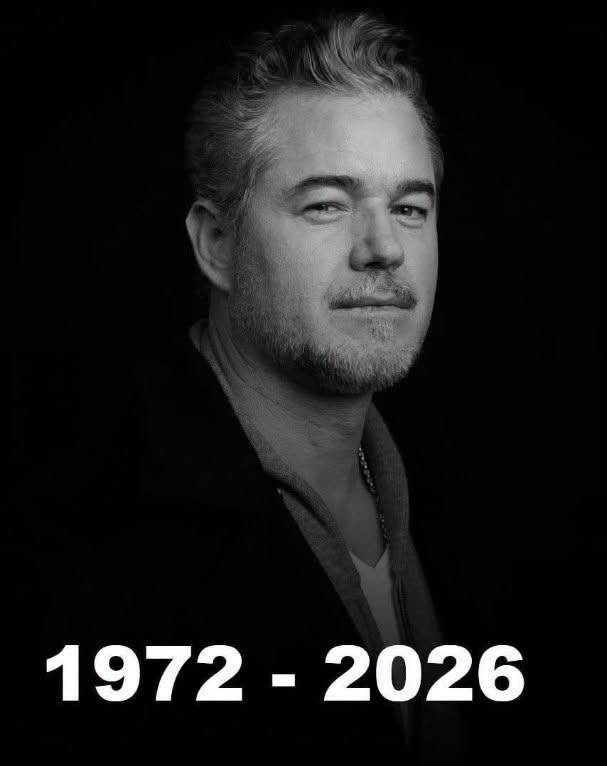
    The man who defined charm on Grey’s Anatomy, who reinvented himself on The Last Ship and stunned a new generation in Euphoria, suddenly stepped forward with a diagnosis that changed everything. As Eric Dane revealed his ALS battle in 2025, the story stopped being just about stardom—and became about survi… Continues…

    Eric Dane’s journey reads like a quiet revolution in plain sight. From early guest roles to the global phenomenon of Dr. Mark “McSteamy” Sloan, he moved through television with unforced charisma and emotional precision. Grey’s Anatomy made him a star, but it never trapped him. On The Last Ship, he traded flirtation for command, showing steel beneath the charm. In Euphoria, he went even deeper, exposing the fractures and contradictions inside a man who’d spent a lifetime hiding from himself.

    His decision to speak publicly about his ALS diagnosis reframed his career as something larger than performance. By facing a devastating illness in the open, he challenged the industry’s obsession with invincibility and reminded audiences that vulnerability can be its own kind of courage. Colleagues praised his professionalism; fans clung to his honesty. Long after the final credits roll, his work—and the dignity with which he met his challenges—continues to invite empathy, reflection, and respect.

  • She was the most beautiful girl in the entire USA, turning heads wherever she went, radiating charm and grace, and leaving everyone around her in awe of her striking presence and unforgettable, captivating beauty.

    She was the most beautiful girl in the entire USA, turning heads wherever she went, radiating charm and grace, and leaving everyone around her in awe of her striking presence and unforgettable, captivating beauty.

    Heather Locklear became one of television’s most recognizable stars, captivating audiences with her beauty, charisma, and memorable performances. Born in Los Angeles on September 25, 1961, she grew up in a family connected to Hollywood and military life, but her childhood was not as perfect as it appeared. Despite her attractive appearance, she struggled with acne, insecurity, and social rejection during adolescence. She also experienced painful family tragedies, including the suicides of an uncle and a cousin. These early experiences exposed her to grief and vulnerability long before she became famous.

    Locklear’s career took off in the 1980s when she portrayed Sammy Jo Dean Carrington on Dynasty. Her success grew even further when she joined Melrose Place as Amanda Woodward, a confident and often ruthless character who became one of the defining figures of 1990s television. Her ability to bring glamour and emotional depth to her roles earned her widespread admiration. Nicknamed “The Merch” for her ability to help revive television ratings, she became a major entertainment personality. However, her private life attracted almost as much attention as her acting, particularly her relationships with celebrities and musicians.

    Her marriage to Mötley Crüe drummer Tommy Lee was a highly publicized relationship marked by intense chemistry and personal difficulties. The pressures of celebrity life and the rock-and-roll lifestyle eventually contributed to their divorce in 1993. Locklear later found what appeared to be greater stability with Bon Jovi guitarist Richie Sambora. They married and welcomed their daughter, Ava, in 1997, creating the image of a happy Hollywood family. However, their relationship eventually ended in 2006 after twelve years together, reportedly because of infidelity and conflicting life goals.

    Following the breakdown of her second marriage, Locklear experienced increasingly difficult personal challenges involving mental health and substance use. Reports of hospitalizations, legal troubles, and unpredictable behavior contrasted sharply with her polished television image. A widely publicized emergency call in 2008 raised serious concerns about her well-being. She struggled with depression and anxiety while facing relentless media attention. Her experiences revealed how fame and public scrutiny could intensify private suffering, making her personal recovery especially difficult.

    The following years brought further arrests, hospital visits, and periods of instability, although they also included efforts toward recovery. Support from family and former husband Richie Sambora, who reportedly helped fund treatment, played an important role during difficult periods. Locklear experienced setbacks and relapses, but also moments of sobriety and renewed stability. Her journey demonstrated that recovery is rarely straightforward and that progress can involve repeated challenges. Despite sensationalized headlines, her story reflected the ongoing struggle of a person trying to regain control of her health and life.

    Today, Heather Locklear’s legacy extends beyond her television success and glamorous public image. Her career on Dynasty and Melrose Place secured her place in entertainment history, while her personal experiences have highlighted the importance of compassion toward people facing mental health and addiction challenges. Her journey has included remarkable achievements, painful losses, and difficult setbacks, but also continued efforts to rebuild. Ultimately, her story is a reminder that fame and outward beauty cannot protect anyone from hardship, and that genuine strength is often found in the determination to keep moving forward.

  • Smart Storage For This Everyday Favorite

    Smart Storage For This Everyday Favorite

    Cooked rice is not like dry rice in the pantry. Once it has been prepared, it should be cooled quickly and placed in a shallow, airtight container, then refrigerated within two hours. That simple habit helps slow the growth of Bacillus cereus, a bacteria that can survive cooking and multiply if rice is left out too long.

    For the safest leftovers, keep cooked rice in the fridge for about four to six days, or freeze it in smaller portions for longer storage. When reheating, add a splash of water to bring back moisture and heat it thoroughly. The key lesson is simple: don’t trust appearance alone. Rice can look harmless and still be unsafe.

  • twelve dollar plastic toy that stopped the worst man on the morning train

    twelve dollar plastic toy that stopped the worst man on the morning train

    He moved one trash can and then took the rest of the bench, as if the station belonged to him. By the time the train doors closed, he had already turned a crowded morning into a lesson in power. But the worst part was not the seat. It was the way everyone let him do it… Continues…

    I watched him claim space the way some men claim air, with a briefcase, a voice, and the certainty that no one would challenge him. On the train, he pushed a mother and child aside without even looking up, and the silence around him felt heavier than the winter cold. Then he sat across from me, opened his knees, and smiled like he had already won.

    For eleven years I had kept my routine small and quiet: coffee, four pages, the same seat, the same train. That morning, something in me finally shifted. I saw how easily one person’s selfishness can spread, how quickly strangers shrink when no one speaks. And I understood that decency is not passive. Sometimes it is a choice made in public, in a voice that does not shake.

  • Magic Johnson Shares a Heartwarming Family Photo Leaving Fans Deeply Moved

    Magic Johnson Shares a Heartwarming Family Photo Leaving Fans Deeply Moved

    Magic Johnson has spent a lifetime under the glare of fame, but this time it was a quiet family photo that set the internet buzzing. No trophy, no arena, no headline-grabbing announcement—just a moment that felt deeply personal. Fans looked closer, and what they saw sparked an outpouring of emotion. The image said more than words ever could… Continues…

    For decades, Johnson has been known for his brilliance on the court and his success beyond it, but this glimpse into his private world reminded people of something simpler. Behind the legend is a husband, father, and family man who clearly treasures time with the people closest to him. That authenticity is what made the photo resonate so strongly.

    The reaction was immediate and heartfelt. Supporters praised the warmth of the moment and the reminder that even global icons cherish the same bonds that hold ordinary families together. In a world full of noise, this small snapshot stood out because it felt real, tender, and unmistakably human.