Author: xpress xpress

  • What Does ‘SSSS’ on Your Boarding Pass Mean? (And How to Stay Calm When You See It)

    What Does ‘SSSS’ on Your Boarding Pass Mean? (And How to Stay Calm When You See It)

    Printed your boarding pass.

    Grabbed your coffee.

    And then you see it—right there at the bottom of the barcode:

    SSSS

    Four little letters that feel like a punch to the gut.

    No warning.

    No explanation.

    Just… extra screening.

    Suddenly, your stress level skyrockets.

    “What did I do?”

    “Am I on a watchlist?”

    “Will I miss my flight?”

    Take a breath.

    Let’s demystify SSSS—what it really means, why it happens, and how to get through security with calm (and maybe even a little grace).

    What “SSSS” Stands For

    SSSS = Secondary Security Screening Selection

    It’s not a personal accusation.

    It’s not proof you’re suspicious.

    It’s not even about you, necessarily.

    It’s a random or algorithm-driven flag used by the TSA (Transportation Security Administration) as part of the Secure Flight program—a system designed to:

    Enhance aviation security

    Identify potential threats before boarding

    Match passenger data against government watchlists and trusted traveler databases

    If your name matches certain patterns—or is randomly selected—you get the SSSS tag, which means:

    You’ll undergo additional screening at the checkpoint.

    What Happens During SSSS Screening?

    When you see “SSSS” on your boarding pass, here’s what to expect:

    Extra Pat-Down or Swabbing

    TSA agents will swab your hands, luggage, and sometimes clothing for explosive residue.

    You may be patted down more thoroughly than usual.

    Baggage Inspection

    Your carry-on will be hand-checked—even if it went through the X-ray machine.

    Agents may ask you to open compartments or remove electronics.

    More Questions

    Simple ones like: “Is this all your luggage?” or “Have you packed this bag yourself?”

    Not an interrogation—just verification.

    Longer Wait Time

    Add 5–15 minutes to your security process.

    Best to arrive extra early (at least 2 hours before domestic flights).

    Good news: This screening happens before the regular checkpoint—so once you’re through, you can proceed normally.

    Why Did I Get Flagged? (Spoiler: It’s Usually Random)

    The truth?

    You likely did nothing wrong.

    Common reasons for SSSS selection:

    Random selection —part of routine security rotation

    Name similarity —common names that match watchlist entries (e.g., “Ahmed Khan”)

    Last-minute booking —especially one-way or international flights

    Flying from high-risk regions —even if you’re a U.S. citizen

    Inconsistent travel patterns —if you rarely fly or visit certain countries

    It does not mean you’re banned, blacklisted, or under investigation.

    Think of it like a “security lottery”—you just got picked.

    Pro Tips If You Have SSSS on Your Boarding Pass

    Arrive

    90–120 minutes early

    Extra screening takes time—don’t rush!

    Wear easy-to-remove shoes & minimal metal

    Speeds up the process Keep liquids in a clear quart-sized bag

    Ready for inspection

    Stay polite and cooperative

    Agents are doing their job—kindness goes far

    Don’t panic or argue

    It’s temporary—and very common

    Fun fact: Frequent flyers, celebrities, and even TSA employees sometimes get SSSS. It’s not personal.

    Final Thought: Security Isn’t Punishment—It’s Protection

    Yes, being flagged is stressful.

    Yes, it feels unfair.

    But remember:

    This system exists so that everyone on your flight feels safer.

    And while the process isn’t perfect, it’s designed to cast a wide net—not to target individuals.

    So when you see “SSSS”?

    Don’t dread it.

    Prepare for it.

    Because in 15 minutes, you’ll be past security—just like everyone else.

    And hey…

    Maybe you’ll even earn a quiet “Thanks for your patience” from a TSA agent.

    (They notice calm travelers.)

  • They Mocked My Old Shawl Until They Learned Its Hidden Secret

    They Mocked My Old Shawl Until They Learned Its Hidden Secret

    The reading of my mother’s will left me stunned. While my relatives inherited the house, car, savings, and valuable possessions, I received only a worn, faded shawl. Its edges were damaged, and it looked practically worthless. My sister, Lila, laughed and said the gift proved how little our mother had valued me. I said nothing. I simply took the shawl home, still trying to understand why Mom had chosen it for me.

    That evening, I held the shawl in my hands and noticed a faint lavender scent. Suddenly, memories of my mother came rushing back. I remembered how devoted she had been to her own mother, my grandmother, despite Grandma’s difficult personality and the way she had driven most of the family away. Mom stayed beside her for years, caring for her without asking for recognition. Somehow, the old shawl no longer felt worthless.

    A few weeks later, Lila called me in a panic. Her voice was completely different from the one she had used at the funeral. She desperately asked if I would sell her the shawl. When I refused, she offered money—then even more. I finally asked what had happened. She told me the family lawyer had discovered something shocking about our grandmother’s estate.

    The shawl wasn’t merely an old family possession. According to the lawyer, Grandma had secretly placed a substantial fortune into a hidden estate. Before her death, she had added one unusual condition: whoever legally possessed the shawl would inherit everything connected to that hidden estate. No other family member could claim it simply because they were related.

    Then I understood why Mom had left it to me. She hadn’t been insulting me or giving me something worthless. She had been giving me the one thing that mattered most—and trusting me to understand its meaning when the time came. Lila had only seen an ugly piece of cloth. Mom had seen a promise, a legacy, and a way of honoring everything she had sacrificed.

    I kept the shawl. The inheritance changed my life, but the money wasn’t what mattered most. Whenever I wear it, I remember my mother and the quiet love behind her final gift. What my family dismissed as worthless turned out to be priceless—not only because of the fortune it carried, but because it was my mother’s final way of telling me, “I always believed in you.”

  • The dark-skinned model got married to a blue-eyed blonde: Now they have incredibly beautiful children

    The dark-skinned model got married to a blue-eyed blonde: Now they have incredibly beautiful children

    Jamie Perkins and Nikki Thot’s love story once resembled a modern fairy tale. They met in 2009 on MySpace—Nikki, a 19-year-old South Sudanese-Australian model, and Jamie, a 25-year-old cinematographer. Their connection was instant, and within a year, they married.

    Their life together, including daughters Ava and Zoe, captivated millions through YouTube. It began with Jamie’s viral engagement video, followed by their popular wedding video. Though they rose to fame, Jamie insisted their vlogs were more about preserving memories than chasing stardom.

    Nikki’s upbringing was far more private. Born in Sudan and raised in Australia, she grew up in a household that valued hard work and discretion. Her father’s reaction to sudden public attention—once being recognized on a train—highlighted their discomfort with fame. Her decision to model and vlog clashed with her family’s expectations of a traditional career.

    As their platform grew, so did scrutiny. Nikki faced criticism online, especially on her beauty channel. Meanwhile, Jamie, a white father to biracial daughters, dealt with awkward assumptions—like a doctor questioning his relation to Ava. Though their family channel promoted diversity, negativity found its way into their personal lives.

    Balancing fame and privacy became harder. By 2023, Jamie publicly confirmed their separation, though they had privately split in 2019. Their divorce finalized four years later.

    What once appeared as a picture-perfect union slowly unraveled behind the scenes—proof that even the most admired relationships face struggles, especially under a spotlight.

  • After My Affair Came to Light My Husband Never Touched Me Again

    After My Affair Came to Light My Husband Never Touched Me Again

    The ultrasound shocked me. Dr. Evans discovered a surgical clip and scarring near my fallopian tube, despite my having no memory or records of fertility surgery. She urged me to obtain complete hospital records before confronting anyone involved.

    At home, Michael casually asked about the appointment, unaware I had already begun searching old paperwork. Missing pages, unfamiliar sedatives, and a consent form signed by Michael, not me, transformed forgotten memories into terrifying questions about 2008.

    A specialist confirmed an emergency procedure had permanently altered my fertility, although the available records showed no infection, tumor, or medical necessity. The stated justification was patient safety, yet the signature authorizing surgery clearly was not mine either.

    Archived hospital notes revealed the missing truth: Michael had described me as emotionally unstable and suicidal, then requested permanent contraception while I remained unconscious. Doctors accepted his consent without verifying my wishes, creating devastating lifelong consequences afterward.

    Attorney Nora Ellis obtained the complete file and began preserving every document as evidence. She explained the case might involve civil liability and possibly additional investigations, depending on consent procedures, hospital responsibility, witness testimony, archived records, and timelines.

    When I confronted Michael, he admitted requesting the procedure. He insisted another pregnancy would destroy our family and claimed he was protecting everyone. I answered that my affair deserved accountability, but never justified stealing control over consent.

    Jake arrived during the confrontation and immediately defended my autonomy. He told Michael betrayal did not make him my owner, exposing the controlling beliefs that had shaped our marriage and shattered eighteen years of carefully maintained silence forever.

    The hospital settled after accepting responsibility for failing to verify valid consent, and our marriage quietly ended. Therapy, volunteering, and honest conversations taught me that regret and self-respect could coexist, while true accountability always begins with choice.

  • What I Could Actually Take Back, And The Thing The Tarot Reader Had Told Philippa That Nobody Repeated

    What I Could Actually Take Back, And The Thing The Tarot Reader Had Told Philippa That Nobody Repeated

    The two moving trucks were mostly for show, and I knew it before I arrived. My lawyer had already explained that every renovation I paid for—roof, floors, windows, and kitchen—legally belonged to Philippa because fixtures become part of the property. Only movable items with receipts in my name could be reclaimed.

    So I emptied the house of everything I legally owned. The refrigerator, washer, television, dining table, bedroom furniture, and leather sofa were loaded into the trucks. Around eighty-five thousand dollars in renovations stayed behind, while about nineteen thousand dollars in furniture and appliances left with me.

    Philippa stood on the porch shouting as Desmond recorded the entire scene on his phone. Neighbors watched every minute, turning a painful legal process into a public spectacle. It was not graceful, but walking away from my belongings would have felt even worse.

    Unlike the confidence I felt leaving on my wedding day, this victory was quieter and far less satisfying. I was not reclaiming a home, only the pieces of a life I had paid for while accepting that the walls would never belong to me again.

    Later, my cousin revealed the truth about the tarot reader Philippa often blamed. The reading had happened, but its message had been completely different from the story Philippa repeated.

    The reader had warned Philippa that her son was marrying a generous woman whose money would disappear if she was treated badly. She urged kindness, not suspicion. Philippa ignored that advice and transformed it into a curse that justified her resentment.

    Months later, Desmond began calling. He did not apologize for what happened. Instead, he asked whether I could help pay the mortgage because the renovated house had become too expensive without my income supporting the family.

    They kept the beautiful roof, kitchen, and floors I paid for, but I kept every receipt. Sometimes I think the real prophecy was never about magic—it was simply that kindness could have saved everything.

  • Men born in these months are the most faithful husbands — Is your man on this list?

    Men born in these months are the most faithful husbands — Is your man on this list?

    When it comes to love, loyalty matters more than grand gestures. Flowers and sweet words can impress, but real character appears when life becomes difficult. The true measure of a man is whether he stays when things are complicated.

    Romance creates excitement, but commitment builds stability. When money tightens, health shifts, or misunderstandings arise, endurance becomes more important than charm. Love is proven through presence, not performance.

    Some personality patterns linked to birth months suggest stronger tendencies toward responsibility and long-term commitment. No month guarantees loyalty, but temperament can shape how someone approaches partnership.

    Men born in January often carry a deep sense of responsibility. They treat promises seriously and commit with intention. Rather than walking away during challenges, they tend to work harder to protect stability.

    April-born men are passionate and strong-willed. Their intensity can create conflict, but it also drives persistence. When they care, they fight for the relationship and prefer repairing problems over replacing people.

    August-born men often value dependability and leadership. They take pride in creating security for their partner, emotionally and practically. Commitment feels like responsibility, and responsibility is something they rarely abandon.

    November-born men tend to bond deeply. Even when they struggle to express emotions, attachment runs strong. Love is deliberate for them, making it difficult to walk away when challenges appear.

    Every relationship moves through cycles of closeness and difficulty. The difference between temporary love and lasting partnership is endurance. Loyalty grows from values, integrity, and daily choice — choosing patience, communication, and commitment again and again.

  • I Helped the Elderly Widow Next Door With Her Yard, but the Sheriff’s Request the Next Day Made My Blood Run Cold

    I Helped the Elderly Widow Next Door With Her Yard, but the Sheriff’s Request the Next Day Made My Blood Run Cold

    The sirens woke me at 6:12 a.m. Blue and red lights flashed across my bedroom ceiling. I was thirty-four weeks pregnant and alone. When I opened the door, Sheriff Brennan told me my elderly neighbor, Ruth Higgins, had been found dead. Then he pointed toward my mailbox. “Open it,” he said.

    Inside was a thick yellow envelope stuffed with hundred-dollar bills and a handwritten letter: “If you are reading this, dear girl, I am already gone.” Ruth explained that she had watched me struggle alone after my boyfriend, Kyle, abandoned me and left me with a mortgage I couldn’t afford. She had decided to help.

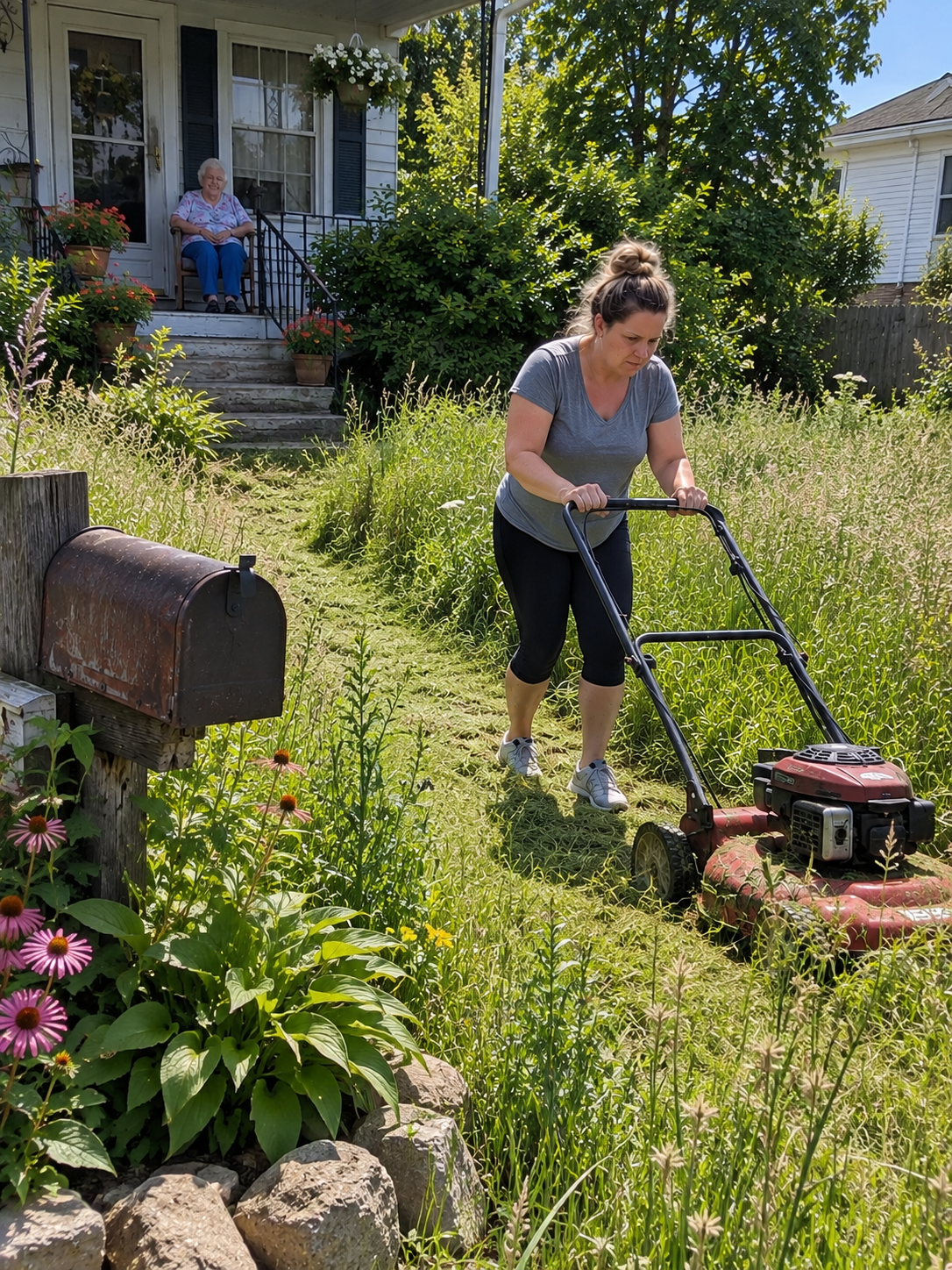
    It had started the previous day. Ruth, eighty-two and recently widowed, had been struggling to mow her overgrown lawn in the heat. I took the mower from her and spent three painful hours cutting the grass. Before I left, she held my hand and said, “You’re a good girl. Don’t forget that.” That night, I saw her walking toward my mailbox in a pink robe, carrying something, but I was too exhausted to investigate.

    The sheriff explained that Ruth’s nephew, Travis, claimed forty thousand dollars had been stolen from her shed. He accused me of taking it. But Ruth’s letter said the money belonged to her late husband, who had saved it for fifty years for someone who truly needed it. She had chosen me because I had shown her kindness when she needed it most.

    Later, Ruth’s lawyer, Harold Pike, confirmed everything. Ruth had written the letter three weeks earlier, witnessed and notarized, leaving a blank for the recipient’s name. Travis tried to challenge the gift, claiming Ruth had been confused. Then I remembered my doorbell camera.

    The footage showed Travis visiting Ruth the night she died. Hours later, it showed Ruth herself walking slowly to my mailbox, placing the envelope inside, and raising the red flag. The evidence ended the accusations. The money was legally mine.

    Soon afterward, I went into labor at Ruth’s funeral. My daughter was born five weeks early but survived. I named her Ruth Odessa, after the woman who had saved us. I used the money to pay my mortgage, buy necessities, and start a savings account for my daughter.

    Two years later, I saw a struggling young mother named Kayla trying to carry a heavy garbage bag while holding her crying baby. I helped her, gave her my phone number, and told her to call whenever she needed anything. I was simply continuing Ruth’s kindness. Some gifts aren’t meant to end with you. They’re meant to be passed forward.

  • Why Do Slugs Enter Your Home?

    Why Do Slugs Enter Your Home?

    Finding a slug inside your home can be surprisingly unsettling. You might spot one crossing the kitchen, bathroom, hallway, basement, or garage and immediately wonder how it got there. Slugs normally live outdoors in gardens and damp soil, but they can enter through surprisingly small openings around doors, windows, foundations, pipes, and crawl spaces. A single slug usually isn’t a serious problem, but repeated sightings can tell you something about your home.

    Slugs need cool, damp conditions because their soft bodies lose moisture quickly. Rain, wet leaves, thick mulch, shaded gardens, poor drainage, and standing water can create ideal conditions around a house. After rainfall, slugs become especially active because wet surfaces make it easier for them to move. One found indoors after heavy rain may simply have followed a damp route inside.

    Where you find the slug can provide clues. One near an exterior door may have slipped underneath a gap, while one in a basement could be connected to moisture around the foundation or crawl space. Finding one in the kitchen or bathroom doesn’t automatically mean you have a leak, but it’s worth checking beneath sinks, around pipes, cabinets, windows, and floor-level openings.

    You may also notice a shiny slime trail behind the slug. Don’t dismiss it. Following the trail can sometimes reveal an entry point that would otherwise be difficult to notice. Check where the trail ends, particularly around doors, walls, plumbing penetrations, or other openings near the floor.

    If slugs keep appearing, inspect the outside of your home. Look for standing water, wet soil, thick mulch touching the walls, leaves collecting near the foundation, leaking outdoor faucets, and downspouts that direct rainwater toward the house. These conditions can attract slugs and create easy paths indoors.

    Next, examine potential entry points. Check door sweeps, weather stripping, window frames, pipe openings, foundation gaps, and crawl spaces. Sealing appropriate openings and reducing unnecessary moisture can make your home less attractive to slugs and many other small creatures.

    Most importantly, don’t panic when you find one. A single slug may simply be an accidental visitor, especially after wet weather. Nature doesn’t always stay neatly outside the front door, and small animals occasionally find their way inside.

    However, repeated sightings are worth investigating. They may indicate excess moisture, poor drainage, dense vegetation, or an unnoticed opening in the structure. Instead of focusing only on removing the slug, look for the reason it was able to enter. Fixing that underlying problem can help keep your home drier, more comfortable, and free of unexpected slimy visitors.

  • This Charming Ranch Home Looks Ordinary Until You Discover What Makes Its Interior So Surprisingly Appealing

    This Charming Ranch Home Looks Ordinary Until You Discover What Makes Its Interior So Surprisingly Appealing

    At first glance, this single-level ranch home appears simple, practical, and easy to maintain. With four bedrooms, two full bathrooms, and 1,760 square feet of living space, it provides plenty of room for a family while keeping everything conveniently located on one floor.

    The home’s layout offers considerable flexibility for different lifestyles. The four bedrooms can easily accommodate family members, guests, a home office, or hobby spaces. As needs change, rooms can be reassigned without requiring major changes to the overall floor plan.

    Having two full bathrooms adds another layer of convenience. Multiple household members can get ready at the same time, while guests can enjoy additional privacy. The arrangement can also make everyday routines smoother for larger families or homeowners who frequently have visitors.

    One of the property’s notable advantages is its ranch-style design. With no stairs between the main living areas, moving around the home can be easier and more convenient. This single-level arrangement may also remain practical as homeowners’ needs change over time.

    The home is being offered as a fixer-upper, which means improvements will likely be necessary. However, its existing structure provides a useful starting point for renovation. Updating flooring, lighting, fixtures, paint, and finishes could dramatically change the appearance and atmosphere of the interior.

    A future owner could also personalize the property according to individual preferences. The bedrooms might become an office, guest suite, studio, playroom, or entertainment area. This adaptability allows the home to evolve alongside its occupants.

    Beyond cosmetic improvements, thoughtful updates could improve the home’s functionality and overall comfort. Modern finishes, better lighting, refreshed bathrooms, and carefully selected furnishings could transform the property while preserving its practical ranch-style layout.

    Ultimately, this home offers a combination of space, flexibility, and single-level convenience. Although it requires work, its 1,760 square feet and adaptable four-bedroom layout provide a solid foundation. With creativity and thoughtful improvements, this ordinary fixer-upper could become a comfortable, personalized, and highly functional home.

  • Why A Simple Cup of Salt Could Save Your Car And Your Health

    Why A Simple Cup of Salt Could Save Your Car And Your Health

    If you’ve ever gotten into your car and been greeted by foggy windows and a musty odor, you’re not alone. These common issues, especially in older vehicles, can turn a routine drive into an uncomfortable or even unhealthy experience. But the solution doesn’t require pricey gadgets or chemical sprays—it might already be in your kitchen.

    Ordinary salt, a common household staple, has powerful moisture-absorbing properties. Salt is hygroscopic, meaning it draws water from the air. When placed in your car, it helps reduce humidity, preventing condensation on windows and creating a drier, healthier environment. It’s a simple, natural dehumidifier that’s both inexpensive and effective.

    By removing excess moisture, salt can also eliminate that stubborn musty smell caused by mold and mildew. Unlike air fresheners that just mask the problem, salt tackles it at the source. For people with allergies or respiratory sensitivities, especially older drivers, this natural remedy can significantly improve air quality.

    Using salt is easy: fill a small container with dry table salt, rock salt, or sea salt and place it on the dashboard or under a seat. Replace it every few weeks when it becomes clumpy. Unlike silica gel or charcoal, salt is clean, affordable, and widely available—making it a practical choice for everyday drivers.

    Older cars are especially prone to moisture buildup due to aging seals and longer idle periods. This can lead to interior damage, mold, and poor visibility from foggy windows. Salt helps mitigate these issues by maintaining a drier car interior.

    Many drivers, like Betty from North Carolina and Don from Michigan, have reported real improvements using salt. Whether it’s clearer windows or fresher air, this small step offers big results. Try it yourself—your car (and lungs) will thank you.