
Author: xpress xpress

  • Men born in these months are the most faithful husbands — Is your man on this list?

    Men born in these months are the most faithful husbands — Is your man on this list?

    When the butterflies fade, some men vanish. Others quietly roll up their sleeves and stay. In a world obsessed with romance, it’s the ones who don’t walk away when everything gets hard that truly matter. Certain birth months are often linked with men who endure, who repair, who remain. If your partner was born in one of these months, you might already feel it in the way he shows up when life feels heavy, when money is tight, when misunderstandings cut deep. He may not be perfect. He may not be poetic. But when the moment comes to choose between escape and effort, he does not choo… Continues…

    Some men love loudly; others love in the quiet decision to stay. The ones born in January, April, August, or November often carry a natural pull toward commitment—whether through responsibility, fierce protection, steady provision, or deep emotional bonding. Their love may not always look cinematic, but it often proves itself when life is anything but romantic.

    Endurance in love is not glamorous, yet it is what holds a relationship together when excitement fades. A man who stays is choosing you not just in the highlight reel moments, but in the confusion, the fear, the everyday weight of real life. Birth month may hint at his tendencies, but character is revealed in his presence during the hardest seasons. If you have a man who doesn’t walk away, you’re not just loved—you’re held, chosen, and safe for the long road ahead.
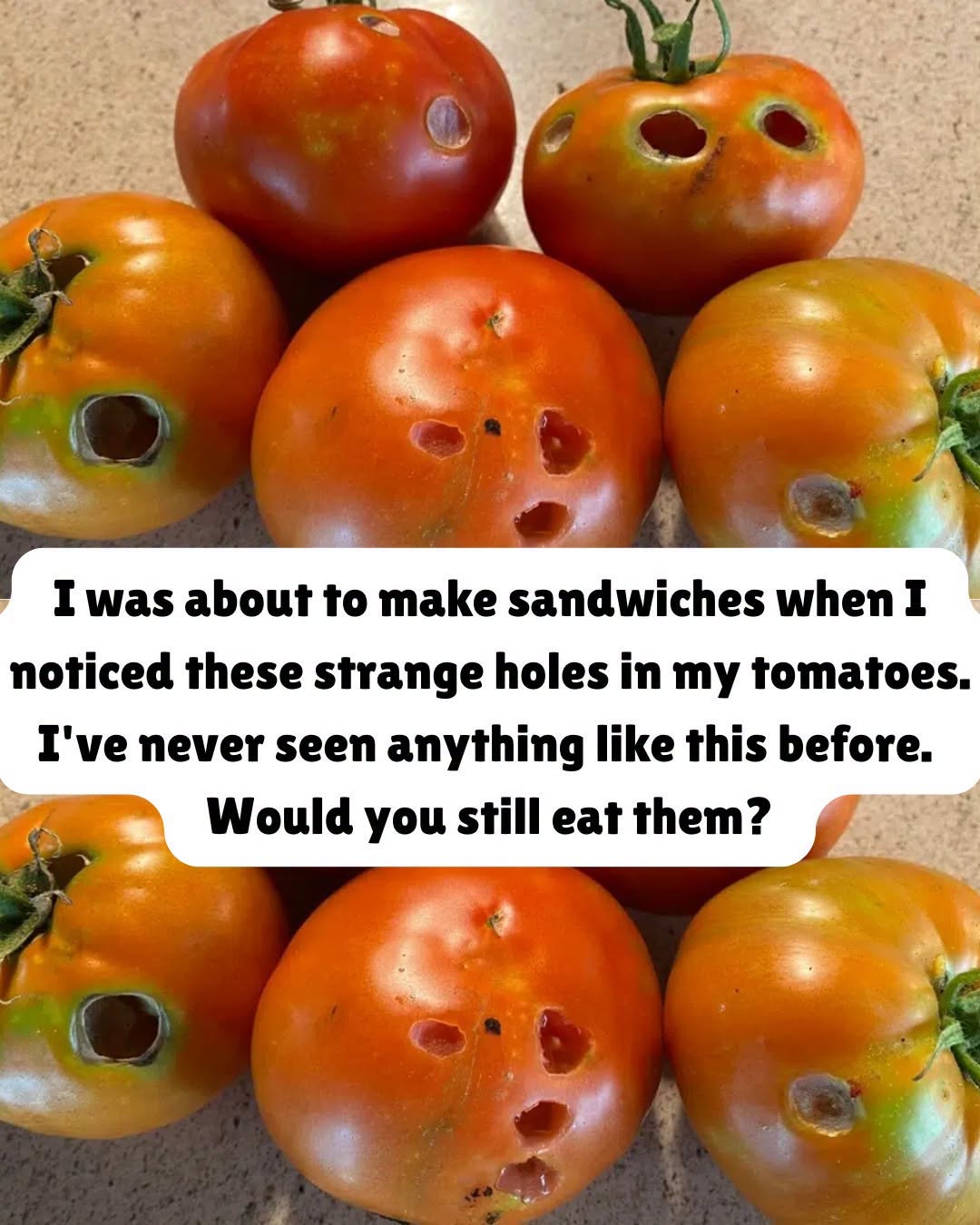

  • What It Means If You See These Holes in Tomatoes

    What It Means If You See These Holes in Tomatoes

    You spot it and your stomach drops.
    That perfect, glossy tomato… has a hole.
    Is something living in there? Is it safe to eat? Is your whole garden doomed? Most of us just toss it and try not to think about what chewed through our dinner. But those tiny holes are secret warning signs from your garden, and once you know how to rea… Continues…

    That little hole in your tomato is rarely random—it’s a message. Most of the time, it’s insects turning your plants into a snack bar, birds and squirrels “taste-testing,” or stress-related growth issues like cracking or catfacing that open the door to pests and rot. The key is slowing down long enough to inspect: look for chew marks, frass (bug poop), mold, sliminess, or movement inside the fruit before you decide whether to keep or toss it.

    Once you’ve played detective, the power shifts back to you. Netting and garden fabric can shut down bird and squirrel raids. Regular plant checks, companion planting with basil or marigolds, and even watering prevent splits and weak spots that invite trouble. Cleaning up fallen fruit and debris keeps pests from setting up camp. In the end, a holey tomato doesn’t mean you’ve failed—it just means your garden is talking. Now you know how to listen, and how to fight back.

  • Onion Confusions

    Onion Confusions

    I walked through the door holding a simple bag of onions—and everything exploded. One look from my mother-in-law turned an innocent grocery run into an accusation, a lecture, and a wave of shame I never saw coming. Were green onions and scallions really different, or was this about something deeper? As voices tightened and silence thickened, a tiny misunderstanding threatened to expose old expectations, hidden pride, and generational habits no one had ever questioned befo… Continues…

    What began as a tense standoff over “wrong” onions slowly unraveled into something more honest. Research showed that, in most places, green onions and scallions are the same thing, with only subtle regional differences. The real issue wasn’t the vegetable, but the feeling of not being heard—on her side and mine. She thought I’d ignored her request; I felt unfairly blamed for trying to help

    Talking instead of arguing changed everything. I asked about her recipe, her childhood terms, and why it mattered so much. She listened as I shared what I’d learned. Side by side, we saw the onions would work perfectly, and she apologized for snapping. I accepted, realizing how fragile everyday peace can be. Now, we double-check words, laugh about “the onion fight,” and remember that most conflicts start small—and can end kindly, if we let them.

  • Key sepsis warning signs after child star Daveigh Chase dies at 35

    Key sepsis warning signs after child star Daveigh Chase dies at 35

    A young star’s body began to shut down before anyone realized what was truly happening. By the time doctors understood, it was too late. Meningitis. Sepsis. Words we scroll past—until they hit someone we know. The symptoms can look so ordinary, so easy to dismiss, that this “silent kil… Continues…

    Daveigh Chase’s death at 35 is a heartbreaking reminder of how quickly a hidden infection can turn catastrophic. Meningitis inflames the membranes around the brain and spinal cord; when infection spreads into the bloodstream, the body’s immune response can spiral into sepsis, damaging organs instead of protecting them. At first, it can look like a bad flu: fever or chills, sweating, weakness, rapid breathing, or a racing heart. But confusion, disorientation, or feeling “not right” inside can be early red flags that something far more serious is happening.

    Sepsis can progress to septic shock in hours, with plunging blood pressure, reduced urination, clammy skin, and unbearable pain. That’s why doctors urge people not to “wait and see” when symptoms escalate suddenly or feel unusually intense. Asking, “Could this be sepsis?” and seeking urgent care can be the difference between recovery and a life cut short.

  • MISSMATCHED COUPLES

    Social media often amplifies public judgment about relationships. A single photo shared online can quickly spark countless assumptions from viewers. People may speculate about the couple’s power dynamics, happiness, or motives, even though none of these things can truly be understood from a brief image or a short caption.

    Online platforms have the ability to turn private relationships into public discussions. Strangers who know nothing about the individuals involved may feel comfortable forming strong opinions. These quick judgments often overlook the complexity and depth that exist in real relationships.

    Many people forget that a photograph captures only a single moment in time. It does not reveal the history, shared experiences, or emotional connection between two individuals. Yet social media often encourages people to make instant conclusions based on very limited information.

    Because of this environment, couples who appear “different” from society’s expectations are often labeled as mismatched. Their appearance, lifestyle, or personality differences can easily become topics of online debate. However, these outside opinions rarely reflect the reality of the relationship itself.

    In truth, many couples described as mismatched are simply comfortable being themselves. They do not feel pressured to change their personalities or appearances to satisfy public expectations. Instead, they focus on building a relationship that works for them.

    These relationships often challenge narrow social ideas about what love should look like. By embracing their differences, such couples demonstrate that attraction and compatibility are highly personal experiences. What works for one couple may look unusual to others, but that does not make it any less meaningful.

    As many people in these relationships express, what outsiders call “mismatched” often feels completely normal to them. Their connection is based on shared values, understanding, and mutual respect rather than outward similarities.

    Ultimately, real connection does not follow strict rules or social expectations. Strong relationships grow through trust, communication, and shared experiences. What truly matters is not how well two people appear to match on the surface, but how deeply they understand and support each other.

  • New Covid Variants Nimbus and Stratus Surge Across Populations, Bringing Unusual Symptoms and Raising Concerns Among Health Experts, While Scientists Monitor Transmission, Vaccine Efficacy, and Public Safety Measures Closely, Urging Communities to Stay Vigilant, Report Emerging Patterns, and Adapt to the Rapidly Evolving Pandemic Landscape for Better Protection and Awareness.

    New Covid Variants Nimbus and Stratus Surge Across Populations, Bringing Unusual Symptoms and Raising Concerns Among Health Experts, While Scientists Monitor Transmission, Vaccine Efficacy, and Public Safety Measures Closely, Urging Communities to Stay Vigilant, Report Emerging Patterns, and Adapt to the Rapidly Evolving Pandemic Landscape for Better Protection and Awareness.

    Health authorities in Britain and the United States are monitoring a renewed rise in Covid-19 cases linked to two newer variants: XFB, known as Stratus, and NB.1.8.1, called Nimbus. While waves of infection are not new, this surge has drawn attention because of how quickly these strains are spreading.

    Data show case rates have roughly doubled since late summer, coinciding with the start of the fall and winter respiratory season. In the UK, test positivity has climbed above 8 percent, with hospital admissions rising modestly. In the U.S., wastewater surveillance indicates moderate national spread, with several states reporting very high viral levels.

    What makes this wave notable is its symptom profile. Many patients report an unusually sore throat and a hoarse or croaky voice, sometimes described as feeling like “razor blades.” These symptoms often appear alongside headaches, cough, congestion, and extreme fatigue.

    Clinicians say the symptoms can feel more intense than those seen with earlier Omicron subvariants, even if overall illness severity has not dramatically increased. Because flu and RSV are circulating at the same time, health officials stress the importance of testing to distinguish between illnesses.

    Authorities are focused on Stratus and Nimbus mainly due to their high transmissibility. Even if most cases remain mild, large numbers of infections at once could strain hospitals, schools, and workplaces during colder months.

    Genomic studies show that Nimbus carries spike protein mutations that help it spread efficiently, while Stratus has already established itself across multiple regions. Current evidence suggests vaccines continue to protect well against severe disease.

    Vaccination remains central to prevention. Officials urge people, especially older adults and those with health conditions, to stay up to date with boosters. Masking in crowded indoor spaces, hand hygiene, and staying home when sick are also recommended.

    Experts emphasize balance rather than panic. While cases are rising and symptoms may feel different, widespread immunity and better treatments have reduced overall risk. Early recognition and responsible behavior remain key to limiting spread and protecting communities.

  • How a Simple Image Can Challenge Your Perspective and Reveal Hidden Details

    In today’s fast-paced digital environment, people are exposed to more information than ever before. Social media platforms, news sites, streaming services, and entertainment apps constantly compete for attention, delivering an endless flow of images, videos, headlines, and updates. Because so much content is available at any given moment, many individuals spend only a few seconds viewing each post before moving on to the next. While this rapid consumption helps people stay informed and entertained, it also increases the likelihood of missing important details. Something that appears simple or ordinary at first glance may contain meaningful information that only becomes visible after a more careful examination.

    First impressions strongly influence how people interpret information. The human brain is naturally designed to identify patterns quickly and make rapid judgments based on limited evidence. This ability is useful in everyday life because it allows people to process large amounts of information efficiently. However, the same mental shortcut can sometimes lead to incomplete or inaccurate conclusions. When content appears familiar, viewers often assume they already understand it and move on without examining it further. As a result, subtle details, hidden meanings, creative elements, or important context can easily be overlooked. This tendency is especially common online, where constant scrolling encourages speed rather than thoughtful observation.

    Digital platforms are intentionally designed to keep users engaged by encouraging quick interactions with content. Notifications, autoplay features, endless feeds, and short-form videos continuously compete for attention throughout the day. In this environment, people naturally focus on the most obvious aspects of an image or story while filtering out smaller details. Expectations also play an important role in shaping perception. When viewers expect something to be ordinary, they are less likely to search for additional layers of meaning or alternative interpretations. Consequently, valuable information often remains unnoticed simply because people do not spend enough time looking for it.

  • World Most Beautiful Child Star Breaks Her Silence as She Finally Reclaims the Life the Media Stole From Her

    World Most Beautiful Child Star Breaks Her Silence as She Finally Reclaims the Life the Media Stole From Her

    She was never asked if she wanted to be famous. The world decided for her. At ten, her face was a battlefield—praised, possessed, picked apart by people who never learned her name, only her angles. They crowned her beauty, then questioned her innocence. They sold her image, then doubted her humanity. As she grew older, something inside her snap… Continues…

    She did not disappear; she recalibrated. After years of being treated like a canvas for other people’s fantasies, she began quietly reclaiming authorship over her life. That meant saying no to the roles that reduced her to a surface, and yes to the work that demanded she think, create, and choose. It meant building a private world that no headline could trespass, where small, ordinary moments belonged only to her.

    The transformation was not some cinematic rebellion but a series of steady, deliberate refusals: to be commodified, to be pitied, to be endlessly available. The media clung to its favorite myth of the “most beautiful girl,” but she met it with boundaries instead of breakdowns. In doing so, she exposed a deeper truth about fame: survival isn’t about staying visible; it’s about staying whole. Her greatest achievement was not enduring the spotlight, but learning to live beautifully beyond it.

  • BREAKING NEWS: Just In 5 Minut Ago…

    BREAKING NEWS: Just In 5 Minut Ago…

    Workers heard the first crack and thought it was nothing. Then the highway itself began to tremble. Concrete shifted, steel groaned, and the sky above the construction site suddenly felt dangerously close. In those seconds, training battled terror. Alarms, shouts, a desperate scramble for solid ground. One wrong move, and history might have repea… Continues…

    The elevated highway never fully gave way, but the fear it unleashed will not fade quickly. Evacuation teams and construction workers, drilled for disaster, moved with practiced urgency, clearing the danger zone before catastrophe could strike. Emergency crews rushed in, stabilizing the site while the structure still shivered with the memory of what almost happened.

    In the aftermath, investigators turned to hard questions: how close was this to another Minneapolis, another I-35W tragedy written in twisted steel and shattered lives? Inspectors combed through every joint and beam, while officials vowed stricter oversight, more frequent checks, and zero tolerance for shortcuts. For the workers who walked away, the lesson is carved into every step they now take beneath concrete and steel: safety isn’t paperwork. It is the thin, invisible line between a near-miss and a memorial.

  • US state will execute a woman for the first time in 200 years: Inside her chilling crime

    US state will execute a woman for the first time in 200 years: Inside her chilling crime

    The clock is finally ticking.
    Nearly 30 years after Christa Gail Pike tortured and murdered 19-year-old Colleen Slemmer, Tennessee has set the date for her death. A jealous teenage rage, a satanic symbol carved into flesh, a skull fragment kept as a trophy — and now, a woman scheduled to die in a state that hasn’t executed one in 200 ye… Continues…

    In 1995, Christa Pike was an angry, damaged 18-year-old who transformed jealousy into something almost ritualistic. Colleen Slemmer was lured into the woods, beaten, stabbed, and mutilated in a killing so vicious it stunned even hardened investigators. Pike returned to the taped-off crime scene giggling, asking questions, seemingly thrilled by the horror she’d created. A year later, a jury sent her to death row, while her mother wept and blamed herself for the chaos that shaped her daughter’s life.

    Three decades on, Pike sits in near-solitary confinement, insisting she is no longer the monster she was at 18. Her lawyers point to childhood abuse, mental illness, and evolving standards that likely would spare her life today. But for Colleen’s family, mercy feels like betrayal. As September 30, 2026 approaches, Tennessee must answer a brutal question: does killing Christa Pike bring justice—or only another irrevocable loss?