Blog

  • My 78 Year Old Boss Took Me to a Park and Said As of Today You No Longer Work for Me I Froze Thinking He Was Firing Me After Years of Loyalty Then He Offered to Keep Me Only on One Condition What He Said Made Me Walk Away in Tears

    My 78 Year Old Boss Took Me to a Park and Said As of Today You No Longer Work for Me I Froze Thinking He Was Firing Me After Years of Loyalty Then He Offered to Keep Me Only on One Condition What He Said Made Me Walk Away in Tears

    The first sign came in a whisper: my name, printed on a folder, then quickly hidden from view. After that came the lawyer’s calls. Then Richard’s strange request: “Be downstairs at four. Just you and me.” Every detail made my stomach tighten.

    For an entire week, dread followed me everywhere. I became convinced I was being quietly erased from the company I had spent years helping build. Every strange glance, every closed-door conversation, seemed to confirm what I feared most.

    I noticed my folder sitting in accounting, even though I had never asked for anything from that department. Conversations stopped whenever I entered the room. Richard started taking frequent calls with his lawyer, lowering his voice whenever I walked past.

    Then there was the unexplained meeting at the park. That was the moment my imagination completely took over. I pictured myself carrying a cardboard box out of the office while security collected my badge and keys.

    At night, I barely slept. I kept thinking about my mother and how disappointed she would be when I told her I had lost the job. In my mind, everything I had worked for was collapsing, and there was nothing I could do to stop it.

    By Friday afternoon, fear had hardened into certainty. I went downstairs expecting the worst. When Richard and I finally sat together on the quiet park bench, I prepared myself for the words I had been dreading all week.

    But Richard didn’t fire me. Instead, he told me he was selling the company and stepping down. The new owners had given him a choice: bring someone he trusted to replace him or allow them to choose someone themselves.

    Then he looked directly at me and said, “I chose you.” For a moment, I couldn’t speak. All those folders, lawyer calls, secret conversations, and strange meetings had never been about pushing me out.

    They had been about preparing me for something I never imagined. I had spent the entire week terrified of losing my future, only to discover that Richard had been quietly placing it in my hands.

  • My Husband Said, Pay for Your Own Food So I Did Then His Birthday Dinner Exposed His Biggest Secret

    My Husband Said, Pay for Your Own Food So I Did Then His Birthday Dinner Exposed His Biggest Secret

    Laurel, married to Grant for seven years, was shocked when he told her to pay for her own food. Although Grant earned more, Laurel contributed substantially through groceries, household bills, repairs, and her home baking business. She also routinely cooked and hosted Grant’s family without receiving recognition.

    Laurel accepted Grant’s demand and began buying only her own food. When Grant later invited fourteen relatives for his birthday and promised Laurel would prepare a large feast, she refused. Grant assumed she would eventually give in, but Laurel remained firm and made him responsible for the celebration.

    On his birthday, Grant struggled to prepare the promised meal. His brisket was unfinished, the macaroni was ruined, and several dishes were incomplete. When the family arrived hungry, Laurel refused to rescue him. Denise, Grant’s mother, eventually learned that he had ordered Laurel to pay for her own food while expecting her to cook for everyone.

    The family discovered that Laurel had spent thousands hosting gatherings. After calculating her expenses, she estimated she had spent about $8,700 feeding relatives the previous year. Grant’s family realized he had routinely taken credit for work and money Laurel had provided.

    The situation became far more serious when Grant’s brother Miles revealed that Laurel’s name was not on the house mortgage. Laurel investigated and discovered Grant had secretly taken a $96,000 line of credit against the property to cover gambling debts. He had also accumulated credit-card debt and used their joint account for gambling.

    Grant then admitted he had sold the house for $420,000 and intended to use the proceeds to resolve his debts. Laurel left, stayed with her sister, gathered financial records, and hired an attorney. The house sale was eventually delayed while the financial issues were addressed.

    Grant entered gambling treatment, while Laurel expanded her baking business into a successful bakery. She rebuilt her financial independence and confidence. Although Grant apologized and changed his behavior, Laurel chose not to return to the marriage. Two years later, she owned her bakery and had created a life based on her own work, choices, and independence.

  • !! The World Says Goodbye To The Actor Behind One of TV’s Most Iconic Characters… See more.

    !! The World Says Goodbye To The Actor Behind One of TV’s Most Iconic Characters… See more.

    Eric Dane’s death stunned Hollywood. Fans thought they knew his story. They didn’t. Behind the charm of “McSteamy” was a man quietly losing control of his own body, even as millions watched him on screen. He kept working. He kept smiling. He kept fighting a disease that stole his voice, his moveme… Continues…

    Eric Dane’s passing at 53 closed the chapter on a career that shaped a generation of television fans, but it also revealed the depth of his resilience. Long after his breakout as Dr. Mark “McSteamy” Sloan on *Grey’s Anatomy*, he refused to be defined by a single role or by his ALS diagnosis. He kept stepping in front of the camera, from *The Last Ship* to *Euphoria*, insisting that his work speak louder than his illness.

    Born in California, Dane climbed from bit parts to global recognition, then used that spotlight to talk openly about ALS when he revealed his diagnosis in 2025. His honesty gave a human face to a brutal disease and offered comfort to others fighting it. He leaves behind more than memorable characters; he leaves a legacy of courage, candor, and connection that will outlive the headlines about his death.

  • With Heavy Hearts, Film Fans Mourn the Passing of This Legend… See more..

    With Heavy Hearts, Film Fans Mourn the Passing of This Legend… See more..

    Robert Duvall’s passing at 95 felt less like a headline and more like the closing of an era. From the haunted calm of *The Godfather* to the madness of *Apocalypse Now*, to the quiet grace of his Oscar-winning turn in *Tender Mercies*, he built a career on characters that never shouted, yet somehow echoed for decades. His death at his Virginia farm, far from red carpets and bright lights, matched the man he really was: private, disciplined, and stubbornly devoted to the work rather than the circus around it.

    As Hollywood rushed to mourn, what lingered wasn’t just grief, but gratitude. Duvall never chased trends, never begged for relevance. He trusted the power of stillness, of silence, of a single look doing the work of a page of dialogue. In an industry addicted to noise, his legacy is a reminder that the deepest impact often arrives in a whisper.

  • My Daughter Brought Home a Pale, Tattooed Goth Boy — My Husband Immediately Told Him to Leave. Then the Boy Placed His Phone on the Table, and My Husband Went Even Paler

    My Daughter Brought Home a Pale, Tattooed Goth Boy — My Husband Immediately Told Him to Leave. Then the Boy Placed His Phone on the Table, and My Husband Went Even Paler

    My Daughter Brought Home a Pale, Tattooed Goth Boy — My Husband Immediately Told Him to Leave. Then the Boy Placed His Phone on the Table, and My Husband Went Even Paler

    When my 19-year-old daughter, Lily, told me she was bringing someone home for dinner, I expected the usual nervous introduction.

    What I didn’t expect was the young man standing beside her when I opened the door.

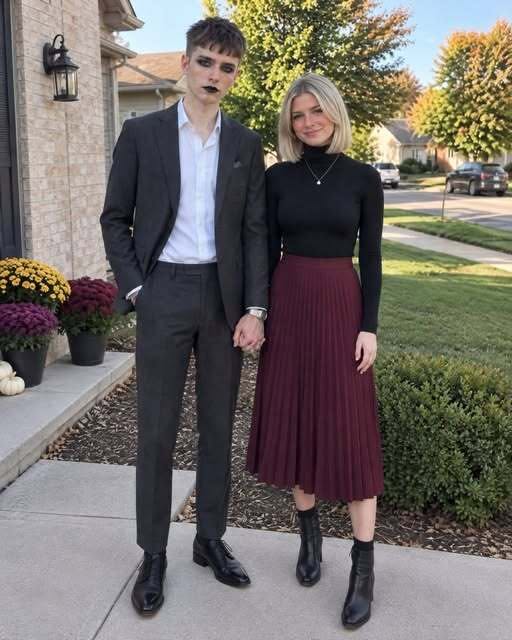
    He was tall and painfully thin, dressed almost entirely in black. Tattoos disappeared beneath the sleeves of his jacket and climbed partway up his neck. His hair was jet black, his skin was unusually pale, and several silver rings covered his fingers.

    “Mom, this is Noah,” Lily said.

    He immediately held out his hand.

    “Nice to meet you, Mrs. Carter. Lily talks about you all the time.”

    His appearance was intimidating, but his voice wasn’t. He was quiet and surprisingly polite.

    I smiled and invited him inside.

    Then my husband, David, walked into the hallway.

    The second he saw Noah, he stopped.

    Not surprised.

    Not confused.

    He looked terrified.

    Noah’s expression changed too.

    For several seconds, neither of them spoke.

    Finally, David pointed toward the front door.

    “Get out.”

    “Dad!” Lily shouted.

    Noah remained completely still.

    I stared at my husband. “David, what are you doing?”

    “I said leave.”

    Lily’s face turned red.

    “You haven’t even spoken to him!”

    “I don’t need to.”

    That was when I realized something was wrong. My husband wasn’t judging Noah because of his clothes or tattoos.

    He recognized him.

    And judging from Noah’s expression, the feeling was mutual.

    Noah slowly reached into his pocket.

    David stepped forward.

    “Don’t.”

    But Noah wasn’t reaching for anything dangerous.

    He pulled out his phone.

    “I didn’t come here to cause trouble,” he said quietly. “But I think your family deserves to know why you recognize me.”

    Then he placed the phone on our dining table.

    The screen showed a photograph.

    I leaned closer.

    My stomach dropped.

    It was David.

    The picture appeared to have been taken several years earlier. My husband was standing outside a hospital beside a woman I had never seen before.

    And beside them was a teenage boy.

    Noah.

    I looked from the screen to my husband.

    “What is this?”

    David had gone pale.

    Noah swiped to another photograph.

    Then another.

    In every picture, my husband was there.

    Finally, Noah opened a message thread.

    Dozens of messages appeared on the screen.

    They were from David.

    Lily looked at her father.

    “Dad?”

    David pulled out a chair and sat down as though his legs could no longer support him.

    “I can explain.”

    Noah gave a bitter laugh.

    “That’s what you told my mother.”

    The room went silent.

    I felt suddenly cold.

    “Your mother?” I asked.

    Noah nodded.

    “My mom was Sarah Bennett.”

    The name meant nothing to me.

    But it clearly meant everything to David.

    He covered his face with both hands.

    I had been married to this man for twenty-three years, and I had never heard that name once.

    Noah continued.

    “My mother met David before he married you. They were together for a while. Then she became pregnant.”

    Lily slowly sat down.

    I couldn’t.

    I just stared at my husband.

    “No,” David whispered. “It wasn’t that simple.”

    “It was pretty simple to me,” Noah replied.

    Then he looked directly at me.

    “David is my father.”

    I actually laughed.

    Not because anything was funny, but because my brain refused to process the sentence.

    “That’s impossible.”

    Noah unlocked another folder.

    There were photographs of David holding him as a baby.

    Birthday pictures.

    Christmas pictures.

    A photograph of a much younger David pushing Noah on a swing.

    Then the pictures suddenly stopped.

    Noah explained that when he was eight, his mother became seriously ill.

    She contacted David and asked him to help.

    According to Noah, David initially promised he would.

    Then he disappeared.

    “He changed his number,” Noah said. “Mom tried contacting him for months.”

    David finally looked up.

    “I had a family.”

    “You had two families,” Noah replied.

    That sentence silenced everyone.

    Lily started crying.

    “So Noah is my brother?”

    David didn’t answer.

    He didn’t need to.

    I sat across from him.

    “Did you know?”

    He nodded.

    One small movement.

    Twenty-three years of marriage suddenly felt different.

    Noah explained that his mother eventually recovered, but she never contacted David again. She raised Noah herself.

    Years later, shortly before she died, she gave Noah a box containing photographs, letters and David’s old messages.

    Noah hadn’t planned to confront him.

    Then something almost unbelievable happened.

    He met Lily.

    They attended the same college.

    They became friends.

    Eventually, they started dating.

    Neither knew.

    Not until Lily showed him a family photograph.

    “I recognized him immediately,” Noah said, pointing toward David.

    Lily covered her mouth.

    “You knew before coming here?”

    “For three days.”

    “And you still came?”

    “I needed to hear him say it.”

    David stood suddenly.

    “You should have told Lily immediately.”

    Noah stared at him.

    “You’re criticizing me for keeping a secret for three days?”

    David had no response.

    But there was still one question bothering me.

    “Why put your phone on the table? Why bring all of this tonight?”

    Noah looked down.

    “Because there’s something else.”

    He opened an email.

    It was from a genetic testing company.

    Noah had taken a DNA test years earlier while trying to confirm information about his biological family.

    Recently, Lily had taken one too.

    She had mentioned it casually a few weeks earlier. Her friends had convinced her to order a kit.

    The results had arrived that morning.

    Noah turned the phone toward us.

    Close Family Match.

    Lily stared at the screen.

    There was no longer any room for denial.

    David was Noah’s father.

    And Noah was Lily’s half-brother.

    Lily immediately moved away from him, horrified—not at Noah, but at the situation neither of them could possibly have known about.

    Noah looked devastated.

    “I’m sorry,” he whispered.

    Lily shook her head.

    “You didn’t know.”

    Neither of them had.

    The only person in the room who had known the truth for years was my husband.

    David began apologizing.

    He told us he had been twenty-one when Noah was born. He was frightened, irresponsible and convinced himself that sending money occasionally was enough.

    Later, when he met me, he buried that entire part of his life.

    He said he always intended to tell me.

    First after our wedding.

    Then after Lily was born.

    Then when she was older.

    There was always another reason to wait.

    Eventually, the lie became easier than the truth.

    But secrets don’t disappear simply because enough time passes.

    Sometimes they grow quietly in the background until two completely innocent people walk straight into them.

    Noah left our house that evening.

    Before leaving, he stopped beside Lily.

    Neither knew what to say.

    Finally, she hugged him.

    Not as his girlfriend.

    As the brother she had never known existed.

    David slept in the guest room that night.

    I barely slept at all.

    By morning, the photographs from Noah’s phone were still sitting in my mind—the baby pictures, the hospital photograph, the messages.

    But one image stayed with me most.

    It wasn’t on Noah’s phone.

    It was the expression on my husband’s face when he opened our front door and saw the past standing beside our daughter.

    He had spent almost twenty years believing that chapter of his life was buried.

    Then one evening, it rang the doorbell.

  • 4 Bedroom Home with 0.25 Acres in Decatur, Illinois

    4 Bedroom Home with 0.25 Acres in Decatur, Illinois

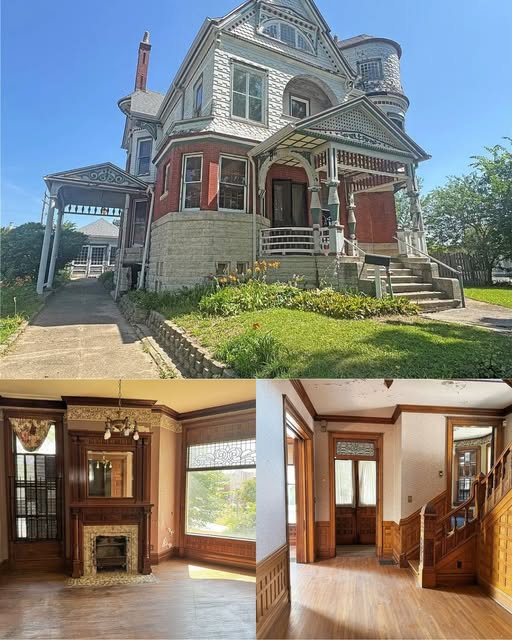
    Standing before this 1887 Queen Anne Victorian in Decatur, Illinois, you immediately feel the weight of authentic American craftsmanship. The striking curb appeal blends rustic rusticated stone masonry with intricate red brickwork and ornamental fish-scale shingles.

    A broad front porch welcomes you near the covered porte-cochère, framed by turned spindles and hand-carved bracket work. This grand residence spans 3,500 square feet across two primary levels, offering an unmatched foundation in the Decatur Historic District.

  • $50,000 5 Bed, 2 Bath, Near Lake…See more

    $50,000 5 Bed, 2 Bath, Near Lake…See more

    This historic Victorian home showcases classic 19th-century architecture, with a distinctive tower, steep gable roofs, and an elaborate wrap-around porch. Intricate fretwork, decorative brackets, and detailed spindles highlight the craftsmanship of the period. A central set of concrete steps leads through the overgrown front yard to the elevated porch, while the unkempt landscaping suggests that the property may be vacant or awaiting restoration.

    The facade is defined by symmetry, tall, narrow double-hung windows, and a traditional entrance topped by a transom window. Although the wooden siding shows clear signs of age and weathering, many of the home’s original architectural details remain intact. The combination of the tower, gables, large windows, and decorative woodwork gives the property a character that modern construction rarely reproduces.

    Restoring a home of this scale would require much more than cosmetic improvements. A thorough inspection should begin with the foundation, roof, electrical and plumbing systems, heating, drainage, and any older materials that could contain lead or asbestos. Structural repairs and weatherproofing should take priority before attention turns to decorative elements.

    The roof, gutters, exterior walls, and foundation would likely need careful evaluation to prevent further deterioration. Once the major systems are secure, restoration could focus on the windows, floors, doors, staircases, porch, and other original features. Whenever possible, existing materials should be repaired rather than replaced.

    The interior could be updated for modern living while preserving the home’s historic character. Kitchens, bathrooms, insulation, heating, and modern utilities can be introduced without removing original trim or altering the proportions of the rooms. Specialist craftsmen may be needed to repair or reproduce damaged decorative woodwork.

    A project like this would require patience, careful planning, and a realistic budget. Victorian homes often contain layers of craftsmanship that are difficult and expensive to reproduce today. Every restoration decision would need to balance modern safety and comfort with the preservation of the building’s original character.

    Despite its neglected appearance, the house still retains many of the features that make historic architecture so appealing. The tower, steep rooflines, wrap-around porch, tall windows, and elaborate woodwork create a strong visual identity that would be difficult to recreate from scratch.

    For the right owner, the property offers an opportunity to bring a neglected piece of architectural history back to life. With realistic budgeting, skilled craftsmanship, and a phased restoration plan, this remarkable Victorian home could once again become a beautiful and distinctive residence while preserving the craftsmanship of another era.

  • After My Affair Came to Light My Husband Never Touched Me Again

    After My Affair Came to Light My Husband Never Touched Me Again

    The ultrasound shocked me. Dr. Evans discovered a surgical clip and scarring near my fallopian tube, despite my having no memory or records of fertility surgery. She urged me to obtain complete hospital records before confronting anyone involved.

    At home, Michael casually asked about the appointment, unaware I had already begun searching old paperwork. Missing pages, unfamiliar sedatives, and a consent form signed by Michael, not me, transformed forgotten memories into terrifying questions about 2008.

    A specialist confirmed an emergency procedure had permanently altered my fertility, although the available records showed no infection, tumor, or medical necessity. The stated justification was patient safety, yet the signature authorizing surgery clearly was not mine either.

    Archived hospital notes revealed the missing truth: Michael had described me as emotionally unstable and suicidal, then requested permanent contraception while I remained unconscious. Doctors accepted his consent without verifying my wishes, creating devastating lifelong consequences afterward.

    Attorney Nora Ellis obtained the complete file and began preserving every document as evidence. She explained the case might involve civil liability and possibly additional investigations, depending on consent procedures, hospital responsibility, witness testimony, archived records, and timelines.

    When I confronted Michael, he admitted requesting the procedure. He insisted another pregnancy would destroy our family and claimed he was protecting everyone. I answered that my affair deserved accountability, but never justified stealing control over consent.

    Jake arrived during the confrontation and immediately defended my autonomy. He told Michael betrayal did not make him my owner, exposing the controlling beliefs that had shaped our marriage and shattered eighteen years of carefully maintained silence forever.

    The hospital settled after accepting responsibility for failing to verify valid consent, and our marriage quietly ended. Therapy, volunteering, and honest conversations taught me that regret and self-respect could coexist, while true accountability always begins with choice.

  • There is an artificial lake in our village

    There is an artificial lake in our village

    There is a small man-made lake near our village that has always seemed a little mysterious. Surrounded by tall trees and rarely visited, it has a peaceful beauty that makes it feel almost untouched. On clear days, the surface reflects the sky so perfectly that the lake looks like a giant mirror.

    One quiet afternoon, I decided to take a walk along the shoreline. The weather was calm, and there was hardly any sound except the occasional rustling of leaves in the trees. As I walked closer to the water, I noticed that it was unusually clear.

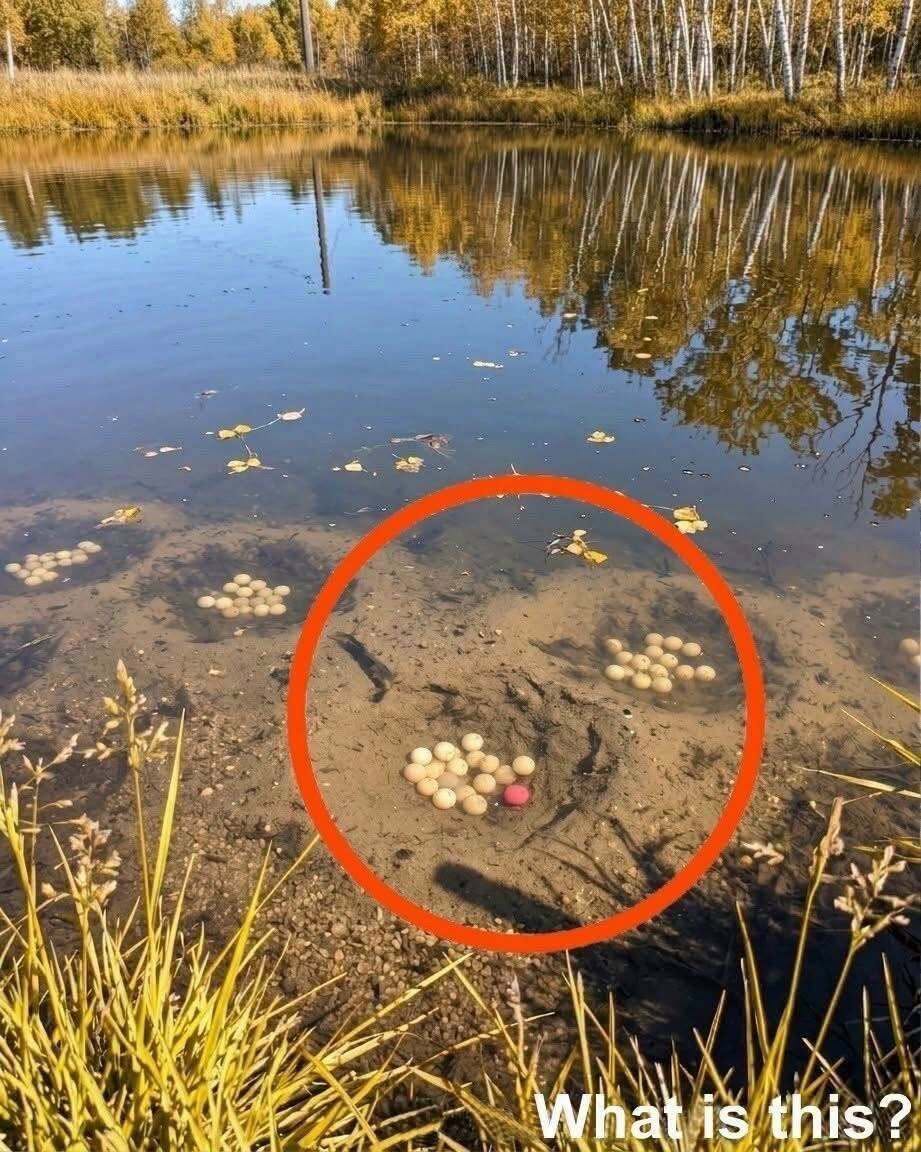
    Because the water was so transparent, I could see the lakebed much more easily than I normally could. That was when I noticed something strange beneath the surface. Scattered across the bottom were dozens of round objects, some of them arranged in small groups.

    What immediately caught my attention was how similar the objects looked. Their shapes seemed too smooth and uniform to be ordinary rocks. They also appeared strangely out of place in the otherwise natural-looking surroundings of the lake.

    I stood there for several minutes, trying to understand what I was seeing. From the shore, it was difficult to make out their exact size, color, or material. The clearer the water became, the more mysterious the objects seemed.

    Several possibilities crossed my mind. Perhaps they were unusual plant formations or stones that had been shaped by years of water movement. They might even have been remnants of something connected to the lake’s past, although I had no way of knowing for certain.

    The quiet surroundings made the discovery feel even more unusual. The lake looked completely peaceful and familiar, yet beneath its glassy surface was something I had never noticed before. I wondered how long the objects had been there and whether anyone else from the village had seen them.

    For now, the mysterious objects remain unexplained from my perspective. What made the experience memorable was the contrast between the ordinary setting and the unexpected sight hidden beneath the water. Sometimes, a simple walk can uncover something unusual and leave you with questions that stay in your mind long after you have returned home.

  • Transforming a Simple Pool Noodle into a Glowing Backyard Feature That Reimagines Outdoor Living Through Light, Color, Creativity, and Budget-Friendly DIY Design, Turning Ordinary Nights into Magical, Family-Friendly Experiences Filled with Warmth, Connection, Imagination, and Eye-Catching Outdoor Ambiance Everyone Can Enjoy Together

    Transforming a Simple Pool Noodle into a Glowing Backyard Feature That Reimagines Outdoor Living Through Light, Color, Creativity, and Budget-Friendly DIY Design, Turning Ordinary Nights into Magical, Family-Friendly Experiences Filled with Warmth, Connection, Imagination, and Eye-Catching Outdoor Ambiance Everyone Can Enjoy Together

    There’s something satisfying about taking an ordinary object and transforming it into something beautiful and purposeful. A pool noodle, often seen only at the pool or lake, is light, inexpensive, and brightly colored—perfect for creative reinvention. With a little imagination and modern LED lighting, it can become a glowing element that reshapes how a backyard feels at night.

    Outdoor lighting shapes mood, guides movement, and defines spaces. Harsh light can feel clinical, while soft, diffused lighting encourages conversation, relaxation, and connection. Pool noodles naturally diffuse LEDs, creating a gentle, even glow that mimics expensive lighting without the cost or complexity.

    The accessibility of pool noodle lighting is a major advantage. Noodles and battery-powered or solar LEDs are inexpensive, widely available, and easy to work with. Beginners, renters, and families on a budget can experiment safely, rearranging or adjusting pieces without permanent commitment or fear of mistakes.

    This DIY approach shifts the focus from technical precision to emotional intention. Color and placement define atmosphere—bright hues energize, muted tones soothe, thick noodles create broad washes of light, and thin noodles act as subtle accents. Pathways, plants, and seating areas are transformed, revealing new nighttime perspectives.

    Pool noodle lighting also encourages collaboration. Children enjoy the colors, adults appreciate practicality, and trial-and-error becomes playful. Shared decisions about placement and patterns turn the project into a bonding experience, making the backyard a space for connection as well as design.

    Adaptability is another strength. Unlike permanent fixtures, these lights can change with seasons, celebrations, or moods. Materials are reusable and modular, allowing constant reinvention without waste, creating a dynamic, evolving outdoor space.

    Ultimately, the transformation is about more than DIY ingenuity. Soft, thoughtful light slows time, deepens connection, and elevates ordinary evenings. The humble pool noodle becomes a symbol of creativity, accessibility, and intentionality.

    With imagination, minimal cost, and simple tools, an ordinary backyard can become a glowing retreat—warm, welcoming, and alive with shared moments and gentle light.