Blog

  • My husband promised my Christmas bonus for his mother’s roof. I smiled—and changed everything quietly.

    My husband promised my Christmas bonus for his mother’s roof. I smiled—and changed everything quietly.

    The moment I said her name, my husband froze. The color drained from his face as he stared at the bank statement like it might erase itself. I told him plainly what I saw: a joint account with another woman. His only response was, “It’s complicated,” which told me everything I needed to know.

    After twelve years of marriage, I understood that phrase meant the truth was worse than I imagined. I demanded clarity. He hesitated, then admitted the woman was someone he had dated before me. My stomach tightened as he struggled to continue.

    Finally, he said it—she had gotten pregnant. The room felt colder. I asked if he had a child, and he nodded. A daughter. Twelve years old. The same length as our marriage. The timeline hit me instantly, and it made everything feel like a lie.

    He claimed he didn’t know about the child until three years ago, which explained the first payment I had noticed back then. Quiet transfers, hidden behind excuses. I realized he had been sending money in secret the entire time.

    No one else knew. Not his family. Not even me—his wife. And instead of telling me, he had taken money from my account without asking. He called it “our money,” but I knew better. He had made a decision alone and hid it deliberately.

    When I demanded the woman’s number, he resisted, afraid I would involve her. But I insisted. Eventually, he gave in. That night, he slept in the guest room, while I lay awake, replaying everything.

    The next morning, I called her. She sounded normal—tired, even. Not like the villain I had imagined. She agreed to meet, and when I sat across from her, she handed me a folder filled with documents that changed everything.

    What I found inside made my hands shake. The money wasn’t just support. It was part of an agreement—one that revealed a much deeper secret. In that moment, I understood that the missing money was never the real problem. It was only the beginning.

  • The Cake You Pick Reveals What Kind Of Woman You Are

    The Cake You Pick Reveals What Kind Of Woman You Are

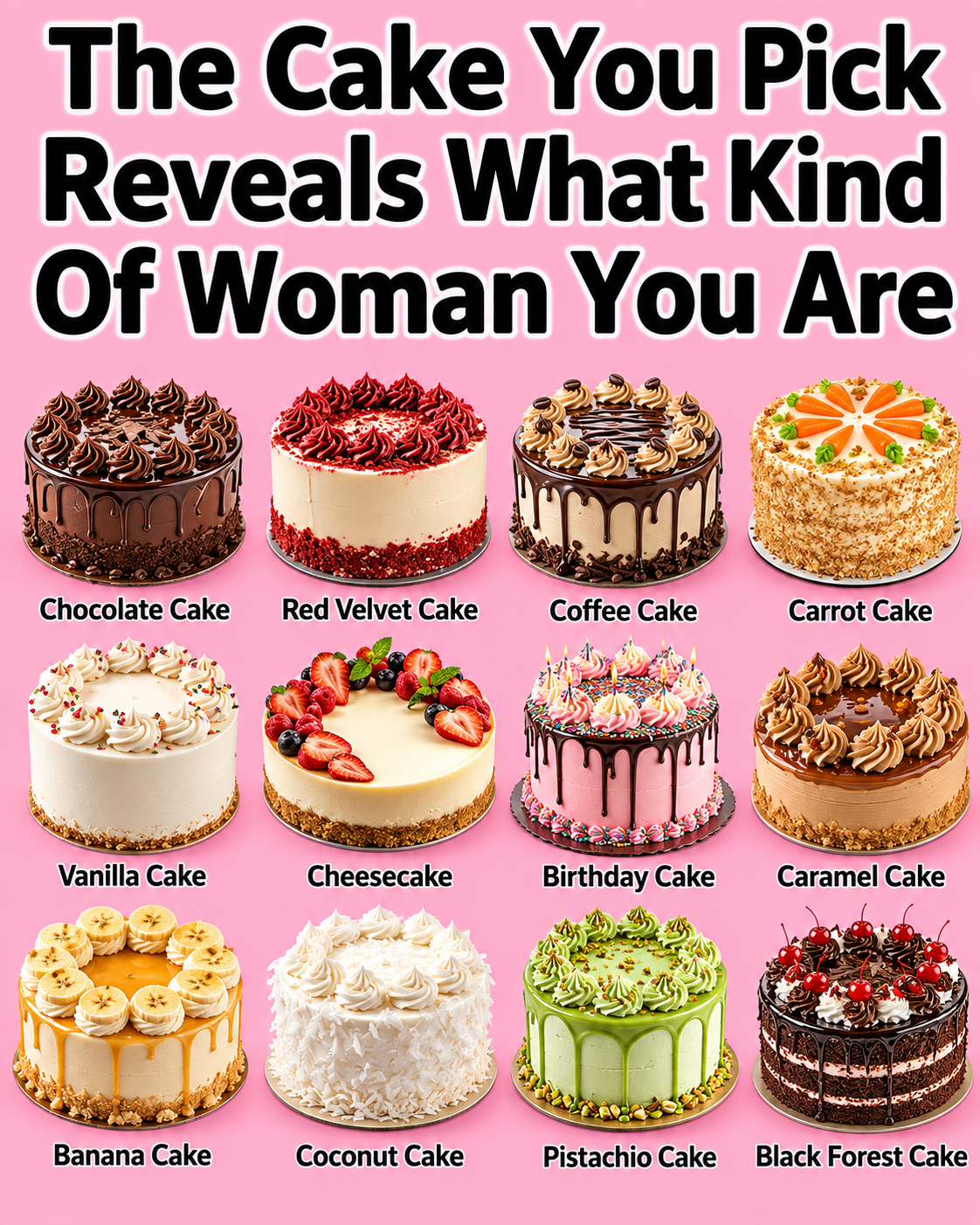
    Sometimes the smallest choices say the most about us. Pick the cake in the picture that catches your eye first—don’t overthink it. Personality-by-cake quizzes are best treated as entertainment rather than a scientific personality assessment. CNA

    Chocolate Cake — The Loyal One
    You value deep relationships, comfort, and trust. You’re warm with the people you love, but you also have a strong side that comes out when someone crosses a boundary.

    Red Velvet Cake — The Confident One
    You enjoy standing out without needing to demand attention. You appreciate beauty, romance, and a little luxury, and people often remember your presence.

    Coffee Cake — The Calm Thinker
    You prefer meaningful conversations over unnecessary drama. You’re observant, independent, and usually think things through before making an important decision.

    Carrot Cake — The Grounded Woman
    Practical but never boring, you value authenticity. Friends may come to you for advice because you tend to look at situations realistically.

    Vanilla Cake — The Classic Soul
    You appreciate simplicity, stability, and traditions that still have meaning. You don’t need something extravagant to recognize quality.

    Cheesecake — The Woman With High Standards
    You know what you like and can be selective about who gets your time and attention. You would rather have a few great relationships than dozens of superficial ones.

    Birthday Cake — The Joyful One
    Celebrations, memories, and the people around you matter. You have a playful side and enjoy making ordinary moments feel special.

    Caramel Cake — The Charmer
    Warm and naturally sociable, you have a way of making people feel comfortable around you. You can be sweet while still knowing exactly what you want.

    Banana Cake — The Nurturer
    You’re comforting, down-to-earth, and protective of the people closest to you. Home, family, laughter, and familiar things can mean more to you than showing off.

    Coconut Cake — The Dreamer
    You value freedom and peaceful surroundings. You have an imaginative side and sometimes need to disconnect from everything to recharge.

    Pistachio Cake — The Sophisticated One
    Your taste tends to be distinctive. You’re comfortable liking something different even when everyone else chooses the obvious option.

    Black Forest Cake — The Mysterious One
    There’s more to you than people notice at first. You value emotional depth and genuine connections, and you don’t reveal everything about yourself immediately.

    So—which cake did you choose first? 🍰 Share your pick in the comments and see whether the description sounds like you.

  • My SIL Invited My Kids to Her Big House With a Pool for the Holidays – When I Showed Up Unannounced, I Went Pale

    My SIL Invited My Kids to Her Big House With a Pool for the Holidays – When I Showed Up Unannounced, I Went Pale

    When my sister-in-law invited my kids to spend a week at her large, luxurious home, I thought it was a wonderful opportunity for them to enjoy a summer full of fun by the pool, trampoline, and gaming. She said her daughter, Mikayla, was bored and would love company, so I happily agreed and packed their bags, even giving them money for treats.

    For the first three days, I heard nothing from my kids, which was unusual since they normally text or call constantly. When I asked my sister-in-law, she assured me they were having a great time, swimming and enjoying the pool. But on the fourth day, my daughter sent a desperate text asking me to “come save us” because their phones were taken away.

    I rushed to her house without calling and found my son scrubbing the pool tiles and my daughter dragging a heavy garbage bag, while Mikayla lounged by the pool on her phone. A clipboard on the table listed daily chores that my kids had to complete just to earn pool time and TV privileges. My sister-in-law claimed the kids volunteered, but my daughter whispered they were threatened with losing their money and being forced to sleep in the garage if they refused.

    I immediately packed up my kids and demanded their phones, which were locked away by my sister-in-law. She tried to justify the situation as “building character” and “helping,” but I refused to accept it. I took my children home and sent my sister-in-law an invoice charging for the child labor.

    She paid immediately, and I used the money to give my kids a fun, carefree trip to an amusement park. That summer, my kids learned that fairness matters, work deserves pay, and that their mom will always protect them. The experience also taught me to trust my instincts and stand up for my children, no matter what.

  • Put a sheet of aluminum foil in boiling water, even rich people do that: A simple sheet of aluminum foil is enough to solve a very common problem at home: seeing is believing. Only polite members will say thank you 😊the reason details in the first comment

    Put a sheet of aluminum foil in boiling water, even rich people do that: A simple sheet of aluminum foil is enough to solve a very common problem at home: seeing is believing. Only polite members will say thank you 😊the reason details in the first comment

    A straightforward household hack involving a sheet of aluminum foil proves to be a remarkable solution for revitalizing old cutlery. In the aftermath of a meal, the immediate washing of dishes is often preferable to avoid a daunting pile in the sink.

    While dishwasher owners may escape this chore, those relying on hand washing, for various reasons, encounter the challenge of restoring old and seemingly irreversibly tarnished cutlery.

    In response to this common woe, an ingenious method emerges, utilizing the transformative power of aluminum foil. The process begins by heating water in a pot, to which a spoon of sodium bicarbonate and half a spoon of sugar are added.

    Once the mixture reaches a boil, a sheet of aluminum foil is cut in half, creating four equal parts. Each segment is then rolled into a ball, and these aluminum balls are introduced into the boiling pot.

    Surprisingly, this method proves ideal for rejuvenating old cutlery. Spoons, forks, and knives that have lost their original luster are immersed in the pot for a mere ten minutes.

    Following this brief treatment, the cutlery is removed, washed with water and soap, completing the revitalization process. The result is astonishing – the once-dull cutlery now shines brightly, almost as if brand new.

    This cost-effective solution, utilizing the potential of aluminum foil and the cleansing properties of sodium bicarbonate, stands as an extraordinary alternative to discarding old cutlery and purchasing replacements.

    By employing this simple yet effective method, individuals can breathe new life into their kitchen essentials, saving both money and resources. The brilliance and clarity reminiscent of the cutlery’s original state are restored through this ingenious combination of everyday items.

  • What The Sealed Page Said, And Why My Brother Knew Before I Did

    What The Sealed Page Said, And Why My Brother Knew Before I Did

    This text presents a personality-style interpretation based on choosing one of six purple nail designs. Each design is said to reflect different emotional, social, and behavioral tendencies based on instinctive attraction rather than overthinking.

    If you chose Nail 1, it suggests quiet confidence and restraint. The simple, structured design is linked to someone who values stability, self-control, and understated elegance. This type of person is seen as reliable, composed, and not driven by attention or validation.

    If you chose Nail 2, it represents emotional depth and sensitivity. The heart detail is associated with romantic, intuitive individuals who prioritize feelings and connection. This choice reflects someone compassionate, expressive, and sometimes emotionally vulnerable in relationships.

    If you chose Nail 3, it reflects balance and calm logic. The design suggests a grounded personality that values stability and avoids extremes. People drawn to it are described as thoughtful, steady, and emotionally controlled while still caring deeply.

    If you chose Nail 4, it indicates boldness and ambition. The larger, eye-catching gem symbolizes confidence, leadership, and a desire to stand out. This type of person is portrayed as goal-driven, competitive, and comfortable being noticed.

    If you chose Nail 5, it suggests practicality with refined taste. The structured design reflects logical thinking, planning, and long-term focus. At the same time, there is an appreciation for aesthetics, showing a balanced mix of discipline and style.

    If you chose Nail 6, it reflects independence and subtle strength. The minimal design suggests a private, observant personality that values control over personal expression. These individuals are often seen as hard to read but internally confident and self-reliant.

    Overall, the concept emphasizes that such choices are not literal definitions of personality, but reflections of instinct and preference. They highlight tendencies in how people balance emotion, logic, attention, and privacy in everyday life.

    In the end, the purpose is not to label you, but to suggest that even small, instant preferences can reveal patterns in how you think, feel, and present yourself to the world.

  • The real purpose of those mysterious lines on towels

    The real purpose of those mysterious lines on towels

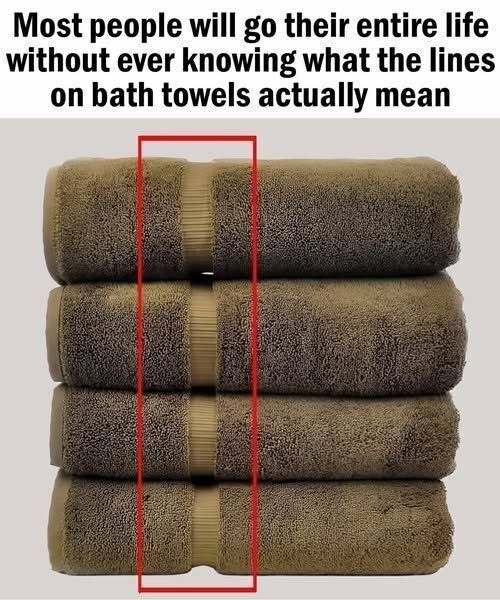
    A seemingly simple question recently sparked a surprisingly passionate debate across social media: why is there that odd, raised line or strip across bath towels? Thousands chimed in, offering both humorous theories and genuine curiosity — transforming what appeared to be a minor design detail into an unexpectedly viral topic.

    This isn’t the kind of conversation that will change the world or answer life’s big philosophical questions. But much like past internet fascinations — think the infamous blue-and-black or white-and-gold dress debacle — the towel line mystery somehow captivated minds. And as it turns out, there’s a lot more to that strange line than meets the eye.

    For anyone who’s stood staring at a freshly washed towel wondering, “Do I really need to clean this if I was clean when I used it?” or “Why do these horizontal stripes exist?” — you’re not alone. These questions have been bouncing around for years, but it was a recent post on X (formerly Twitter) that reignited the curiosity.

    One user shared a photo of a towel with a single caption: “What’s this line for?” It quickly went viral. Responses flooded in — ranging from cheeky suggestions like “that’s the face-to-butt separation line” to the idea that the towel needed “racing stripes” to dry faster. Others proposed the line acted like a built-in crease for easy folding or was purely an aesthetic decision by towel designers.

    But for those looking for a serious, no-nonsense answer, experts quickly stepped in to clear things up. And yes, there is a practical reason behind those mysterious lines.

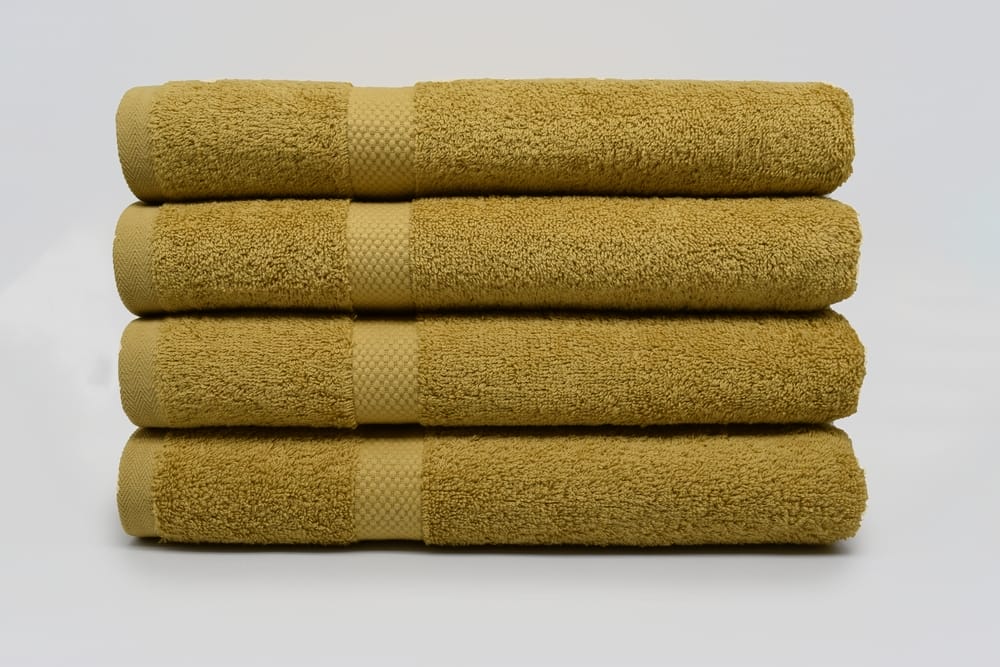
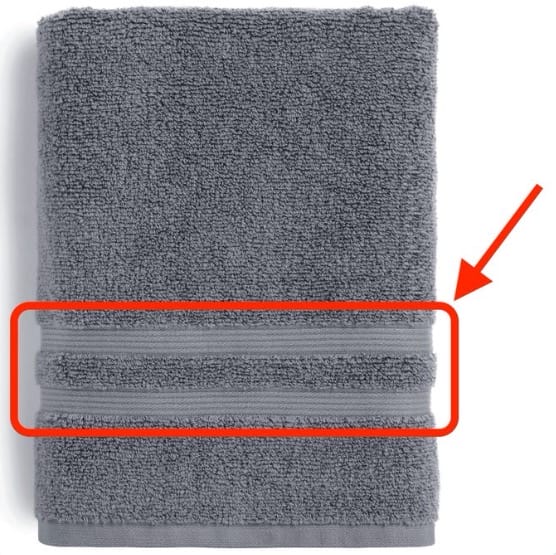
    That line is officially known as the dobby border — and it’s far more functional than decorative. According to textile professionals and sources like Towel Hub, the dobby border is a woven strip at both ends of most towels, created not for show but to improve the overall performance and longevity of the towel.

    The dobby border reinforces the structural integrity of the towel, helping to prevent fraying and wear at the edges after repeated washes. This woven section also keeps the towel from becoming too bulky around the borders, ensuring it stays lightweight and remains soft and absorbent. For manufacturers, it provides an area where fancy jacquard weaving or subtle branding can be added — but the core reason is still all about function.

    Beyond that, it does help with aesthetics. The dobby border provides a visual cue for folding, helps towels hang more neatly, and adds a clean, symmetrical finish that makes towels look more refined, whether they’re stacked in a linen closet or draped over a bathroom rack.

    As Towel Hub notes, “Absorbency is one of the most important qualities of a good towel, but achieving the perfect balance between thickness and performance can be challenging. The dobby border helps maintain structure and improve overall function without compromising softness.”

    So the next time you reach for your towel, give a little nod to the dobby border. It’s not just there to look pretty — it’s quietly doing the work of keeping your towel strong, shapely, and stylish through hundreds of drying sessions.

    And hey, who doesn’t love learning the answer to one of life’s oddly satisfying everyday mysteries? Be sure to pass it along — someone else is probably wondering the same thing.

  • After Decades of Friendship, Separation, and a Remarkable Reunion That Defied Time

    After Decades of Friendship, Separation, and a Remarkable Reunion That Defied Time

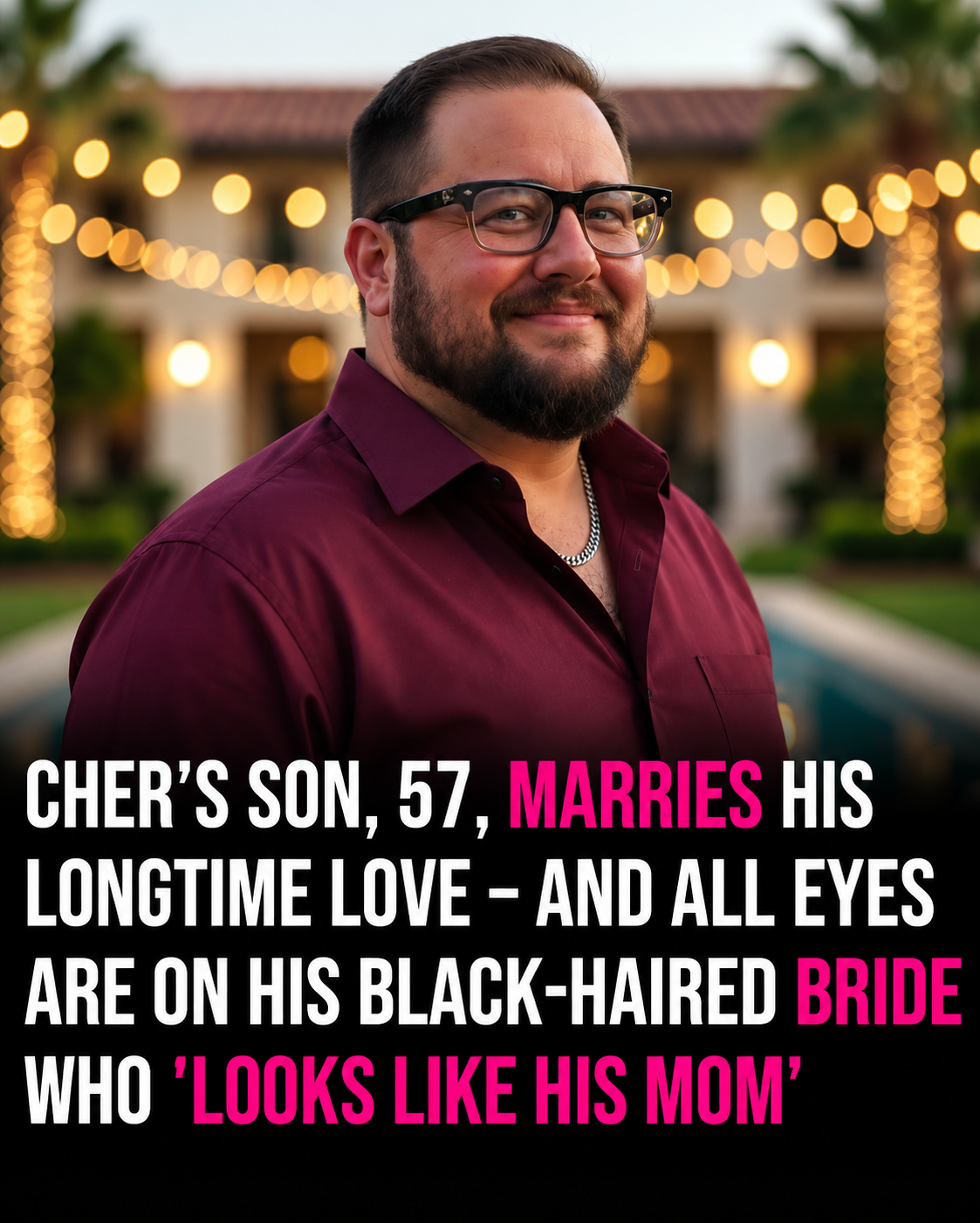
    The wedding was never supposed to be a spectacle. Yet on March 8, 2026, as candles flickered inside the Hollywood Roosevelt, the world watched a love story decades in the making finally collide with the spotlight. This wasn’t just about Cher’s son getting married. It was about first kisses, second chances, and a journey through identity, loss, and rediscover… Continues…

    Under the soft glow of vintage chandeliers, Chaz Bono and Shara Blue Mathes stood surrounded by friends, family, and the long shadows of their shared past. Their vows carried the weight of years spent apart, the uncertainty of reinvention, and the fragile hope that some connections never truly dissolve. The room held more than romance; it held recognition. Here were two people who had seen each other through youth, estrangement, and the quiet work of becoming themselves, finally choosing to walk forward together.

    Cher’s presence added an unmistakable emotional charge, not as a legend, but as a mother witnessing a full-circle moment. While social media tried to flatten the story into look-alike jokes and surface-level commentary, the truth lived in the details: teenage classmates turned partners, a first kiss turned lifelong imprint, and a wedding that felt less like a finale and more like a homecoming.

  • Tragic Loss: 18-Year-Old Rodeo Star Ace Patton Ashford Dies in Freak Horse Accident

    Tragic Loss: 18-Year-Old Rodeo Star Ace Patton Ashford Dies in Freak Horse Accident

    Tragic Loss: 18-Year-Old Rodeo Star Ace Patton Ashford Dies in Freak Horse Accident

    The nation is mourning the heartbreaking loss of 18-year-old rodeo roper Ace Patton Ashford, who died in a tragic accident just weeks before he was set to achieve a lifelong goal in the sport he loved.

    Known for his dedication, talent, and promising future in rodeo, Ace’s sudden passing has sent shockwaves through his local community and the wider rodeo world.

    The accident occurred on the morning of August 12 near Chilton, Texas, a rural area about 20 miles south of Waco. According to reports from NBC affiliate KPLCTV, the incident unfolded while Ace was assisting a sick cow. In the process, the calf and another nearby horse became spooked, resulting in a chaotic and devastating chain of events.

    Officials from the Lott Volunteer Fire Department reported that Ace’s leg became entangled in a rope or tack, causing him to be dragged a considerable distance across an open field by the panicked horse. When emergency responders arrived, they found him with significant head injuries, but he was still breathing and had a heartbeat.

    He was quickly airlifted to a nearby hospital in critical condition. Despite efforts to save him, Ace tragically succumbed to his injuries shortly after arrival. His death is being felt deeply across the rodeo community, where he was seen as a rising star and a kind-hearted competitor.

    Ace Patton Ashford’s legacy will live on through the lives he touched and the dreams he chased with courage, humility, and heart.

  • What Does ‘SSSS’ on Your Boarding Pass Mean? (And How to Stay Calm When You See It)

    What Does ‘SSSS’ on Your Boarding Pass Mean? (And How to Stay Calm When You See It)

    Printed your boarding pass.

    Grabbed your coffee.

    And then you see it—right there at the bottom of the barcode:

    SSSS

    Four little letters that feel like a punch to the gut.

    No warning.

    No explanation.

    Just… extra screening.

    Suddenly, your stress level skyrockets.

    “What did I do?”

    “Am I on a watchlist?”

    “Will I miss my flight?”

    Take a breath.

    Let’s demystify SSSS—what it really means, why it happens, and how to get through security with calm (and maybe even a little grace).

    What “SSSS” Stands For

    SSSS = Secondary Security Screening Selection

    It’s not a personal accusation.

    It’s not proof you’re suspicious.

    It’s not even about you, necessarily.

    It’s a random or algorithm-driven flag used by the TSA (Transportation Security Administration) as part of the Secure Flight program—a system designed to:

    Enhance aviation security

    Identify potential threats before boarding

    Match passenger data against government watchlists and trusted traveler databases

    If your name matches certain patterns—or is randomly selected—you get the SSSS tag, which means:

    You’ll undergo additional screening at the checkpoint.

    What Happens During SSSS Screening?

    When you see “SSSS” on your boarding pass, here’s what to expect:

    Extra Pat-Down or Swabbing

    TSA agents will swab your hands, luggage, and sometimes clothing for explosive residue.

    You may be patted down more thoroughly than usual.

    Baggage Inspection

    Your carry-on will be hand-checked—even if it went through the X-ray machine.

    Agents may ask you to open compartments or remove electronics.

    More Questions

    Simple ones like: “Is this all your luggage?” or “Have you packed this bag yourself?”

    Not an interrogation—just verification.

    Longer Wait Time

    Add 5–15 minutes to your security process.

    Best to arrive extra early (at least 2 hours before domestic flights).

    Good news: This screening happens before the regular checkpoint—so once you’re through, you can proceed normally.

    Why Did I Get Flagged? (Spoiler: It’s Usually Random)

    The truth?

    You likely did nothing wrong.

    Common reasons for SSSS selection:

    Random selection —part of routine security rotation

    Name similarity —common names that match watchlist entries (e.g., “Ahmed Khan”)

    Last-minute booking —especially one-way or international flights

    Flying from high-risk regions —even if you’re a U.S. citizen

    Inconsistent travel patterns —if you rarely fly or visit certain countries

    It does not mean you’re banned, blacklisted, or under investigation.

    Think of it like a “security lottery”—you just got picked.

    Pro Tips If You Have SSSS on Your Boarding Pass

    Arrive

    90–120 minutes early

    Extra screening takes time—don’t rush!

    Wear easy-to-remove shoes & minimal metal

    Speeds up the process Keep liquids in a clear quart-sized bag

    Ready for inspection

    Stay polite and cooperative

    Agents are doing their job—kindness goes far

    Don’t panic or argue

    It’s temporary—and very common

    Fun fact: Frequent flyers, celebrities, and even TSA employees sometimes get SSSS. It’s not personal.

    Final Thought: Security Isn’t Punishment—It’s Protection

    Yes, being flagged is stressful.

    Yes, it feels unfair.

    But remember:

    This system exists so that everyone on your flight feels safer.

    And while the process isn’t perfect, it’s designed to cast a wide net—not to target individuals.

    So when you see “SSSS”?

    Don’t dread it.

    Prepare for it.

    Because in 15 minutes, you’ll be past security—just like everyone else.

    And hey…

    Maybe you’ll even earn a quiet “Thanks for your patience” from a TSA agent.

    (They notice calm travelers.)

  • They Mocked My Old Shawl Until They Learned Its Hidden Secret

    They Mocked My Old Shawl Until They Learned Its Hidden Secret

    The reading of my mother’s will left me stunned. While my relatives inherited the house, car, savings, and valuable possessions, I received only a worn, faded shawl. Its edges were damaged, and it looked practically worthless. My sister, Lila, laughed and said the gift proved how little our mother had valued me. I said nothing. I simply took the shawl home, still trying to understand why Mom had chosen it for me.

    That evening, I held the shawl in my hands and noticed a faint lavender scent. Suddenly, memories of my mother came rushing back. I remembered how devoted she had been to her own mother, my grandmother, despite Grandma’s difficult personality and the way she had driven most of the family away. Mom stayed beside her for years, caring for her without asking for recognition. Somehow, the old shawl no longer felt worthless.

    A few weeks later, Lila called me in a panic. Her voice was completely different from the one she had used at the funeral. She desperately asked if I would sell her the shawl. When I refused, she offered money—then even more. I finally asked what had happened. She told me the family lawyer had discovered something shocking about our grandmother’s estate.

    The shawl wasn’t merely an old family possession. According to the lawyer, Grandma had secretly placed a substantial fortune into a hidden estate. Before her death, she had added one unusual condition: whoever legally possessed the shawl would inherit everything connected to that hidden estate. No other family member could claim it simply because they were related.

    Then I understood why Mom had left it to me. She hadn’t been insulting me or giving me something worthless. She had been giving me the one thing that mattered most—and trusting me to understand its meaning when the time came. Lila had only seen an ugly piece of cloth. Mom had seen a promise, a legacy, and a way of honoring everything she had sacrificed.

    I kept the shawl. The inheritance changed my life, but the money wasn’t what mattered most. Whenever I wear it, I remember my mother and the quiet love behind her final gift. What my family dismissed as worthless turned out to be priceless—not only because of the fortune it carried, but because it was my mother’s final way of telling me, “I always believed in you.”