Blog

  • What I Did In The Garden While They Slept, And The Question Margot Asked Me That I Could Not Immediately Answer

    What I Did In The Garden While They Slept, And The Question Margot Asked Me That I Could Not Immediately Answer

    I called my attorney from the garden at half past midnight. I wanted no action, only a record of the timeline, my arrival, what I had heard, the date, and the names inside. He listened without interruption and promised to be at the house by eight.

    Then I entered through the kitchen door, which Margot always leaves unlocked when she cannot sleep. I climbed the stairs to the balcony, where she sat beneath the garden lights, her face pale and exhausted.

    When she saw me, she remained silent for a long moment. Then she whispered my name. I sat beside her, wrapped my arm around her shoulders, and stayed there until her trembling finally eased.

    She had known for two days. Grayson had arrived with Delphine’s parents, initially describing their plans as sensible estate planning and tax efficiency. By the second evening, their polite conversation had become relentless pressure to surrender her home.

    She had not called me because she feared ruining my trip. Alone among people planning to take away her house, she had cried on the balcony, uncertain how to refuse her own son without destroying their relationship.

    My attorney arrived at eight. At eight-thirty, Grayson found us at the kitchen table. Delphine’s parents soon joined us. My attorney explained that selling the property required both signatures and that agreements made during my absence had no legal standing.

    Delphine’s father called everything a misunderstanding. My attorney calmly disagreed. They left before noon. Grayson paused at the door, studying me, perhaps deciding which version of events he would tell others. I offered him no assistance.

    That evening, Margot asked why I had waited before confronting them. I explained that listening had taught me more than anger ever could. She wondered whether Grayson had devised the scheme or whether Delphine’s parents had influenced him. I admitted I did not know, but promised we would discover the truth. The following morning, we decorated our Christmas tree together, just as we had every December for thirty-five years.


  • At Seventy-Two, She Decided to Wear the Wedding Dress She Always Dreamed Of—And Her Daughter Couldn’t Understand Why

    At Seventy-Two, She Decided to Wear the Wedding Dress She Always Dreamed Of—And Her Daughter Couldn’t Understand Why

    My daughter’s question turned my wedding joy into heartache. At seventy-two, preparing for my third marriage, I had finally found the dress I wanted, only to hear that my age made it an unnecessary expense. But behind that white lace were two broken marriages and a dream I had never claimed, and she didn’t yet understand what it repr… Continues…

    At nineteen, pregnant and nervous, I married in my mother’s borrowed gown. At forty-one, I tried again in a beige suit at a courthouse, choosing practicality over romance. Both marriages ended, but neither erased my desire for a beautiful beginning. This time, I found a white lace dress online for about $100. Looking in the mirror, I stopped cataloguing my flaws and recognized a woman who had raised three children, endured disappointment, and remained willing to love.

    At my kitchen table, I added light-blue crystals and lace appliqués, making the gown my own. Later, I explained its meaning to my daughter. She listened quietly; whether she fully understood remained uncertain. Still, I no longer needed her approval. I wasn’t trying to erase my years or recreate my youth. I was choosing to celebrate the person those years had made me—and to wear something beautiful simply because it brought me joy.

  • The Day I Came Home With My Newborn And Learned What Protecting My Family Truly Means When Trust Quietly Breaks

    The Day I Came Home With My Newborn And Learned What Protecting My Family Truly Means When Trust Quietly Breaks

    Gordon presented the recorded deed proving that the narrator was the sole legal owner of the house, inherited through her father’s estate before she ever met Nathan. He then showed Nathan’s agreement falsely declaring himself the lawful owner, which caused his clients to immediately withdraw their escrow funds.

    Nathan insisted the declaration was merely a formality and claimed the narrator had agreed to everything months earlier. Loretta supported his story. The narrator firmly stated that she had never signed any documents authorizing Nathan to claim ownership.

    Nathan then changed his tone, suggesting the narrator had been exhausted and overwhelmed and that he had only been helping manage matters she could not handle. He tried to portray his actions as kindness rather than deception.

    Susan produced a detailed timeline containing lender correspondence, the suspicious night in the study, and the drawer Nathan had previously closed. The documents reinforced the narrator’s account, leaving little need for her to argue because the evidence already spoke for itself.

    Gordon left with the documents, and the escrow money was returned within a week. Susan filed the narrator’s legal petition the next morning, while a locksmith replaced every lock in the house before noon.

    That evening, Nathan and Loretta quietly collected their belongings and left. Nathan placed $150 on the coffee table without being asked. After they were gone, the narrator donated the money to a local diaper bank rather than keeping it.

    A lender’s inquiry followed, but the narrator chose not to wait for its outcome. Her newborn daughter needed her, and for the first time, the narrator could focus on feeding her child and feeling secure inside her own home.

    Months later, the former study had become a nursery, with her father’s desk beneath a sunny window. Nathan communicated through his attorney, while Loretta never wrote. Holding her daughter beneath the faded blanket, the narrator realized that true sa

  • This Unique Underground Home in Illinois Has Incredible Character

    This Unique Underground Home in Illinois Has Incredible Character

    This $59,000 underground home comes with a catch no buyer can ignore. Behind its stone-covered walls lies one family’s extraordinary vision, built into the Illinois earth and filled with rocks carried home from Colorado. But beneath the charm of arched hallways and a cavern-like bathtub waits an unfinished renovation that could turn a bargain into a more expensive drea… Continues…

    Andy “Caveman” Davis built the Armington, Illinois, home in 1977 with a practical ambition: use the surrounding earth to help control indoor temperatures and reduce energy costs. The approximately 2,300-square-foot property became deeply personal, too. Rocks gathered during family trips to Colorado were incorporated into its interiors, giving the rooms a distinctive, cave-like character. Round windows, curved passageways, and a stone-surrounded bathtub make the house feel unlike a conventional residence, while its concrete exterior and earth-covered roof reflect Davis’s original purpose.

    Now offered at $59,000, the property needs substantial work, particularly in the kitchen and other unfinished interior spaces. A potential five-bedroom layout leaves room for an imaginative transformation, whether as a private home or a possible rental. But the purchase price is only the starting point. Bringing this unusual place to completion could demand considerable money, patience, and a buyer who values its history enough to tackle the challenge.

  • The Animal You See First Reveals Your Personality.

    The Animal You See First Reveals Your Personality.

    One glance, and your friends might see you completely differently. Some people spot a loyal dog, others a watchful cat, while a few insist they see something nobody else notices. Before you compare answers, hold on to that first impression: this playful test turns an ordinary shape into a revealing conversation, but the biggest surprise may be your reac… Continues…

    An unusual shape on a kitchen counter invites several interpretations, each paired with a lighthearted personality description. A dog represents optimism, loyalty, and an outgoing nature, while a cat suggests independence, quiet observation, and appreciation for personal space. Those who recognize a hippo are described as creative, honest, and willing to think differently. A pig points toward gentleness, an easygoing outlook, and enjoyment of life’s simple comforts. A bear symbolizes patience, dependability, and a protective instinct toward loved ones.

    And if you spotted nothing more than a potato? The playful explanation casts you as practical and logical, someone who prefers straightforward answers over hidden meanings. None of these associations scientifically measures personality, and noticing one shape cannot establish who you are. The real pleasure is sharing the image, hearing different answers, and realizing how varied our perceptions can be. Sometimes an ordinary object is simply an invitation to connect and laugh.

  • The Toilet Seat Detail Most People Never Notice

    The Toilet Seat Detail Most People Never Notice

    The unusual toilet seat immediately caught my attention. I had never seen one with an opening at the front, and its strange design made me wonder why anyone would create it that way. At first, I assumed it was a manufacturing mistake, but the truth turned out to be surprisingly practical.

    After looking into it, I discovered that open-front toilet seats are common in public restrooms, particularly in the United States. They aren’t defective or incomplete. Their distinctive shape serves a specific purpose, especially in places where many different people use the same facilities every day.

    One major reason for the design is hygiene. The opening reduces the amount of seat material at the front, helping minimize contact with areas that may become soiled during use. It also provides additional clearance for personal hygiene, making the seat more practical for certain users.

    Another advantage is easier cleaning and maintenance. In busy public facilities, even small design choices can make a difference. Open-front seats allow cleaning staff to access the surrounding area more easily, helping them maintain restrooms efficiently.

    The design is also reflected in plumbing standards. In the United States, the International Plumbing Code has traditionally required open-front toilet seats in many public restrooms, with certain exceptions. This helps explain why the style appears so frequently in commercial buildings.

    Of course, not every toilet seat has this feature. Closed-front seats remain popular in private homes because many people prefer their appearance and feel. The choice often depends on the setting, applicable regulations, and personal preference.

    What initially looked like a strange design suddenly made sense. The opening wasn’t a mistake but a practical feature developed with hygiene, accessibility, and maintenance in mind.

    Sometimes, the most ordinary objects hide fascinating explanations. All it takes is a little curiosity to discover why everyday things are designed the way they are.

  • After 10 Years of Living like a Married Couple, My Partner Said He’d Never Marry Me Because It Was ‘Just a Piece of Paper’ – What I Did the Next Morning Made Him Regret Every Word

    After 10 Years of Living like a Married Couple, My Partner Said He’d Never Marry Me Because It Was ‘Just a Piece of Paper’ – What I Did the Next Morning Made Him Regret Every Word

    On our tenth anniversary, I asked David the question I had waited years to ask. “I want us to get married,” I said. He leaned back, laughed coldly, and replied, “I’m never marrying you, Sarah. Marriage is just a useless piece of paper.” His cruel response hurt, but I had no idea the truth behind it would hurt even more.

    We had shared a house, finances, a dog, and ten years of memories. Everyone called him my husband, and he never corrected them. Whenever I mentioned marriage, he joked about expenses or insisted we were already committed enough. That night, I finally understood that he had no intention of making our relationship official.

    Unable to sleep, I opened our financial documents and remembered something his mother, Elaine, had told me years earlier. She had said David loved me and hoped I would eventually let him make things official. Suddenly, her words sounded less like a kind assumption and more like a story someone had carefully constructed.

    I called Elaine after midnight and explained what happened. She fell silent before revealing the truth: David had told his entire family that I was afraid of marriage and that he was patiently waiting for me. Worse, three years earlier, he had borrowed his grandmother’s ring from her, claiming he planned to propose during our trip to Maine.

    The proposal never happened. David told his family I had begged him to wait. When Elaine confronted him the next morning, he reluctantly produced the ring, still hidden in a drawer. He had allowed everyone to believe he was a devoted partner sacrificing his wishes for mine.

    I packed a bag, took my dog, and left. Days later, David appeared at my sister’s house, dropped to one knee, and offered me the ring. “Marry me,” he pleaded. I shook my head. “This isn’t love suddenly becoming clear. This is damage control.”

    He eventually admitted his lies to his family and friends, but I didn’t return. I rented my own apartment and rebuilt my life. Months later, Elaine gave me the ring, saying I had been family for ten years. I had its stones reset into a pendant.

    For years, that ring represented a promise David never made and a lie I never knew I carried. Now it belonged to me—not because he had finally chosen me, but because I had chosen what it would become.

  • My Dad Raised Me Alone After My Mother Left Me as a Baby—Eighteen Years Later, She Appeared at My Graduation and Made a Claim About My Father That Changed Everything I Thought I Knew

    My Dad Raised Me Alone After My Mother Left Me as a Baby—Eighteen Years Later, She Appeared at My Graduation and Made a Claim About My Father That Changed Everything I Thought I Knew

    My graduation nearly became a reckoning for the man who raised me. At seventeen, Dad had found me in a bicycle basket and built his life around mine, never imagining who would appear eighteen years later. Then a woman approached us with a warning about him, and our proudest day hung on what she might be about to reve… Continues…

    Dad always told me he discovered me at three months old, wrapped in a blanket with a note saying my mother could no longer care for me. The next morning, he attended his high school graduation holding me. In the years that followed, he worked construction, delivered food, and learned everything from school lunches to caring for me through illness. Money was sometimes scarce, but his presence never was. He made sure I felt wanted.

    At my graduation, a woman appeared, saying there were things I needed to know about him. Dad asked her to leave, but I wanted answers. Still, I took his hand and assured him he remained my father, whatever came next. Her explanation stayed unresolved that day. I crossed the stage while he applauded, choosing to celebrate our shared journey. Questions about the past could wait; the love that had carried me there deserved its moment.

  • A Nurse Revealed a Secret About Her Late Husband—Days Later, a Stranger Came to Her Home

    A Nurse Revealed a Secret About Her Late Husband—Days Later, a Stranger Came to Her Home

    Six months pregnant, I buried my husband—and then a stranger brought me a secret. An unfamiliar cardigan, hidden files, and a letter about a little boy made me question the man I had loved since high school. But when I finally followed his trail, an old photograph revealed that my worst fear had concealed a much more complicated trut… Continues…

    Ethan wasn’t Jack’s son. He was his nephew, the child of Daniel, a brother Jack had been separated from in childhood. By the time Jack uncovered their connection, Daniel had already died. With help from his childhood friend Mara, Jack had visited Ethan, arranged financial support, and searched for answers about the family he had lost. His secrecy still hurt, but the explanation transformed my suspicions into grief for everything he had discovered too late. He had wanted me to choose whether to become involved, without feeling bound by his wishes.

    I began meeting Ethan’s caregivers and discussing his needs with the professionals involved. We moved carefully, making no promises we couldn’t keep. Soon, he and Lucy were building train tracks together. Guardianship remained unresolved, but a relationship was growing. I couldn’t restore Jack’s years with Daniel. I could help their family connection survive—not through obligation, but through my own choice.

  • My Son Was Bullied Throughout School — They Didn’t Even Invite Him To The 10-Year Reunion

    My Son Was Bullied Throughout School — They Didn’t Even Invite Him To The 10-Year Reunion

    They shut my son out for years, then excluded him from his own reunion. A decade after graduation, he decided to walk into that room anyway, while I feared the same people would break his heart again. But he wasn’t coming for revenge, and when someone handed him the microphone, their silence became the beginning of something far big… Continues…

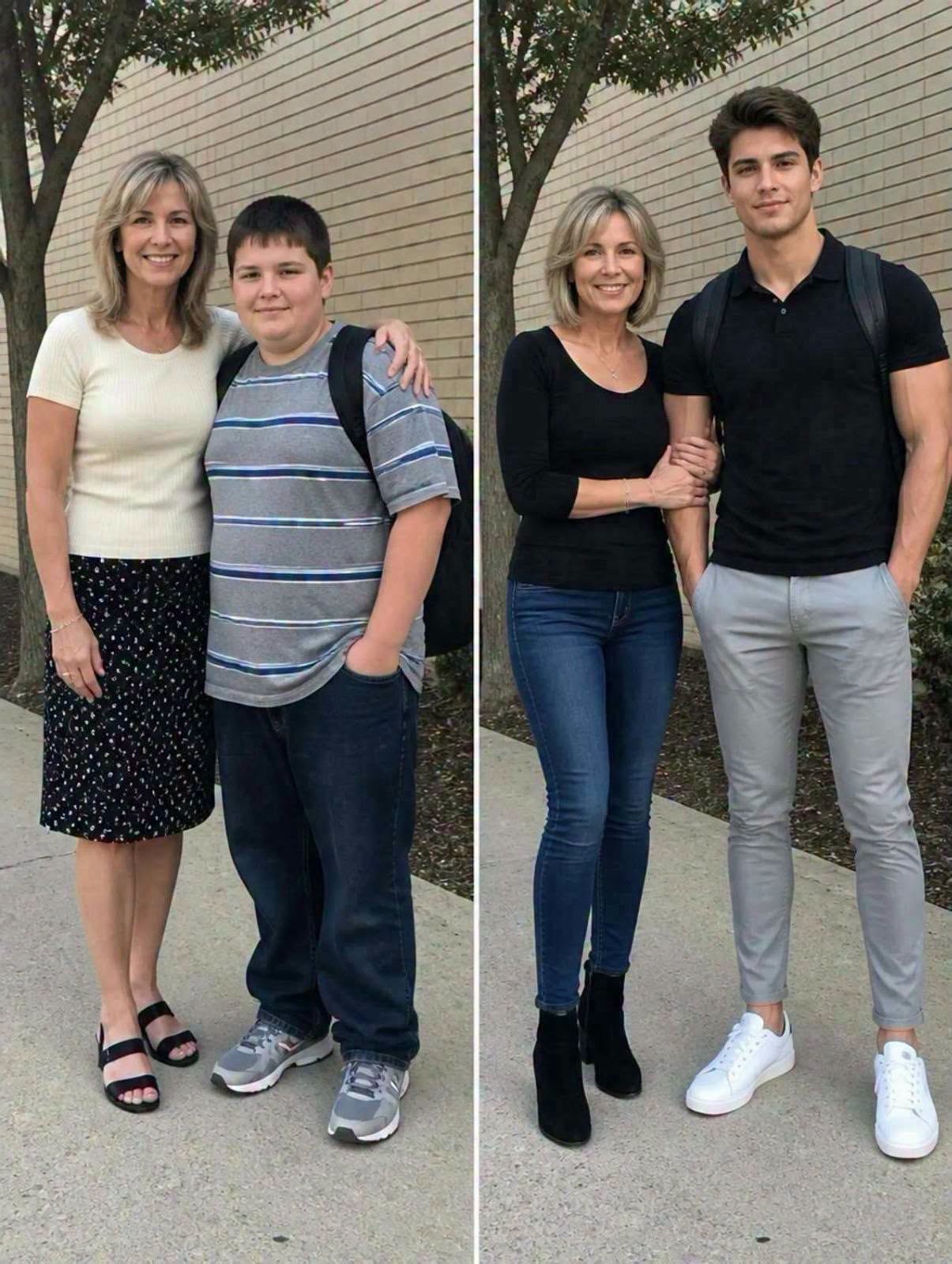
    Throughout my son’s school years, I watched him hide the hurt of being teased, overlooked, and left behind. After graduation, he built a life beyond those memories. Discovering that his classmates had deliberately omitted him from their reunion guest list could have reopened every wound. Instead, he attended with confidence and no demand for an apology. Offered the microphone, he explained that their rejection had taught him something lasting: his worth was never theirs to decide.

    Then he shared what he had done with that lesson. He had launched a scholarship program for students facing bullying and isolation, with early donations funding counseling, educational support, and mentoring for dozens of young people. Applause followed, along with apologies and admissions from classmates who hadn’t understood the damage. He left without resentment. For me, the triumph wasn’t their recognition; it was knowing he was helping other children feel less alone than he had.