Blog

  • Only One Detail Is Different — Can You Spot It?

    Only One Detail Is Different — Can You Spot It?

    Your eyes are betraying you. What looks like a perfectly matched pair of pictures can turn a harmless challenge into a battle with your own certainty, as every failed glance makes that missing detail feel more personal. Somewhere in plain sight, one tiny change is waiting to shatter your confidence and reveal what your brain keeps refusing to noti… Continues…

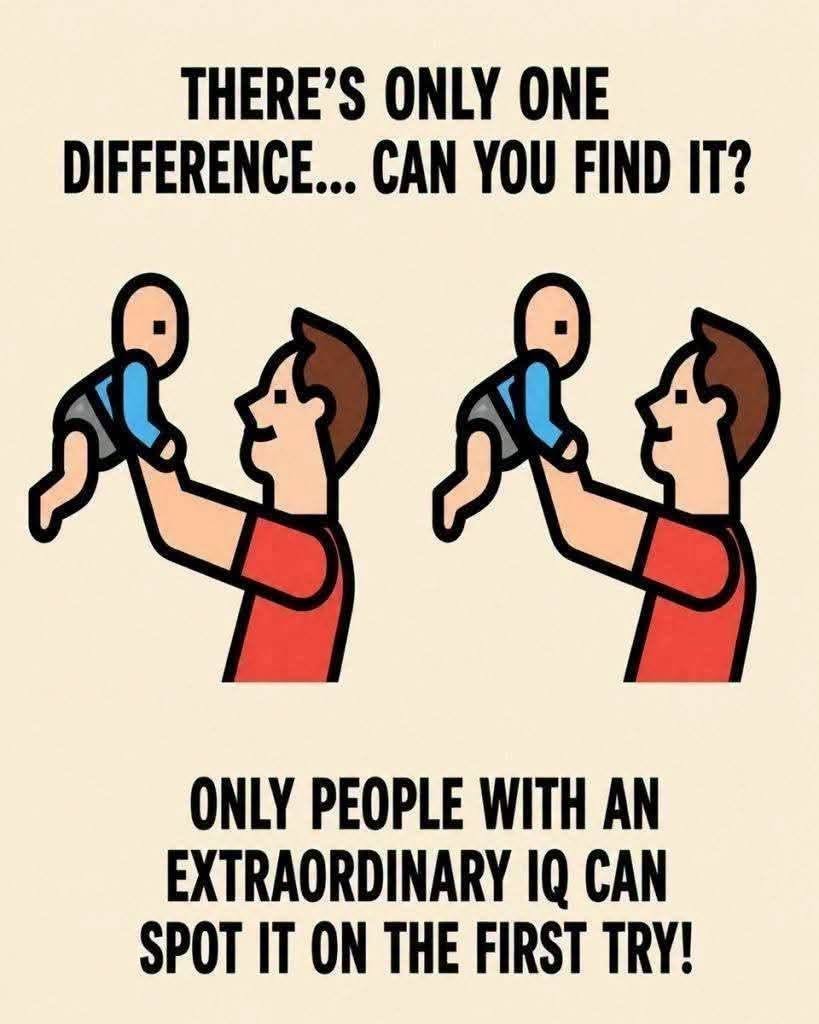
    At first, a spot-the-difference puzzle feels like an easy win. You look from one image to the other, expecting the mismatch to announce itself. Instead, familiar shapes blend together, and confidence gives way to frustration. Some people catch the alteration immediately; others need a break before returning with fresh attention. Neither experience makes the challenge any less compelling. The tension comes from knowing that the answer is visible while still being unable to recognize it.

    When the difference finally clicks, relief often arrives with a laugh: how could something so small have escaped you for so long? A slower, more deliberate comparison can help—checking one section at a time rather than repeatedly scanning the whole picture. Beyond the game, there is a modest reminder worth keeping. Being certain you have looked closely is not the same as noticing everything. Sometimes, the breakthrough begins when you stop rushing to be right.


  • Susan Dell steals the spotlight beside Trump – her dramatically different look has surgeons weighing in

    Susan Dell steals the spotlight beside Trump – her dramatically different look has surgeons weighing in

    A message about children’s futures became a debate about one woman’s face. Susan Dell stood beside Donald Trump with a multibillion-dollar pledge behind her and an appeal to families across America. But as footage spread and older photographs resurfaced, attention shifted toward her appearance, leaving supporters pushing back against personal scrutiny as the conversation took a very different dire… Continues…

    At the October 7 White House event, Susan Dell urged parents and grandparents to claim Trump Accounts, an initiative intended to help children build savings. Her family had pledged $6.25 billion to support the effort. Appearing with her husband, Michael Dell, she encouraged families to contribute toward their children’s futures. Trump praised her remarks and said he would endorse her if she sought office, adding an unexpected political moment to the announcement.

    Dell founder Michael Dell and his wife, Susan, attend President George W. Bush’s Inaugural Ball. (Photo by mark peterson/Corbis via Getty Images)
    Susan Dell, co-founder and Chairman of the Board of the Michael & Susan Dell Foundation, attends the 6th Annual Sesame Workshop Benefit Gala at Cipriani 42nd Street on May 28, 2008 in New York City. (Photo by Will Ragozzino/Getty Images)
  • Mini Str0ke in the Elderly: Common and Unusual Symptoms

    Mini Str0ke in the Elderly: Common and Unusual Symptoms

    A transient ischemic attack, or TIA, happens when blood flow to part of the brain is briefly blocked, often by a clot. Symptoms usually resolve, but the risk of a subsequent stroke is especially high in the first days. Older adults face greater risk, particularly with high blood pressure, diabetes, high cholesterol, smoking, or atrial fibrillation. Sudden difficulty speaking, weakness on one side, vision changes, or loss of coordination require emergency assessment. A sudden severe headache also warrants emergency care, whether or not a TIA is suspected.

    Call your local emergency number immediately; do not wait for symptoms to return or drive the person yourself. Note when symptoms began or when they were last well. Clinicians may use brain imaging, blood vessel tests, and heart monitoring to guide treatment. Prevention can include prescribed antiplatelets or anticoagulants, cholesterol treatment, and blood pressure management. Do not start aspirin without medical guidance. Prompt action can protect someone’s future.

  • He Opened a Bag of Broccoli – What He Found Inside Left Him Horrified

    He Opened a Bag of Broccoli – What He Found Inside Left Him Horrified

    A package of broccoli concealed a passenger nobody expected: a snake. Before specialists could identify the animal, the discovery raised an unsettling question about what had slipped through the journey from field to food packaging. The answer would bring relief, but the tiny stowaway’s extraordinary trip left one lingering mystery: how had it stayed hidden until that startling disc… Continues…

    The unexpected visitor was eventually taken to Dudley Zoo, where, according to the account, specialists identified it as a young ladder snake. Native to parts of southwestern Europe, the species is non-venomous—a reassuring outcome after such an alarming find. Its identification answered the biggest question, although the account did not establish exactly how the animal entered the package or escaped detection along the way.

    One possible explanation begins in the fields, where vegetables grow alongside wildlife. Small animals can occasionally be collected during harvesting, and broccoli’s tightly packed florets offer potential hiding places. That possibility does not make this a common occurrence: a snake in supermarket produce remains extraordinarily unusual. The story drew attention because it turned an everyday purchase into something startling. Beyond the shock, it offered a reminder that fresh food comes from living environments, without giving shoppers a reason to fear their next bag of vegetables.

  • He Opened the Wall to Find the Source of a Strange Smell and Was Stunned

    He Opened the Wall to Find the Source of a Strange Smell and Was Stunned

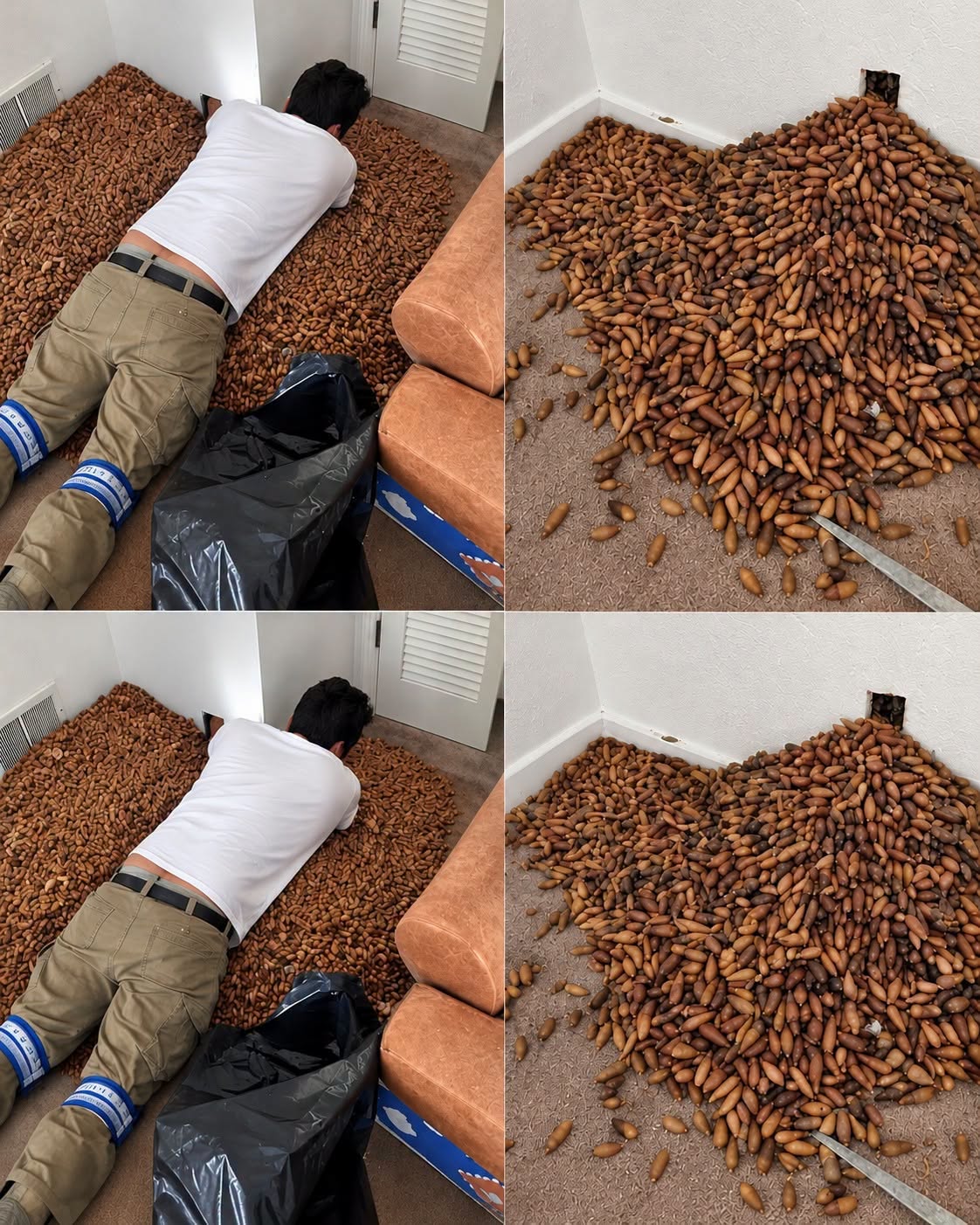
    The holes were small, but the secret behind them was staggering. When pest-control professional Nick Castro opened a California home’s wall, acorns began pouring out—and the hidden supply seemed impossible to exhaust. What looked like ordinary woodpecker damage had concealed something far bigger, turning a routine service call into a moment nobody there could have anticipated before this disc… Continues…

    According to the account, approximately 700 pounds of acorns were removed from the California house, filling roughly eight large trash bags. A woodpecker had been using openings in the siding to store food, gradually transforming the wall cavity into an enormous pantry. From outside, the damage offered little indication of the volume concealed within. For Nick Castro, the cleanup became one of the strangest assignments of a pest-control career spanning more than two decades.

    The bird was left unharmed. The openings were patched, and new siding helped make the home less inviting as a storage site. The episode offers homeowners a practical lesson: recurring exterior holes deserve investigation, not simply another repair. Wildlife may be seeking food storage, nesting space, or shelter, and professional guidance can help address the cause humanely. What remained unknown was how long this remarkable stockpile had taken to build—one small delivery at a time.

  • Should Adults Be Allowed to Order Kids’ Meals?

    Should Adults Be Allowed to Order Kids’ Meals?

    Children’s menus sit at an uncomfortable crossroads between restaurant economics and personal choice. Their lower prices and smaller servings are generally intended for younger diners, and businesses may enforce age restrictions to protect already tight margins. But adults seeking modest portions are not necessarily trying to exploit a bargain. They may simply want less food. When that request is met with a sharp refusal or a judgmental remark, an ordinary meal can become an embarrassing experience.

    The answer does not have to be unrestricted access to discounted children’s meals. Restaurants can offer smaller entrées, half portions, or clearly priced small plates that account for their costs while giving adults meaningful choices. Staff can also explain restrictions without making anyone defend their appetite. A business has every reason to protect its bottom line, but customers deserve dignity, too. Clear options and considerate service can keep a smaller order from becoming a bigger conflict.

  • Hidden Valentine

    Hidden Valentine

    After seven years together, she walked into a Valentine’s Day dinner believing it might become one of the most important nights of her life. Every detail seemed to point toward a proposal—the elegant restaurant, the candlelit table, and the nervous excitement in her partner’s behavior. She quietly imagined he might finally ask the question she had waited years to hear. Instead, the evening took an unexpected turn when he suggested they split the dinner bill. It wasn’t the cost of the meal that unsettled her, but the feeling that something deeper was happening beneath the surface. What she had expected to be a celebration of their future soon became something entirely different.

    Later, she learned that her boyfriend had been carrying an engagement ring throughout the dinner. He had intentionally suggested splitting the check because he wanted to observe her reaction before deciding whether to propose. In his mind, it was a test of her character, her attitude toward money, and whether she was the “right” person to spend his life with. For her, however, the issue had nothing to do with who paid for dinner. Couples can successfully manage finances in many different ways when they communicate openly. What hurt was realizing she had been unknowingly placed in a situation where she was being evaluated instead of treated as an equal partner. Rather than discussing their expectations for marriage, he had created a hidden challenge she never agreed to take.

    When she confronted him, he defended his decision by saying he simply wanted reassurance before making such an important commitment. But she saw it differently. She realized that trust cannot grow through secret experiments or silent judgments. Healthy relationships are built through honest conversations, mutual respect, and the willingness to address concerns openly. Although ending a seven-year relationship was incredibly painful, time helped her recognize it as a turning point rather than a failure. She no longer wanted a love that required passing hidden tests or proving her worth without knowing she was being judged. Looking back, she understood that the engagement ring was never the true symbol of commitment. The real foundation of a lasting relationship is trust, where both people feel safe enough to communicate honestly instead of testing one another in silence.

  • The Silent Sacrifice: My Daughter Abandoned Our Family for Korea, but the Truth Behind Her Annual Payments Left Me Broken

    The Silent Sacrifice: My Daughter Abandoned Our Family for Korea, but the Truth Behind Her Annual Payments Left Me Broken

    For twelve years, eight thousand dollars arrived in my account from South Korea—like clockwork. Everyone said I was lucky, that my daughter Mary Lou was devoted and thriving. I wanted to believe it. But money can’t tell you if your child is truly okay.

    After my husband died, she was my whole world. So when she married a man much older and moved across the world, I felt something was wrong. Still, she went, determined as ever, and I let her go—hoping she’d come back.

    She never did. Calls grew shorter, colder, rehearsed. Messages became routine: “I’m doing well.” I held onto that word, even as it felt empty.

    Video calls only made it worse. She looked distant, distracted. I was afraid to ask questions, afraid the truth would shatter everything. So I stayed silent and lived with the illusion.

    Years passed. I used her money to fix the house, but it never felt like home. Every holiday, I set a place for her anyway.

    By year twelve, I couldn’t take it anymore. I flew to Seoul unannounced. The house she gave me led to was large, modern—and completely lifeless.

    Inside, there were no signs of a real life. Bare rooms. No food. No warmth. Then I found boxes filled with cash. Panic set in.

    When she walked in, I barely recognized her. Exhausted, broken, older than her years. Through tears, she told me everything—abandoned by her husband, buried in his debts, working endlessly just to survive… and still sending me money.

    She had sacrificed everything so I wouldn’t worry. I didn’t care about the money anymore. I just wanted my daughter. We left together the next day—finally choosing each other over everything else.

  • Why Do Smart Travelers Throw a Water Bottle Under the Hotel Bed? The Surprising Safety Trick Explained

    Why Do Smart Travelers Throw a Water Bottle Under the Hotel Bed? The Surprising Safety Trick Explained

    Smart travelers sometimes use a simple trick when checking into a hotel room: they throw a water bottle under the bed. It may sound strange at first, but the idea behind it is surprisingly practical.

    The method works by observing how the bottle moves once it is pushed underneath. If it rolls smoothly and comes out the other side, it usually means the space under the bed is clear.

    However, if the bottle stops suddenly or doesn’t come out, it can signal that something is blocking it. This could be anything from forgotten items to objects left behind during cleaning.

    Hotel beds are often low and difficult to inspect without bending down or using a flashlight. This quick trick allows guests to check the area without much effort or discomfort.

    In most cases, what’s found under the bed is harmless, such as dust, trash, or personal belongings left by previous guests. Still, it’s useful to know what’s there.

    Some travelers use this method simply for peace of mind, especially when staying in an unfamiliar place or traveling alone. It gives them a small sense of control over their surroundings.

    It’s important to understand that this is not a foolproof safety measure. It’s just a quick and easy precaution that takes only a few seconds to try.

    Overall, the water bottle trick is a simple habit that can help travelers feel more comfortable, aware, and prepared when settling into a hotel room.

  • THE SIN OF CREMATION according to the Bible says!

    THE SIN OF CREMATION according to the Bible says!

    Cremation and Christian Faith: Tradition, Theology, and Choice

    In recent decades, cremation has become increasingly common in Western societies, driven by rising costs, limited burial space, and environmental concerns. For many families, it is a practical and respectful alternative to traditional burial. Yet within the Christian community, this shift raises theological questions about the body, tradition, and the promise of the afterlife.

    The central debate often asks whether cremation is a “sin.” Unlike burial, which is deeply rooted in biblical precedent, cremation lacks a single explicit prohibition. Historically, burial was the norm: patriarchs like Abraham and Moses were interred in the earth, reflecting a belief in the body as sacred and destined for future restoration.

    The most significant example is the burial of Jesus Christ. His entombment has long served as a model for Christians, symbolizing hope through the metaphor of sowing a seed that will rise again. St. Paul emphasized this idea, linking burial with resurrection and reinforcing why burial became the preferred tradition for centuries.

    Yet the Bible contains no direct law against cremation. Cases where bodies were burned usually involved extreme circumstances, not moral instruction. Modern theologians argue that while burial is traditional, cremation falls under Christian liberty, not doctrinal requirement.

    Concerns about cremation often invoke the body as the “temple of the Holy Spirit.” Some worry that burning the body shows disrespect or a lack of faith in resurrection. Scholars counter that God’s power to raise the dead is not limited by the physical state of remains, whether buried, burned, or scattered.

    Historically, cremation was linked to pagan practices denying resurrection, reinforcing Christian burial as counter-cultural. Today, cremation is typically motivated by practicality rather than theology, reflecting personal or familial choice rather than doctrinal rebellion.

    Most Christian denominations now agree that cremation does not affect salvation or resurrection. The faith emphasizes transformed, glorified bodies rather than the preservation of earthly remains, making the method of disposal secondary to spiritual hope.

    Ultimately, whether burial or cremation is chosen, the focus remains on Christ’s resurrection. The body’s resting place—grave or urn—matters less than the eternal promise of life beyond death, where neither fire nor decay can alter the hope found in Him.