Category: Uncategorized

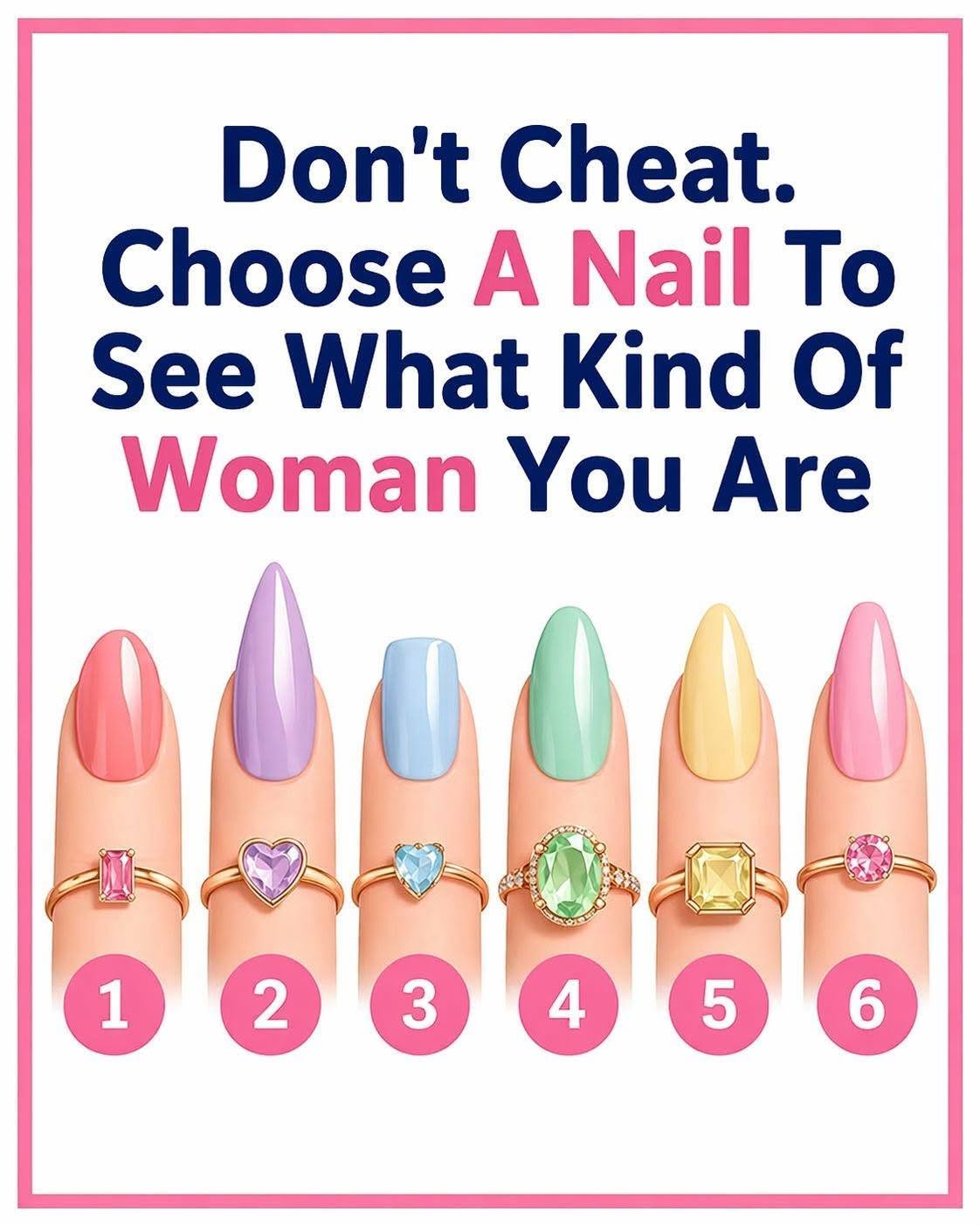
  • Don’t Cheat. Choose A Nail To See What Kind Of Woman You Are…Read more

    Don’t Cheat. Choose A Nail To See What Kind Of Woman You Are…Read more

    This text presents a personality-style interpretation based on choosing one of six purple nail designs. Each design is said to reflect different emotional, social, and behavioral tendencies based on instinctive attraction rather than overthinking.

    If you chose Nail 1, it suggests quiet confidence and restraint. The simple, structured design is linked to someone who values stability, self-control, and understated elegance. This type of person is seen as reliable, composed, and not driven by attention or validation.

    If you chose Nail 2, it represents emotional depth and sensitivity. The heart detail is associated with romantic, intuitive individuals who prioritize feelings and connection. This choice reflects someone compassionate, expressive, and sometimes emotionally vulnerable in relationships.

    If you chose Nail 3, it reflects balance and calm logic. The design suggests a grounded personality that values stability and avoids extremes. People drawn to it are described as thoughtful, steady, and emotionally controlled while still caring deeply.

    If you chose Nail 4, it indicates boldness and ambition. The larger, eye-catching gem symbolizes confidence, leadership, and a desire to stand out. This type of person is portrayed as goal-driven, competitive, and comfortable being noticed.

    If you chose Nail 5, it suggests practicality with refined taste. The structured design reflects logical thinking, planning, and long-term focus. At the same time, there is an appreciation for aesthetics, showing a balanced mix of discipline and style.

    If you chose Nail 6, it reflects independence and subtle strength. The minimal design suggests a private, observant personality that values control over personal expression. These individuals are often seen as hard to read but internally confident and self-reliant.

    Overall, the concept emphasizes that such choices are not literal definitions of personality, but reflections of instinct and preference. They highlight tendencies in how people balance emotion, logic, attention, and privacy in everyday life.

    In the end, the purpose is not to label you, but to suggest that even small, instant preferences can reveal patterns in how you think, feel, and present yourself to the world.

  • My Father Signed a Million Dollar House Purchase Using My Inheritance

    My Father Signed a Million Dollar House Purchase Using My Inheritance

    At 11:58 p.m. on her eighteenth birthday, Ava quietly moved her entire $2.4 million inheritance into a protected trust her parents could not access. She suspected something was wrong, but she didn’t yet know how far it would go.

    The next morning, her family acted as if nothing unusual had happened. At breakfast, her sister Lena thanked her for “buying” a $1.4 million house, while their parents calmly discussed the purchase as already completed. Ava realized they had planned everything without her consent.

    When she confronted them, she learned the truth: her father had been treating her inheritance as family money for years and had already arranged the house purchase using her funds. He believed she would simply accept it as usual.

    Ava also discovered a forged authorization claiming she had allowed him to use up to $1.5 million. Although her signature had been imitated, she had already secured her assets in a trust before it could be used against her.

    With help from the estate attorney, she immediately froze all transactions. The trust blocked access to the funds, and the house purchase began to collapse as banks and legal teams flagged the irregularities.

    Her family reacted with anger and guilt, accusing her of ruining Lena’s future. But Ava refused to reverse her decision, standing firm that her inheritance could not be spent without her consent.

    As investigations continued, it was revealed her father had also misused funds in the past. Legal pressure forced repayment agreements, and the real-estate deal fully fell apart, leaving the family divided.

    A year later, Ava lived independently and studied finance, her trust now fully under professional management. Though her family still demanded forgiveness, she chose distance and stability instead, finally controlling her own future and finances without interference.

  • Your Subconscious Is Betraying You: The First Animal You See Reveals Your Darkest Personality Flaw

    Your Subconscious Is Betraying You: The First Animal You See Reveals Your Darkest Personality Flaw

    Have you ever wondered why you repeat certain patterns in life, struggle with relationships, or feel controlled by hidden traits you can’t quite name? Viral “psychological illusion” tests claim these patterns can be revealed in seconds through simple visual choices.

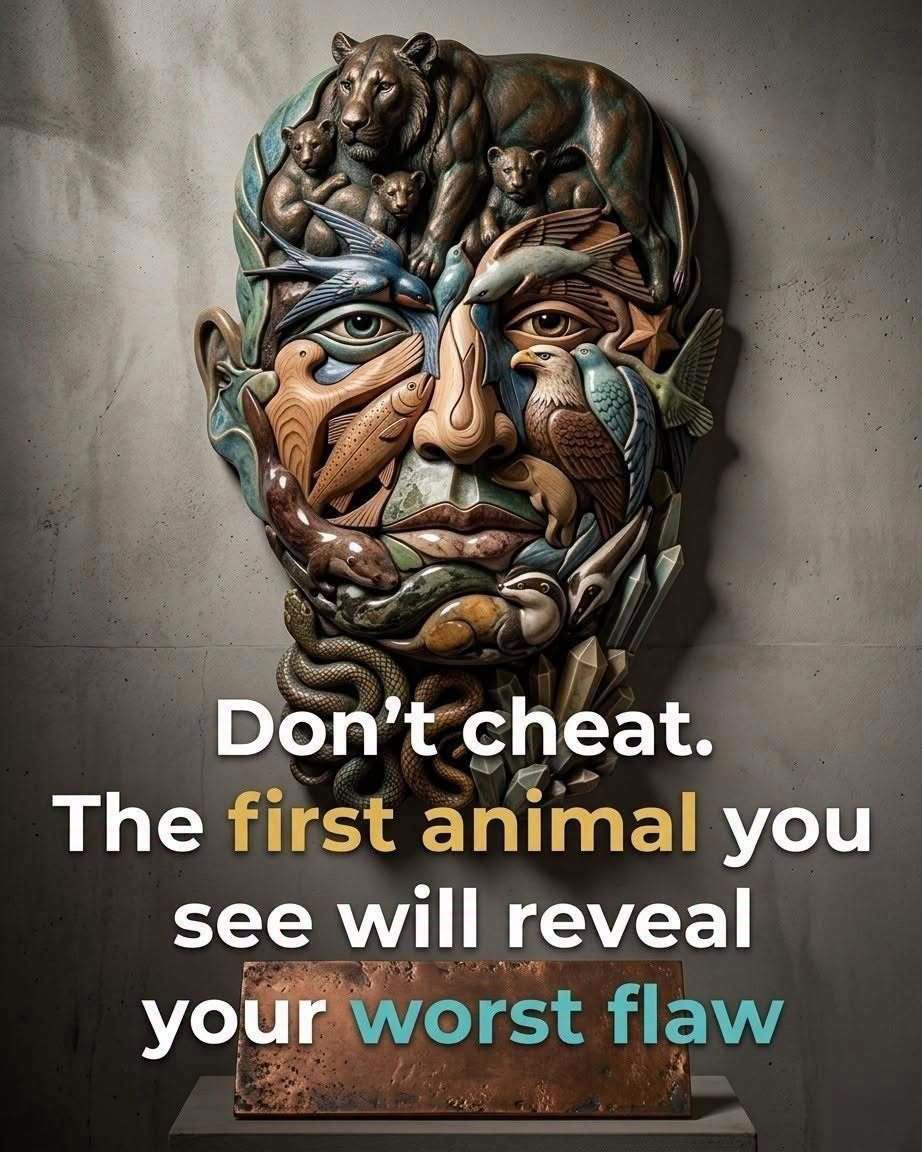
    One of the most popular formats is the “first animal you see” image test. You’re shown a complex illustration and asked to identify the first animal that stands out. The idea is that your brain reveals subconscious tendencies through instinctive perception.

    These tests are often compared loosely to Rorschach-style exercises. When faced with ambiguous images, the human brain naturally imposes order on chaos, prioritizing certain shapes and details based on attention, memory, and bias.

    Different interpretations are said to reflect different personality traits. For example, seeing a lion may be linked to pride or dominance, while a rabbit is associated with sensitivity or anxiety. A bird can symbolize independence, a snake mistrust, and an elephant strong memory or attachment to the past.

    However, these interpretations are not scientifically validated. They are typically built on symbolic associations rather than clinical psychology and should be understood as entertainment rather than diagnostic tools.

    Much of their popularity can be explained by the Barnum Effect, where people relate to vague or general statements because they feel personally accurate. This is why many quiz results seem meaningful even when they are broadly applicable to almost anyone.

    Despite this, such tests can still encourage self-reflection. They may prompt people to consider their habits, emotions, or reactions more thoughtfully, even if the underlying mechanism is not scientifically rigorous.

    Ultimately, the value of these viral illusions lies not in accuracy but in perspective. They highlight how differently people perceive the same image and remind us that self-understanding often comes from reflection, not quick answers.

  • I Found a Strange Object in His Girlfriend’s Drawer — The Answer Surprised Him

    I Found a Strange Object in His Girlfriend’s Drawer — The Answer Surprised Him

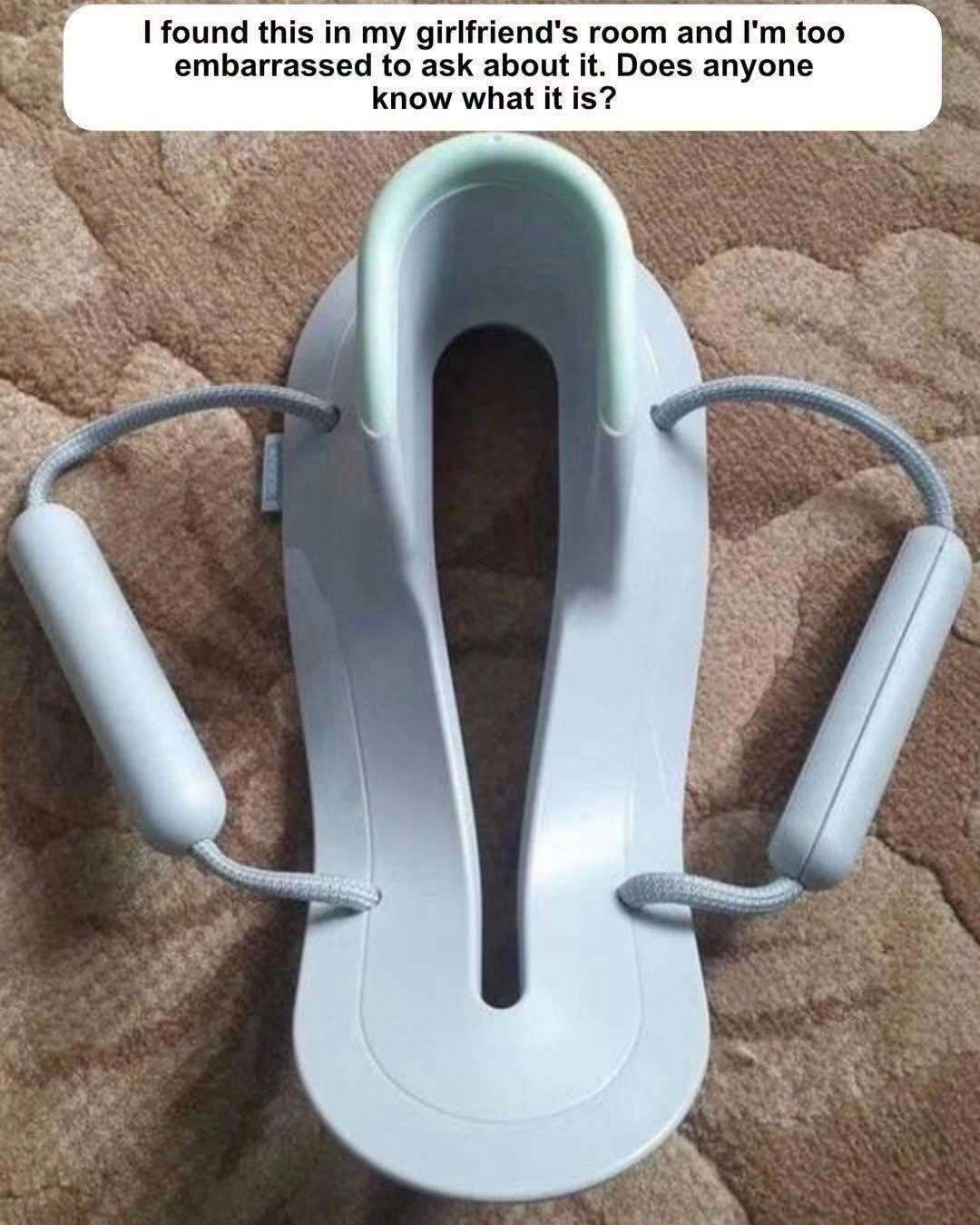
    While helping his girlfriend clean her room, a man discovered a strange object hidden inside one of her drawers. It had two handles and a curved shape, but he had no idea what it was designed to do. Instead of immediately asking his girlfriend, he took a photo and decided to ask people online. “I’ve been staring at it for the last 20 minutes trying to figure it out,” he admitted, completely puzzled by its unusual design.

    The comments quickly filled with theories. Some people believed it was a kitchen gadget, while others suggested it might be a beauty tool or some kind of unusual household device. Every new suggestion seemed to make the mystery even more confusing. “The more answers I read, the less certain I became,” he said as the discussion continued.

    Eventually, however, several people began suggesting the same possibility. They believed the mysterious object was an abdominal exercise device designed for home workouts. Curious about the answer, he decided to research the item instead of relying entirely on the online guesses.

    His research finally confirmed it. The object was indeed a compact piece of home fitness equipment designed to help exercise the abdominal and core muscles. The user holds the two handles while performing controlled movements, while the curved section helps guide and support the motion.

    Depending on how it is used, the device can also engage other muscles involved in stabilization and movement, including the obliques, lower back, shoulders, and surrounding core muscles. Its compact size makes it convenient to store and use at home without taking up much space.

    Of course, the device itself is not a magical shortcut to getting fit. Like other exercise equipment, it works best when combined with consistent workouts, proper technique, and healthy lifestyle habits. The results depend much more on regular effort than on the equipment alone.

    Later that evening, he finally decided to ask his girlfriend about the mysterious object. She immediately laughed when she saw it. She explained that she had purchased it during a fitness phase after seeing it recommended online and had used it regularly for a few weeks.

    Eventually, however, life became busy and the exercise equipment was forgotten inside the drawer. The mystery that had consumed his attention for nearly twenty minutes finally had a simple explanation. What looked like an unusual and possibly mysterious gadget was nothing more than an old piece of home workout equipment.

  • They Kicked Me Out of the Will Reading

    They Kicked Me Out of the Will Reading

    They Kicked Me Out of the Will Reading …Three Days Later, the Truth Came Out

    My stepfather never used the word step.

    Not once in the fifteen years he raised me did he draw that line. To him, I wasn’t a technicality or an obligation. I was simply his child. He showed up in all the ways that mattered—quietly, consistently—without ever asking for recognition.

    He ran behind my bike with one steady hand on the seat until I learned to balance on my own. When I failed my first serious math test, he sat beside me at the kitchen table and worked through every problem until the numbers finally made sense.

    At my high school graduation, he stood in the crowd smiling like the diploma belonged to him, eyes shining in a way that made me laugh and tear up at the same time.

    He never missed a parent meeting. Never forgot a birthday. Never once reminded me we didn’t share blood.

    When he passed away, it felt like the ground disappeared beneath me.

    The funeral was formal and restrained. People spoke in polished phrases about his career, his accomplishments, his reputation. Everything they said was true—but incomplete. They described the man the world knew, not the one who packed my lunches, who checked the locks at night, who sat on the edge of my bed and said, “You’re going to be okay. I’ve got you.”

    After the service, we were told the will would be read later that week.

    I went, not expecting anything extraordinary. I wasn’t thinking about money or property. I just wanted to be there—to be acknowledged as someone who mattered to him.

    That hope lasted less than a minute.

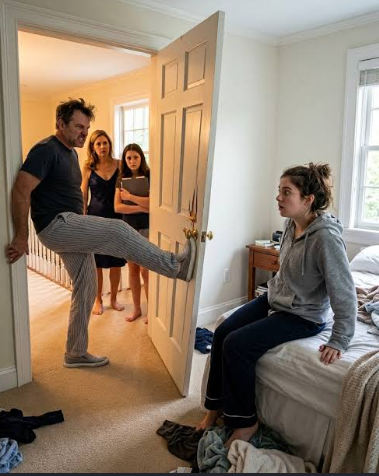
    As I approached the lawyer’s office, his biological children stepped in front of the door. We had lived in the same house for years but never truly connected. Polite coexistence—that was all.

    One of them spoke without meeting my eyes.

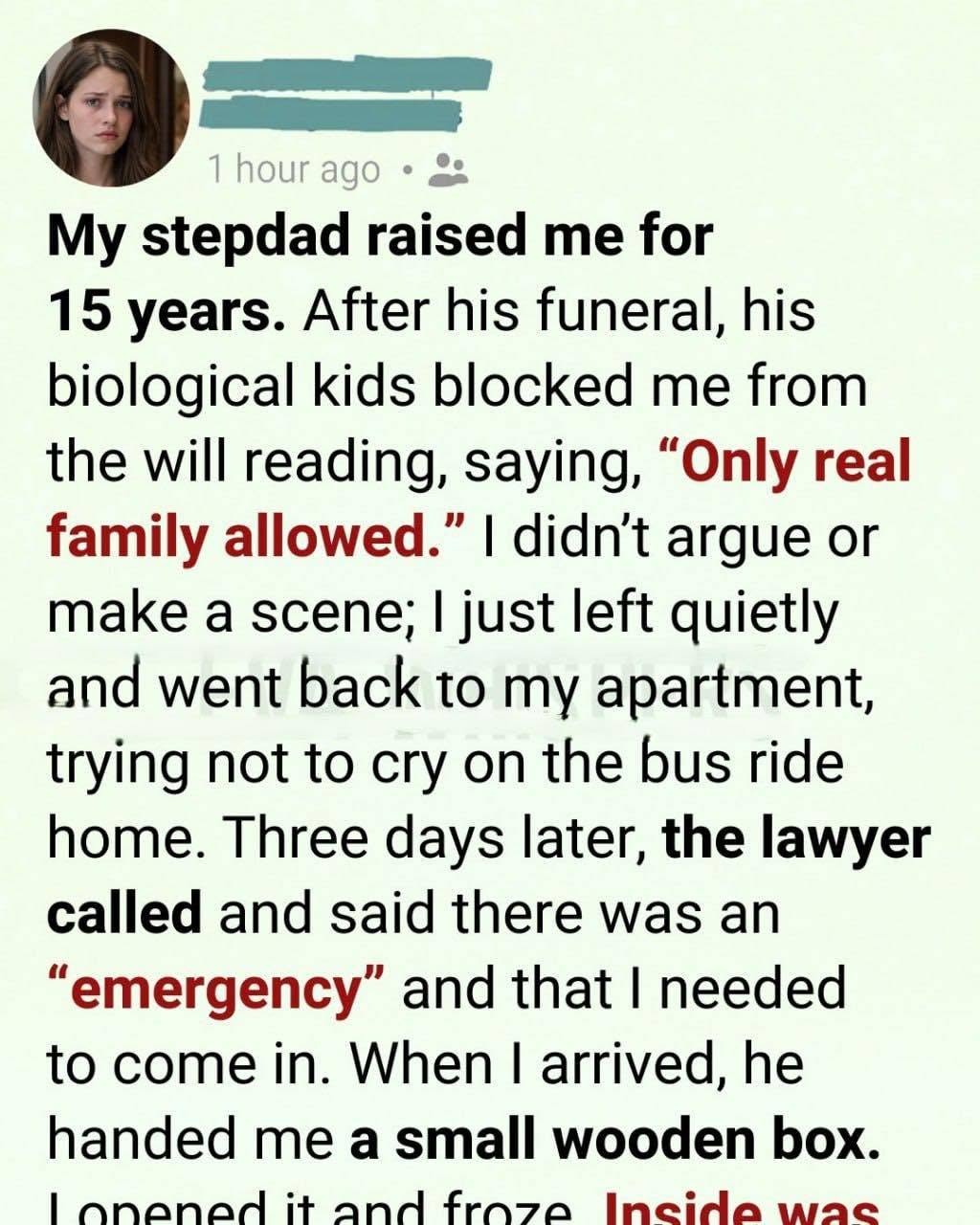
    “Only real family is allowed inside.”

    The words landed harder than I expected.

    For a moment, I considered arguing. I could have reminded them who helped with my homework, who stayed up all night when I was sick, who chose me—again and again. I could have listed every ordinary, sacred act of fatherhood he carried out without hesitation.

    But I didn’t.

    I nodded once and walked away.

    On the bus ride home, I counted stops so I wouldn’t cry in front of strangers. The ache in my chest wasn’t just grief. It was erasure. The feeling that a life I thought I belonged to had quietly edited me out.

    When I got home, I sank onto the couch and let the tears come the way I’d learned to over the years—quietly, without spectacle.

    Three days passed.

    Then my phone rang.

    It was the lawyer.

    His voice was careful, almost urgent. There had been an issue, he said. I needed to come in as soon as possible.

    I assumed the worst—a mistake, a complication, some final confirmation that I had no place in any of it.

    When I arrived, the office was empty and still. The lawyer asked me to sit, then disappeared into the back room. He returned holding a small wooden box, its edges worn smooth as if it had been handled often.

    “He left very specific instructions,” he said gently. “This was meant for you. Personally.”

    My hands trembled as I opened it.

    Inside were photographs.

    One showed us standing by a river, fishing poles tilted awkwardly, both grinning like we’d conquered something enormous. Another captured him laughing while I held up a fish so small it barely qualified.

    There were school certificates I didn’t even remember bringing home—carefully stacked and preserved.

    And beneath them, letters.

    One for every year he raised me.

    I opened the first. Then the next.

    His handwriting filled each page—steady, unmistakable. He wrote about watching me grow into myself. About worrying when I got too quiet. About how becoming my father had been the greatest privilege of his life.

    Not responsibility.

    Privilege.

    At the bottom of the box lay a copy of the will.

    Everything was divided equally.

    Between his two biological children.

    And me.

    The lawyer told me he had made that decision years ago. He never hesitated. Never felt the need to explain himself.

    “They received their share,” the lawyer said. “And so did you.”

    I left the office holding the box against my chest, grief and gratitude tangled together.

    That was when I finally understood something that took me years to put into words:

    Love doesn’t need witnesses.

    It doesn’t argue at doorways or demand recognition. It doesn’t rely on bloodlines or labels to validate itself. Sometimes it works quietly in the background, making sure you are seen, protected, and remembered—even after goodbye.

    I wasn’t his family because of paperwork.

    I wasn’t his family because of DNA.

    I was his family because he showed up.

    Day after day.
    Year after year.

    And in the end, that love outlasted everything else.
  • “This Drink Destroys Bones” — The Viral Image That Has Millions Questioning Their Daily Habits

    “This Drink Destroys Bones” — The Viral Image That Has Millions Questioning Their Daily Habits

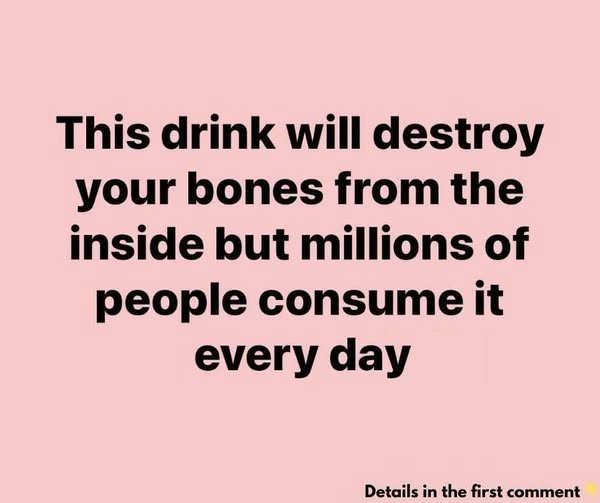
    A shocking image has been spreading rapidly across social media platforms, showing a cracked and crumbling hip bone beside the warning:

    “This drink destroys bones, yet many people drink it every day.”

    The dramatic picture immediately grabs attention. Many viewers are left wondering the same thing:

    What drink could possibly be so dangerous?

    Most people assume the image is referring to soft drinks — especially sugary sodas and cola beverages. For years, health experts have debated whether drinking large amounts of soda may negatively affect bone health, particularly when consumed daily over long periods of time.

    But how much of this viral claim is actually true?

    The answer is more complicated than the image suggests.

    The reason sodas are often blamed for weak bones comes from several scientific concerns. One major issue is phosphoric acid, an ingredient commonly found in cola drinks. Some researchers believe excessive phosphoric acid intake may interfere with the body’s calcium balance if a person’s diet is already low in calcium.

    Calcium is one of the most important minerals for maintaining strong bones. If the body doesn’t get enough calcium from food, bones may gradually weaken over time.

    Another concern is that people who drink large amounts of soda sometimes replace healthier drinks like milk, yogurt smoothies, or calcium-rich beverages with sugary soft drinks instead. This indirect effect may contribute to weaker bones over many years.

    However, experts are careful to point out something important:

    Drinking a soda occasionally will not suddenly “destroy” your bones.

    The viral image exaggerates the danger for dramatic effect.

    Bone health is influenced by many different factors, including nutrition, exercise, age, hormones, vitamin D levels, smoking, alcohol use, and genetics. No single drink instantly causes bones to crack apart like the image shows.

    Still, doctors agree that regularly consuming large amounts of sugary beverages can create other serious health problems.

    Sugary soft drinks have been linked to obesity, type 2 diabetes, heart disease, tooth decay, and metabolic issues. Some studies also suggest that people with poor overall diets and high soda consumption may face a greater risk of lower bone density later in life.

    Energy drinks are another growing concern. Many contain extremely high levels of caffeine and sugar. Excessive caffeine intake may slightly reduce calcium absorption when consumed in very large amounts. Combined with poor sleep, unhealthy eating habits, and dehydration, this can negatively impact overall health over time.

    The image also taps into a bigger fear many people have about aging and osteoporosis.

    Osteoporosis is a condition where bones become fragile and more likely to fracture. Millions of people around the world suffer from it, especially older adults. Hip fractures, like the one shown in the image, can become life-changing injuries that require surgery and long recovery periods.

    Because of this fear, dramatic health images spread very quickly online.

    But there’s a problem with viral health posts:

    They often oversimplify complex medical topics.

    In reality, bone health depends much more on long-term lifestyle choices than on one specific drink alone. A person who exercises regularly, gets enough vitamin D and calcium, eats balanced meals, and stays active can still maintain healthy bones even if they occasionally drink soda.

    On the other hand, someone with poor nutrition, little physical activity, smoking habits, and chronic deficiencies may experience weaker bones regardless of avoiding soft drinks.

    Many nutrition experts recommend moderation rather than panic.

    Instead of fearing one beverage completely, they suggest focusing on overall healthy habits:

    • Eat calcium-rich foods
    • Spend time outdoors for vitamin D
    • Exercise regularly
    • Avoid smoking
    • Limit excessive sugar intake
    • Stay hydrated with water

    The viral image succeeds because it combines fear with mystery. It forces viewers to pause and question something they may consume every day without thinking twice.

    And while the claim may be exaggerated, it still highlights an important truth:

    What we consistently put into our bodies over years can have a major impact on our long-term health.

    So the next time you reach for a sugary drink, the real question may not be whether it instantly destroys bones…

    …but whether your daily habits are helping build a healthier future — or slowly weakening it.

  • Exclusive Subterranean Sanctuary: 11-Acre Earth-Sheltered Bunker Home

    Exclusive Subterranean Sanctuary: 11-Acre Earth-Sheltered Bunker Home

    Nestled on an expansive 11.59-acre property, this unique retreat offers an exceptional combination of privacy, security, and innovative subterranean design. Surrounded by dense woodland, the secluded setting provides a rare sense of peace and isolation.

    The three-bedroom, three-bathroom home is built directly into the natural contours of the hillside. Designed to blend with its surroundings, the earth-sheltered structure remains discreetly tucked into the landscape, creating a private retreat hidden from view.

    Distinctive soft-blue concrete retaining walls frame the wide paved driveway and entry patio, adding character to the property’s rugged setting. Large glass doors and an overhead garage door create a seamless transition between the sheltered interior and outdoor areas.

    The property also features practical outdoor gathering spaces, including an umbrella-covered seating area positioned alongside the retaining wall. These spaces provide comfortable spots for relaxing, entertaining, or enjoying the surrounding woodland.

    Above the residence, the grassy hillside continues across much of the roof, helping the structure blend naturally into the terrain. Round skylight domes punctuate the landscape, bringing daylight into the subterranean rooms and creating a bright, inviting interior.

    Large multi-pane windows along the exposed facade further enhance the home’s connection with the outdoors. Despite its underground construction, the living areas benefit from abundant natural light, open views, and spacious interiors designed for everyday comfort.

    Built with reinforced concrete walls and ceilings, the structure incorporates heavy-duty engineering intended to withstand demanding conditions. Off-grid utility systems add another layer of independence, making essential amenities available even during unexpected disruptions.

    Surrounded by more than 11 acres of natural terrain, the property offers ample opportunities for recreation, future expansion, or simply enjoying complete solitude. Combining modern living, resilient construction, and discreet architecture, this one-of-a-kind earth-sheltered retreat delivers privacy and functionality in an extraordinary setting

  • My girlfriend came home after a walk with the dog. Attached to the dog’s fur, we discovered this. We’ve been…

    My girlfriend came home after a walk with the dog. Attached to the dog’s fur, we discovered this. We’ve been…

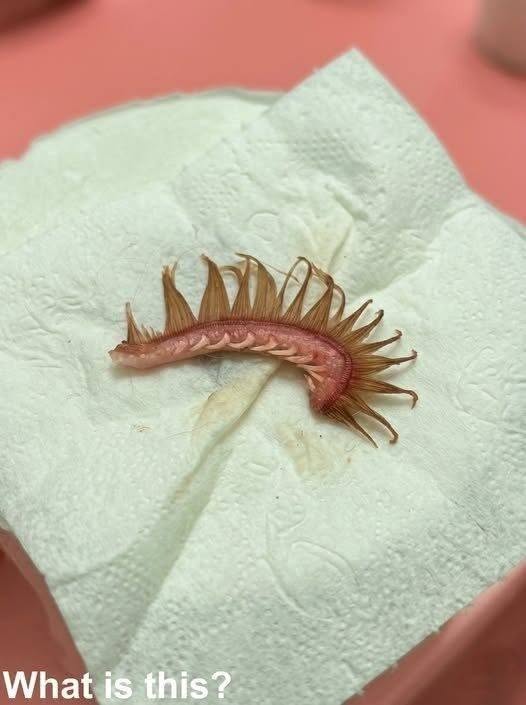
    My girlfriend came home from walking the dog, and something immediately felt wrong. Before she even stepped through the door, I noticed a strange translucent shape clinging to his wiry fur. It moved strangely under the light, and within seconds, my mind had already decided we were dealing with something horrible.

    We crouched beside him and examined every inch of his coat. Our little apartment suddenly felt like the setting of a horror movie. We whispered theories about ticks, parasites, infections, and expensive emergency vet visits while our dog happily wagged his tail, completely unaware of the panic surrounding him.

    The more we stared, the worse it seemed. Every flicker in his fur looked suspicious. I imagined the vet examining him, the fluorescent waiting room, the antiseptic smell, and the possibility of being told he needed treatment or even an overnight stay. Meanwhile, the dog continued sniffing around the carpet as though absolutely nothing had happened.

    Then my girlfriend moved closer and squinted at the strange object beneath the kitchen light. Something about it looked different now. She carefully touched it with one fingertip, expecting it to move. Instead, it shifted awkwardly but remained firmly attached to the fur.

    Then the terrifying mystery finally revealed itself.

    It wasn’t a tick. It wasn’t a parasite. It wasn’t some strange creature hiding in our dog’s coat. It was a pair of fake eyelashes—warped, soggy, and stubbornly tangled in his fur after his damp evening walk. For several seconds, we simply stared at them before bursting into helpless laughter.

    The relief was immediate. Our dog looked at us with complete confusion, wagging his tail as though wondering why his humans had suddenly lost their minds. We gently removed the eyelashes and threw them away, still laughing about how quickly our imaginations had transformed something harmless into a medical emergency.

    The incident stayed with me because it showed how easily fear can distort reality. When something seems unfamiliar, our minds often rush toward the worst explanation before we have enough information. A harmless object can become terrifying simply because we don’t understand what we’re seeing.

    That evening, watching our dog peacefully curl up on the rug, I realized the experience was a small reminder to pause before panicking. Sometimes the monsters we imagine are nothing more than ordinary things viewed through frightened eyes. In our case, the terrifying creature was just a pair of fake eyelashes—and the best cure was laughter.

  • My girlfriend came home after a walk with the dog. Attached to the dog’s fur, we discovered this. We’ve been…

    My girlfriend came home after a walk with the dog. Attached to the dog’s fur, we discovered this. We’ve been…

    My girlfriend came home from walking the dog, and something immediately felt wrong. Before she even stepped through the door, I noticed a strange translucent shape clinging to his wiry fur. It moved strangely under the light, and within seconds, my mind had already decided we were dealing with something horrible.

    We crouched beside him and examined every inch of his coat. Our little apartment suddenly felt like the setting of a horror movie. We whispered theories about ticks, parasites, infections, and expensive emergency vet visits while our dog happily wagged his tail, completely unaware of the panic surrounding him.

    The more we stared, the worse it seemed. Every flicker in his fur looked suspicious. I imagined the vet examining him, the fluorescent waiting room, the antiseptic smell, and the possibility of being told he needed treatment or even an overnight stay. Meanwhile, the dog continued sniffing around the carpet as though absolutely nothing had happened.

    Then my girlfriend moved closer and squinted at the strange object beneath the kitchen light. Something about it looked different now. She carefully touched it with one fingertip, expecting it to move. Instead, it shifted awkwardly but remained firmly attached to the fur.

    Then the terrifying mystery finally revealed itself.

    It wasn’t a tick. It wasn’t a parasite. It wasn’t some strange creature hiding in our dog’s coat. It was a pair of fake eyelashes—warped, soggy, and stubbornly tangled in his fur after his damp evening walk. For several seconds, we simply stared at them before bursting into helpless laughter.

    The relief was immediate. Our dog looked at us with complete confusion, wagging his tail as though wondering why his humans had suddenly lost their minds. We gently removed the eyelashes and threw them away, still laughing about how quickly our imaginations had transformed something harmless into a medical emergency.

    The incident stayed with me because it showed how easily fear can distort reality. When something seems unfamiliar, our minds often rush toward the worst explanation before we have enough information. A harmless object can become terrifying simply because we don’t understand what we’re seeing.

    That evening, watching our dog peacefully curl up on the rug, I realized the experience was a small reminder to pause before panicking. Sometimes the monsters we imagine are nothing more than ordinary things viewed through frightened eyes. In our case, the terrifying creature was just a pair of fake eyelashes—and the best cure was laughter.

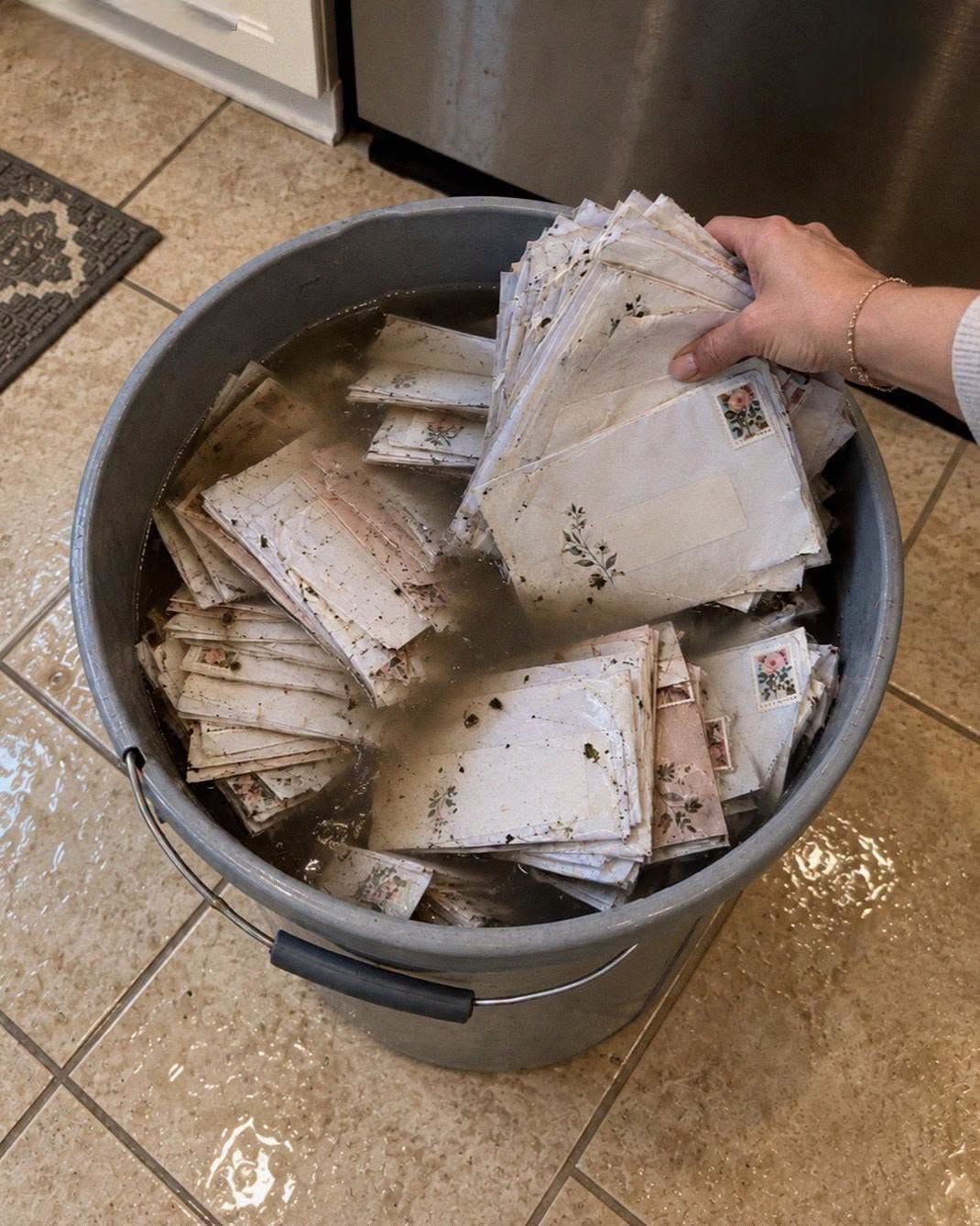
  • My Future MIL Dumped All Our Stamped Wedding Invitations Into a Bucket of Dirty Water and Swore It Was Just a Mishap What My Fiancé Did Next Was Her Worst Nightmare

    My Future MIL Dumped All Our Stamped Wedding Invitations Into a Bucket of Dirty Water and Swore It Was Just a Mishap What My Fiancé Did Next Was Her Worst Nightmare

    My future mother-in-law, Mavis, had strong opinions about our wedding even before the proposal was official. When Ryan showed her the ring, she immediately questioned whether it was big enough, setting the tone for what was to come. At first, I laughed it off, thinking it was harmless.

    Once we got engaged, her involvement intensified. She acted as if the wedding were her personal project, criticizing nearly every decision we made, from the flowers to the venue setup.

    She complained that our choice of white roses felt too somber and pushed for changes we didn’t want. Even practical limits, like the venue’s capacity, didn’t stop her from insisting we “just add more tables.”

    The tension grew as she kept testing boundaries, often ignoring our explanations. Ryan tried to keep the peace, but it was clear her behavior was becoming overwhelming.

    Things escalated when the guest list came up. We had agreed on a small wedding with fewer than one hundred guests, wanting an intimate celebration with people we truly knew.

    Mavis, however, arrived one evening with a list of eighteen additional guests. Many were distant relatives or people Ryan barely recognized, making the situation even more frustrating.

    When questioned, she brushed it off, insisting they were “family” and therefore belonged at the wedding. Her logic ignored our wishes entirely, as if our preferences didn’t matter.

    That moment made it impossible to keep pretending everything was fine. What once seemed like overbearing enthusiasm had clearly crossed into control, forcing us to confront the reality that boundaries were no longer optional but necessary.