
Author: xpress xpress

  • Hidden Riverfront Home in Missouri Built in 1977

    Hidden Riverfront Home in Missouri Built in 1977

    From the road, this Missouri home nearly disappears. Behind a stone entrance and a grassy slope lies a three-bedroom retreat built into the earth, where wooded riverfront seclusion replaces the familiar suburban view. Built in 1977, it promises an escape from the ordinary, but anyone dreaming of life beneath this hillside needs to understand its most important hidden det… Continues…

    Along the Osage River near Lake of the Ozarks, this earth-sheltered residence offers an unconventional version of home. Its two bathrooms, attached garage, and practical living spaces bring everyday convenience to an unusual setting. Inside, natural wood finishes and rustic details reflect its late-1970s roots, while a long hallway connects the rooms. Outside, mature trees surround the property, and the river offers opportunities for fishing, kayaking, and quiet moments beside the water.

    The hillside does more than conceal the house: surrounding soil helps moderate indoor temperatures through Missouri’s changing seasons. That benefit, however, comes with responsibilities. Anyone considering an earth-sheltered property should carefully assess waterproofing, drainage, ventilation, and structural condition before buying. Those practical checks matter as much as the scenery. For someone willing to understand its construction, the appeal is deeply personal: a place that trades a conspicuous exterior for privacy, character, and a closer connection to the natural landscape.
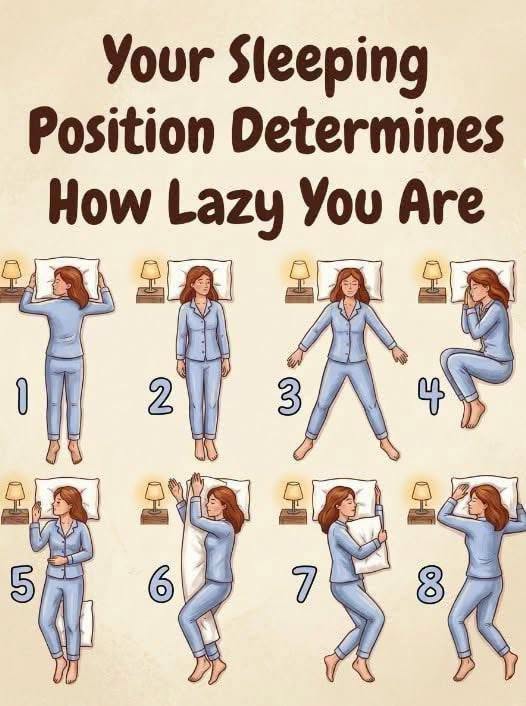

  • What does your sleeping position say about you? ♪

    What does your sleeping position say about you? ♪

    Your favorite sleeping position may not mean what you think. Those viral claims about confidence, sensitivity, and laziness can feel personal, but the real clues may involve comfort, pain, or breathing. Before you let a bedtime habit define who you are, take a closer look at what your body might actually need and what those familiar postures really reve… Continues…

    The way you settle into bed is not a reliable personality test. Despite popular illustrations linking sleep postures to confidence or laziness, those labels lack solid scientific backing. Your preferred position is more likely shaped by habit, temperature, mattress support, and physical comfort. Curling up may help you feel warm; stretching out may help you cool down. Even a familiar posture can change as your body responds to pressure throughout the night.

    What matters most is how you breathe and feel afterward. Back sleeping can ease pressure on shoulders and hips, but may worsen snoring or obstructive sleep apnea. Arms overhead can feel comfortable yet leave some people with discomfort or tingling. Adjusting pillows may help, but recurring pain, numbness, or breathing interruptions deserve medical attention. Side sleeping can help some people with position-dependent apnea, but it does not replace prescribed treatment. Your posture is a clue—not a character verdict.

  • Hidden Name on the Bridge

    Hidden Name on the Bridge

    His name was never missing—you just read straight past it. A stranger on London Bridge tips his hat, and a deceptively simple riddle challenges you to identify him using nothing but the words already on the page. Before you chase secret symbols or invent elaborate explanations, look again at one ordinary phrase that hides the answer in plain sigh… Continues…

    “I met a man on the London Bridge. He tipped his hat and drew his name.” The encounter sounds like the beginning of a mystery, especially when the next line insists, “In this riddle, I told you his name.” But there is no missing introduction to uncover, and the bridge itself offers no special clue. The solution comes from changing how you divide the sentence, rather than imagining anything beyond it.

    The man’s name is Andrew. Put “and” and “drew” together, removing the space, and the answer appears: Andrew. Read aloud, those two words can also sound like the name, making the trick particularly satisfying when someone recites the puzzle. What initially seems like an odd description of a gentleman’s actions is actually the reveal. That is the charm of this little riddle: it invites you to search for information, then shows you that you had it from the very beginning.

  • 55-year-old Learjet captain Jeff Gregory recited the ‘Lord’s Prayer’ seconds before plane crash

    55-year-old Learjet captain Jeff Gregory recited the ‘Lord’s Prayer’ seconds before plane crash

    Nine people died when a private jet plunged onto a Florida highway. Among them were a family of four and a pilot whose final moments reportedly surfaced in chilling audio, leaving loved ones facing an unimaginable loss. As investigators search for answers, reports describe what Captain Jeff Gregory was heard saying before the recording fell silent: a final pray… Continues…

    The Learjet 60 was traveling from Austin, Texas, to the Bahamas when it crashed around 12:50 p.m. Sunday. All nine aboard died, including a family of four, their nanny, 20-year-old co-pilot Nathalia, and Captain Jeff Gregory, 55. According to ABC News, the FAA said the aircraft descended from 35,250 feet to 8,750 feet in just over a minute. Investigators are examining weather conditions and evidence suggesting the aircraft may have begun breaking apart before impact; the cause remains undetermined.

    According to The Mirror, Gregory could be heard reciting the Lord’s Prayer in a recording from the flight’s final moments: “Who art in heaven, hallowed be thy name.” His former employer, East Coast Jets, offered condolences to everyone affected. A longtime friend remembered him as diligent and dependable, with a childhood dream of flying. Gregory reportedly leaves behind his wife, Cheryl, and three children—a family now grieving alongside the other victims’ loved ones.

  • Millions Of Fans Are Heartbroken As Beloved Icon Passed Away See more

    Millions Of Fans Are Heartbroken As Beloved Icon Passed Away See more

    A television home feels quieter with the reported loss of Demond Wilson. For viewers who knew him as Lamont on Sanford and Son, the news reaches beyond a familiar face to the affection beneath every argument. But the supplied account of his death at 79 also points beyond the laughter, toward a life many fans had only glimpsed befo… Continues…

    Demond Wilson gave Sanford and Son something its outrageous comedy needed: a steady human center. Opposite Redd Foxx’s Fred Sanford, his Lamont could answer a wild scheme with an impatient look, a sharp reply, or the unmistakable weariness of a son who still cared. That balance helped turn family friction into enduring television. Wilson was not simply reacting to the jokes; his timing and restraint helped make the partnership work, giving viewers a relationship worth returning to across generations.

    The account reporting Wilson’s death also describes him as a decorated Vietnam War veteran and an ordained minister. Those chapters matter alongside the sitcom, reminding readers that a beloved performance can reveal only part of a person. No cause of death or further circumstances are provided. His television legacy remains in the exchanges audiences remember: the exasperation, the quick wit, and the affection that made the bickering feel like family.

  • My Husband Filed for Divorce After Our Lottery Win but Never Checked the Back of the Ticket

    My Husband Filed for Divorce After Our Lottery Win but Never Checked the Back of the Ticket

    When my husband, Gary, filed for divorce just days after we won $2.4 million in the lottery, I thought I had lost everything. But he had made one enormous mistake: he took the winning ticket without checking the back, where my signature was clearly written.

    When I contacted the lottery office, the official confirmed that the ticket carried my signature. I provided receipts, calendars, and nineteen years of records showing that I had purchased the same numbers every Friday. Gary insisted the money belonged to him because we were married, but the officials refused to release the prize until ownership was investigated.

    Then I discovered something even more troubling. While Gary had spent years telling me we couldn’t afford home repairs or small luxuries, he had secretly transferred money from our joint account into an account under his name. When I found an unsent letter revealing that he had planned to leave me months before the lottery win, I realized the money hadn’t destroyed our marriage. It had exposed what was already broken.

    My attorney helped me gather the evidence and navigate the legal process. Meanwhile, Gary tried to convince our children that I was stealing his winnings. Even when he called me crying and promised we could start over, I asked him one question: would he have returned if the ticket had been worth only two dollars? He had no answer.

    The investigation continued for months, involving financial disclosures, legal arguments, and a careful review of the ticket. I didn’t win every argument, and I couldn’t predict the outcome, but I stopped being afraid to stand up for myself. Eventually, the divorce was finalized, and the financial matters were resolved through the proper legal process.

    With my future finally in my own hands, I began enjoying the simple things I had once felt guilty about: buying flowers, tending my garden, helping my sister, and spending time with my children. I didn’t need a mansion or a luxury car. What mattered most was having the freedom to make my own decisions.

    A year later, I returned to the gas station where my nineteen-year lottery habit had begun. I bought one final ticket and signed the back, adding a reminder that what belonged to me would never be surrendered without a fight.

    Gary had believed I would lose everything without him. Instead, I discovered that the greatest prize wasn’t the money. It was the truth, the courage to leave a broken marriage, and the freedom to begin again. After thirty-four years of putting everyone else first, I finally understood that my life had never been worth less than anyone else’s.

  • A Woman’s Chin Hair Could Be a Sign of More Than Just Aging, Experts Say

    A Woman’s Chin Hair Could Be a Sign of More Than Just Aging, Experts Say

    Finding a few dark hairs on the chin is common among women. While occasional facial hair is usually harmless, excessive or rapidly increasing growth can sometimes be associated with hormonal changes, genetics, medications, or certain medical conditions.

    Genetics and hormones are among the most common factors. Some women have hair follicles that are more sensitive to androgens, hormones naturally present in women in smaller amounts. This sensitivity can cause facial hairs to become thicker or darker.

    Facial hair may also become more noticeable during different stages of life, including puberty, pregnancy, perimenopause, and menopause. Changes in estrogen and androgen levels can influence hair growth as women age.

    One possible medical cause is polycystic ovary syndrome (PCOS). Along with increased facial or body hair, PCOS may involve irregular periods, acne, weight changes, or difficulty becoming pregnant. Having chin hair alone, however, does not mean someone has PCOS.

    Certain medications can also contribute to increased hair growth. If facial hair develops or becomes noticeably worse after starting a medication, it is important to discuss the change with a healthcare professional rather than stopping the medication independently.

    A few occasional chin hairs generally aren’t a reason for concern. However, medical advice may be appropriate if the hair appears suddenly, increases rapidly, or occurs alongside irregular periods, severe acne, voice changes, or other unexplained hormonal symptoms.

    Treatment depends on the underlying cause and personal preference. Options may include tweezing, waxing, laser hair removal, prescription creams, or medically appropriate hormonal treatment. Addressing an underlying condition may also reduce unwanted hair growth.

    The bottom line: chin hair is often a normal part of genetics and aging, but sudden or excessive growth can sometimes signal hormonal changes. Paying attention to other symptoms can help determine whether it is worth discussing with a healthcare professional.

  • I Called Police About Someone Outside My Window, but Someone Had Called First

    I Called Police About Someone Outside My Window, but Someone Had Called First

    Just after three in the morning, a strange scraping noise woke me. It sounded as though someone was moving something against my bedroom window. Since my husband had died two years earlier, I had been living alone. Frightened, I grabbed my phone and called the county dispatcher.

    The dispatcher paused before telling me something terrifying. According to his records, I had already called fifteen minutes earlier. I insisted this was my first call, but he explained that another frightened woman had given my full name and address. Even worse, the call had apparently come from inside my house.

    The dispatcher asked whether anyone else lived with me. When I said I was alone, he instructed me to remain in my bedroom until officers arrived. The scratching had stopped, but the silence made everything feel even more frightening.

    Minutes later, a police vehicle pulled up outside. After three knocks, the dispatcher confirmed the officers were there. I put on my robe and hurried downstairs, keeping my phone pressed against my ear.

    Two officers stood on the porch. The older one asked whether I had called earlier that night. When I denied it, they exchanged a concerned glance and requested permission to search the house. I immediately agreed, terrified that someone might be hiding inside.

    They checked every room, including the kitchen, bathroom, living room, and spare bedroom. Every window was locked, and the back door was bolted. Nothing appeared disturbed. The officer explained that the earlier call had been recorded at 2:47 a.m. A woman using my identity had described someone outside my bedroom window before abruptly disconnecting.

    Outside, one officer discovered small footprints beneath the window. They continued toward the sidewalk before disappearing. There were no signs of forced entry, so the officers documented the evidence and promised additional patrols.

    After they left, I locked every door and called my daughter, who lived three states away. She listened quietly before revealing something unsettling. She had dreamed about our old house that night, standing in the side yard and staring toward my bedroom window, convinced something terrible was about to happen.

    Then I asked when she had awakened. She hesitated before answering, “A little before three.” I remembered the mysterious call at 2:47. My daughter insisted she had never contacted the police, leaving me with one disturbing question: who had called for help using my name?

  • People Go Crazy on the Beach Over This Mom Breastfeeding Her Baby

    Breastfeeding is a natural and beneficial way to feed an infant, providing essential nutrients and antibodies that help protect against illnesses and support overall growth and development. It fosters a strong bond between mother and baby and is often recommended by health professionals as the ideal source of nutrition for the first six months of life. Additionally, breastfeeding can have health benefits for the mother, including a reduced risk of certain cancers and quicker postpartum recovery. However, it can also present challenges, and support from healthcare providers, family, and breastfeeding groups can be crucial in addressing any difficulties that arise.

    These Breastfeeding Photos by a Mom Have Blown Up the Internet – See What Everyone’s Talking About!


  • The Vintage Hand-Cranked Egg Beater Still Whips Up Memories of Simpler Homemade Cooking Days

    The Vintage Hand-Cranked Egg Beater Still Whips Up Memories of Simpler Homemade Cooking Days

    Before electric mixers became common, the hand-cranked rotary egg beater was an essential kitchen tool that made baking a hands-on experience. Its wooden handles, metal gears, and wire whisks were familiar sights in many homes. The rhythmic sound of the crank often signaled that biscuits, pancakes, omelets, or cakes were being prepared with care.

    The design emerged during the late nineteenth and early twentieth centuries, when inventors sought practical ways to simplify cooking. Early models featured cast-iron or tin bodies and gears that increased the force of each rotation. By the 1940s through the 1960s, rotary egg beaters had become standard equipment in American and European households, helping families prepare everyday meals and special treats.

    Unlike modern appliances that deliver results at the push of a button, the rotary beater required patience, attention, and steady movement. Children often learned these qualities while helping in the kitchen, turning the handle as the whisks spun. Cooking became a shared activity that brought family members together through simple, meaningful tasks.


    For older generations, seeing a worn egg beater can awaken memories of childhood kitchens, holiday baking, birthday cakes, and Sunday breakfasts. The clicking gears and spinning wires bring back the satisfaction of watching cream thicken or egg whites rise. Passed between generations, these tools carried family traditions and reminders of a time when the kitchen was at the heart of home life.

    Today, vintage rotary egg beaters appear in farmhouse kitchens, museum displays, and collectors’ homes. Modern replicas also celebrate their timeless design, appealing to people who appreciate traditional methods and slower living. Despite advances in kitchen technology, the simple hand-operated tool can still produce impressive results without electricity or complicated controls.

    Ultimately, the rotary egg beater represents more than an old-fashioned cooking utensil. It reflects human ingenuity, practical design, and the value of hands-on experiences. In a world increasingly focused on speed and convenience, its familiar crank reminds people that good food does not always require the newest technology. Each turn connects the present with generations who prepared meals through patience, effort, and love.