Author: xpress xpress

  • For 412 Mornings, a 17-Year-Old Boy Paid for the Same Nurse’s Coffee, Then One Morning He Disappeared

    For 412 Mornings, a 17-Year-Old Boy Paid for the Same Nurse’s Coffee, Then One Morning He Disappeared

    “Where’s my boy?”

    The nurse said it the second she rolled down her window. Snow was blowing sideways across Route 9, and the wipers on her dented silver Corolla were going as fast as they could. She didn’t look at me. She looked past me, out at the gas station across the road, where for over a year a rusty green Honda had sat every school morning with its engine running.

    The lot was empty except for the snowplow guy filling up at pump four.

    She said it like a joke, but her eyes weren’t joking.

    “Didn’t show today,” I said. “First time in a year.”

    She paid for her own small vanilla latte. It was $4.85, the same as always. She dug the money out of a little coin purse shaped like a strawberry, and she looked strange doing it, like a woman reaching for a stair that isn’t there.

    “Huh,” she said. “Snow day, probably.”

    “Probably,” I said.

    Neither of us believed it, and neither of us knew his name.

    My name is Rosemary Delgado. Most people call me Ro. I’m fifty-eight, and for eleven years I’ve worked the 5 a.m. drive-thru window at the Mug & Muffin, a little coffee stand on Route 9 just outside Bangor, Maine. It’s a shed with a window, really, painted barn red, with a hand-lettered menu and a tip jar that says “Fueling Maine Since 1998.”

    You learn people by their cars at that window. There’s the plumber in the white van, large black, two sugars. There are the twins in the minivan who always want whipped cream, and a retired game warden in a Ford Ranger who orders decaf and pretends it’s regular.

    And there was the boy in the rusty green Honda.

    He started coming the September before last. He was a skinny kid in a gray hoodie, with a Bangor High School parking sticker on the windshield and a crack running across the passenger side of the glass. The muffler on that Honda sounded like a lawnmower with bronchitis.

    He always ordered a small hot chocolate, $2.75. Then, before I could close the window, he’d glance in his rearview mirror.

    “Whatever the car behind me gets,” he’d say. “I’ll pay for it.”

    The first time, I thought he was being sweet. Kids do that sometimes. They see it on TikTok.

    The second time, I noticed the car behind him. It was a dented silver Corolla with a tired woman behind the wheel in navy blue scrubs and a hospital ID badge clipped to her collar. She ordered a small vanilla latte, $4.85.

    The third time, I realized he was waiting for her.

  • Teen Idol Actor Passed Away At 88

    Teen Idol Actor Passed Away At 88

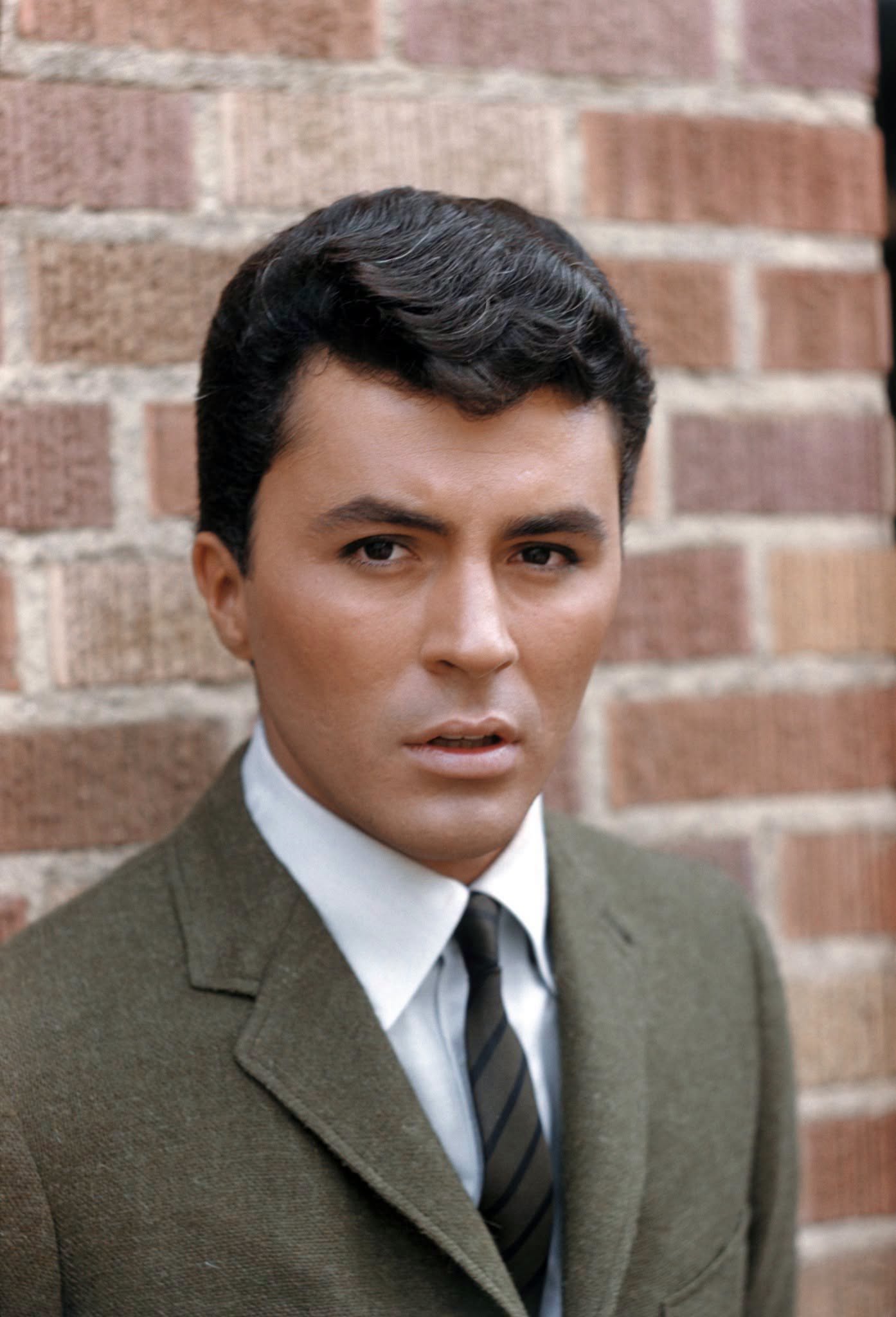
    James Darren is gone, and a piece of Hollywood’s eternal summer has gone with him. At 88, the South Philadelphia boy who became Moondoggie leaves behind more than a famous smile: he leaves generations confronting how quickly youth becomes yesterday. Beyond the beach movies and applause stood a father whose quiet final chapter gives new weight to every mem… Continues…

    For audiences who discovered him in the Gidget films, James Darren embodied the irresistible possibility of being young. His charm made a beachside romance feel like something worth remembering forever. Yet the actor and singer refused to spend his career inside that sunlit image. He moved into television, pursued music, and worked behind the camera as a director, building a professional life that stretched well beyond the role that first made him a heartthrob.

    His final days brought a vulnerability that fame could not soften. According to the account of his passing, doctors determined he was too weak to undergo the heart surgery he needed, and he died in his sleep. He was 88. The loss belongs first to his family and those who knew him personally. For admirers, his performances remain: reminders of an artist who kept finding new ways to connect, long after his first summer on screen.

  • Mourning the loss of a legendary

    Mourning the loss of a legendary

    A beloved science fiction name is at the center of a death claim that cannot be treated as confirmed. The supplied account says Walter Koenig died at 90 from natural causes, but provides no source for that devastating assertion. Behind the familiar face of Chekov and the menace of Bester lies a remarkable legacy that deserves more than spec… Continues…

    Walter Koenig earned his place in television history by making two very different characters unforgettable. As Pavel Chekov aboard the Enterprise, he brought youthful energy and warmth to Star Trek’s vision of a shared human future. Decades later, his portrayal of Alfred Bester on Babylon 5 revealed a darker range: controlled, unsettling, and difficult to dismiss. Beyond those performances, his work as a writer helped establish a creative identity that extended well beyond the bridge of a starship.

    The announcement provided here, however, does not include an obituary, a family statement, or a reputable news report supporting its account of his death. Without that confirmation, neither the reported passing nor its stated cause should be published as established fact. His contributions can be celebrated without turning an unsupported claim into a final farewell. A career that mattered to generations of viewers deserves a telling grounded in both affection and accuracy.

  • My Parents Invited Twenty Guests to the Lake House I Told Them They Couldn’t Use

    My Parents Invited Twenty Guests to the Lake House I Told Them They Couldn’t Use

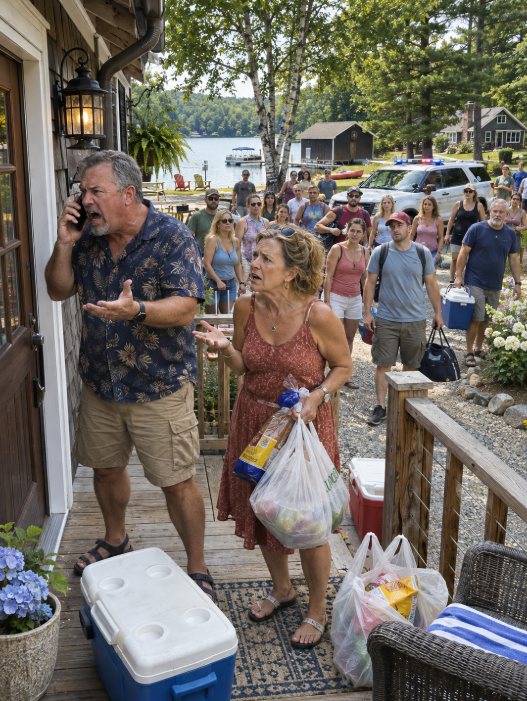
    The first cooler landed against my front door hard enough to make the porch camera shake.

    I was in my apartment in Portland, sitting on the edge of my bed with my phone in one hand and an untouched mug of coffee in the other. On the screen, my father dragged a second cooler up the steps of my lake house. My mother stood at the keypad, pressing the same four digits again and again.

    Behind them, people were getting out of cars.

    Aunt Linda pulled two wheeled suitcases from a trunk. My cousin Travis carried a grocery box against his chest. Three children ran toward the water before someone called them back. Kyle, my younger brother, unloaded a folding lawn chair and grinned at something my father said.

    I counted the cars, then the people. There were twenty of them.

    My mother jabbed the keypad once more. Its little light flashed, and the door stayed shut.

    My phone rang.

    “Good morning,” I said.

    “Do you really think you can keep your own family out?” Mom asked. She sounded amused, as if the locked door were a prank that had gone on a few minutes too long.

    “Yes.”

    I watched her smile falter on the camera feed.

    “The code isn’t working.”

    “I changed it.”

    Behind her, Dad picked up a cooler and moved it closer to the door. He always looked busy when he wanted other people to feel foolish for standing still.

    “Put your father on,” Mom said.

    He took the phone. “What did you do to the house?”

    “I secured it.”

    “Your mother has food sitting outside. Everybody’s staring at us.”

    “Then everybody should go home.”

    He stepped toward the keypad. “Open the door, Claire.”

    I knew that tone. When I was twelve, it meant stop arguing about a canceled school trip. When I was twenty-four, it meant hand over the spare key to my apartment because family ought to be able to reach me. At thirty-six, I was hearing it through a camera mounted above a door I had paid for myself.

    “No,” I said.

    For a second, neither of us spoke. Then Mom grabbed the phone back.

    “We drove all this way. Twenty people rearranged their schedules. You’re humiliating us over a stupid house.”

    “You invited them to property you don’t own.”

    “We’re your parents.”

    “That isn’t a deed.”

    Kyle laughed somewhere behind her. I saw him lift his head toward the driveway, and his expression changed.

    A sheriff’s cruiser was coming slowly over the gravel.

    The deputy parked where everyone could see him. My father moved his hand away from the keypad.

    I had been awake for less than an hour. My face was creased from sleep, and the coffee beside me had gone cold. Even so, when the deputy stepped out holding a sheet of paper, I recognized it.

    It was the notice I had filed the day before.

    “Sir,” he said as he approached the porch, “step away from that door.”

    My father turned to face him. “My daughter’s being difficult. We’re her family.”

    The deputy glanced at the luggage, the coolers, and the people standing around the steps. Then he looked up toward my camera.

    “Whose name is on the property?” he asked.

    Mom answered before Dad could. “She’s our daughter. We helped raise her.”

    The deputy waited.

    Finally Dad said, “Claire owns it. That doesn’t mean she can strand twenty people.”

    I put the call on speaker and told the deputy I was the owner. He asked me to confirm my name and the address. After a few more questions, he told my parents and their guests that I had denied them permission to enter and that they needed to leave the property.

    It was a plain statement. He did not raise his voice. He did not call my parents terrible people or declare that I had won some lifelong argument. He told everyone to take their belongings and go.

    Most of them began moving toward their cars.

    My mother stayed on the porch.

    I watched her put one hand against my front door as if she were testing whether it still recognized her. Dad said something to the deputy that I could not hear. Kyle carried a cooler down the steps. Then my other phone line lit up.

    Margaret Harper, the neighbor across the gravel road, was calling.

    “I’m watching from my window,” she said. “Your father just walked toward the garage.”

    I switched to the garage camera. Dad had left the conversation on the porch and was moving along the side of the house. He reached the keypad beside the garage door, sheltered partly from the driveway by a stand of cedar trees.

    “Deputy,” I said, louder than I intended. “He’s at the garage.”

    The deputy turned. Dad stopped with his finger above the buttons.

    That was when I understood how much of the last twenty-four hours had been spent waiting for one person to say a word my parents would accept. I had said it repeatedly. Written it. Sent it to the group chat. Said it on the phone while they stood at my door.

    It had not become real to them until somebody else arrived to enforce it.

    The day before, after my shift at St. Mercy Medical Center, I had almost given in.

    I had worked twelve hours on the medical floor, covering for a colleague who went home sick. By the end of the shift, I could feel each step in my calves. The sleeves of my scrubs smelled like antiseptic and old coffee. At a red light on the drive home, I looked at my phone and saw that the family group chat had been busy for nearly an hour.

    Dad had written, “We’re using the lake house this weekend. Twenty people are coming.”

    Mom followed: “Stock the refrigerator before we arrive. Don’t make this difficult.”

    Kyle had posted three laughing emojis.

    There was no question in any of it. No request for dates, no offer to pay for groceries, no acknowledgment that I might have plans. I had worked the next day and expected to spend my weekend sleeping, doing laundry, and perhaps driving to the lake alone on Sunday. My parents did not know that schedule. They had not asked.

  • A Homeless Man Used His Last $12 to Make My Widowed Mom Smile, but He Never Expected What Happened After Her Death

    A Homeless Man Used His Last $12 to Make My Widowed Mom Smile, but He Never Expected What Happened After Her Death

    Twelve Yellow Roses

    The lock clicked.

    It was such a small sound. A tiny metal click in a quiet lawyer’s office on a gray Tuesday afternoon in March.

    But my brother flinched like he’d been shot.

    “Don’t,” Glenn said. His voice cracked. “Please. Don’t open that.”

    Ethan didn’t look at him.

    He sat in the leather chair across from the lawyer’s desk. In a borrowed navy jacket two sizes too big for him. With his worn green backpack on the floor between his feet. Holding a small wooden box in his lap.

    He slowly lifted the lid.

    And reached inside.


    But I need to start at the beginning.

    With my mother. And a bag of groceries. And a pharmacy parking lot.


    My name is Susan Albright. I’m fifty-two years old.

    I’m a middle school librarian in Lancaster, Pennsylvania. I’ve been married to my husband, Tom, for twenty-six years. We have one daughter, Claire, who’s twenty-three and teaches third grade in Philadelphia.

    My mother was Iris Kemper.

    She was born in 1945 in a farmhouse outside Strasburg. She married my father, Edwin, when she was nineteen. She raised two children in a little brick rowhouse on Chestnut Street in Lancaster. She taught home economics at McCaskey High School for thirty-one years.

    She could sew a wedding dress from a pattern in two weeks. She could make a pie crust with her eyes closed. She could look at a fifteen-year-old who’d skipped three classes and make him apologize to her before he even knew why.

    My father died fourteen years ago. A heart attack. In his garden. Among his tomato plants.

    After that, my mother lived alone in the house on Chestnut Street.

    She was eighty when she brought a homeless young man home for dinner.


    His name was Ethan.

    He was twenty-four. He slept behind a closed bookstore on Queen Street. A little used bookshop called Chapter Two that had shut down during the pandemic and never reopened. There was a covered alcove by the back door, out of the wind. He’d been sleeping there for almost a year.

    He owned everything he had in one backpack. Green. Canvas. Frayed at the bottom. Patched with duct tape on one strap.


    They met in October. Two years ago.

    At the CVS on Duke Street.

    Mom had walked there. Six blocks. She refused to stop driving but she also refused to drive anywhere within a mile, because she said walking kept her young.

    She came out of the CVS with two canvas bags. Milk. Eggs. A loaf of bread. Her blood pressure medicine. A box of Earl Grey tea. A can of Folgers for when I came over.

    At the edge of the parking lot, the strap on one bag broke.

    Everything spilled. The eggs cracked. The milk rolled under a car. The tea box split open and tea bags scattered across the asphalt. Her pill bottle bounced into a puddle.

    Mom stood there. Eighty years old. Looking at her groceries on the ground.

    She told me later that four people walked past her.

    A man in a suit on his phone. A young mother with a stroller. Two teenagers.

    They looked at her. They looked at the groceries.

    They kept walking.


    Then a young man came across the parking lot.

    Tall. Thin. Dark hair that needed cutting. A gray hoodie with a hole in the elbow. Jeans with mud on the knees. A green backpack.

    He knelt down on the wet asphalt without saying a word.

    He picked up the tea bags. One by one. He fished the milk out from under the car. He found her pill bottle in the puddle and wiped it on his hoodie.

    He looked at the cracked eggs.

    “I’m sorry,” he said. “These are done for.”

    “Oh, that’s all right,” Mom said.

    He stood up. He looked at the broken bag.

    “Where do you live, ma’am?”

    “Chestnut Street. Just up the way.”

    He took off his backpack. He unzipped it. He put her milk and her bread and her tea and her coffee and her pills inside. On top of his own things.

    He zipped it closed. He put it back on.

    “I’ll walk you home,” he said.


    She told me about it that night on the phone.

    “Susan, he was the nicest young man.”

    “Mom. You let a stranger walk you home?”

    “He carried my groceries. Six blocks. In the rain.”

    “Did you let him in the house?”

    “Of course I let him in the house. He was soaking wet. I made him tea.”

    “Mom.”

    “His name is Ethan,” Mom said. “He’s twenty-four. He’s very polite. He said ma’am. Nobody says ma’am anymore.”

    “Mom, he could’ve robbed you.”

    “He could have,” Mom said. “He didn’t. He drank his tea and washed his own cup and thanked me and left.” She paused. “He’s homeless, Susan.”

    I didn’t say anything.

    “He sleeps behind that old bookstore on Queen Street,” she said. “The one that closed. He told me. He wasn’t ashamed of it. He just said it like it was the weather.”


    After that, he started visiting every Thursday.

    I don’t know how it started. Mom said she invited him back. Ethan said she wouldn’t take no for an answer.

    Every Thursday at two o’clock, he knocked on her front door.


    He carried her groceries.

    They’d walk to the CVS together. Or the Giant on Harrisburg Pike. He’d push the cart. She’d tell him what to get. He’d carry everything home in his backpack and two canvas bags.

    He fixed her broken porch steps.

    The bottom two had been rotting for three years. I’d been meaning to call somebody. Tom had been meaning to look at them. Glenn, my brother, who lives twenty minutes away in Lititz and owns a construction company, had said he’d get to it for two summers.

    Ethan fixed them.

    He found some old lumber in my father’s garage. He borrowed my father’s tools. The ones Mom had kept in the garage for fourteen years, hanging on the pegboard exactly where Dad left them.

    He measured. He cut. He replaced both steps. He sanded them and painted them white to match.

    It took him three Thursdays.

    When he was done, Mom sat on the bottom step and cried.

    “Edwin used to say he’d fix these,” she said. “He said it every spring for ten years.”


    And he listened to stories about my late father.

    That’s what Mom liked most. I could tell.

    She’d make tea. They’d sit at the kitchen table. And she’d talk.

    About Dad. About how they met at a church picnic in 1963. About how he proposed in a canoe on the Conestoga River and almost tipped them both into the water. About his tomatoes. About the time he drove all the way to Pittsburgh in a snowstorm because I’d called crying from college.

    Ethan listened.

    Mom said he listened better than anybody she’d ever known. He asked questions. He remembered things from the week before. He’d say, Wait, is this the canoe story? Tell me again about the canoe.

    “He’s a good listener, Susan,” she said. “Do you know how rare that is? At my age? Everybody’s in a hurry. Everybody’s looking at their phones. He just sits there and listens. Like it matters.”


    I met him for the first time in December.

    I came over on a Thursday. Unannounced. On purpose.

    I wanted to see this man who was spending every Thursday with my eighty-year-old mother. I’d read the articles. About scammers. About people who target lonely widows. About bank accounts emptied and houses signed away.

    I walked in through the kitchen door without knocking.

    He was standing at the sink. Washing dishes. In a gray hoodie with the hole in the elbow. His sleeves pushed up.

    Mom was sitting at the table with her tea.

    He turned around.

    He was younger than I expected. He looked younger than twenty-four. Thin. Too thin. Pale. Dark circles under his eyes. A small scar through his left eyebrow.

    And his eyes.

    Brown. Deep-set. Something in them I couldn’t place. Something familiar.

    I didn’t think about it then.

    I would later.


    “You must be Susan,” he said.

    He dried his hands on a dish towel. He held one out.

    “Ethan,” he said. “Your mom talks about you all the time.”

    I shook his hand. It was rough. Callused.

    “Does she,” I said.

    “She says you’re the smart one,” Ethan said. “She says you read every book in the Lancaster County Library before you were fifteen.”

    Mom laughed.

    “Every one in the children’s section,” she corrected. “She started on the adult books at fourteen.”

    I didn’t smile.

    “What do you want from my mother?” I asked.

    The kitchen went quiet.

    Mom set her teacup down.

    “Susan,” she said.

    Ethan didn’t look offended. He looked at me for a long moment. Like he was deciding something.

    “Nothing,” he said. “I don’t want anything from her.”

    “Then why are you here every Thursday?”

    He glanced at Mom. Then back at me.

    “Because she asked me to come back,” he said. “And nobody’s asked me to come back to anything in a long time.”


    I didn’t trust him.

    I want to be honest about that. I watched him for months.

    I checked Mom’s bank statements. I called her bank. I asked her if he’d ever asked for money.

    “Never,” she said. “Not once. I’ve offered. He won’t take it.”

    “What do you mean, you’ve offered?”

    “I tried to give him twenty dollars,” Mom said. “In November. For fixing the steps. He wouldn’t take it. He said he just wanted something to do with his hands.”

    She looked at me.

    “I tried to give him a coat,” she said. “Your father’s old wool peacoat. It’s been in the closet for fourteen years. It’s freezing out there, Susan. He sleeps outside.”

    “Did he take it?”

    “He took it,” Mom said. “But he made me promise it was a loan. He said he’d give it back in the spring.”

    She looked out the window.

    “He gave it back in April,” she said. “Dry-cleaned.”


    Then, on her eightieth birthday, he appeared with twelve dollars’ worth of yellow roses.


    It was March nineteenth. A Saturday.

    We were having a party. At the house on Chestnut Street. Just family. Me and Tom. Claire, home from Philadelphia. My brother, Glenn, and his wife, Patricia, and their two sons from Lititz.

    Mom wanted Ethan to come.

    Glenn didn’t.

    “A homeless guy, Mom? At your birthday party?”

    “He’s my friend, Glenn.”

    “He’s a stranger. You met him in a parking lot.”

    “I met your father at a church picnic,” Mom said. “That’s not much better.”

    Glenn rolled his eyes.

    Ethan didn’t come to the party. He said it was for family.

    But at four o’clock, in the middle of cake, the doorbell rang.


    I answered it.

    Ethan was standing on the porch. On the steps he’d fixed. In his gray hoodie. Freshly washed. His hair was combed. He’d shaved.

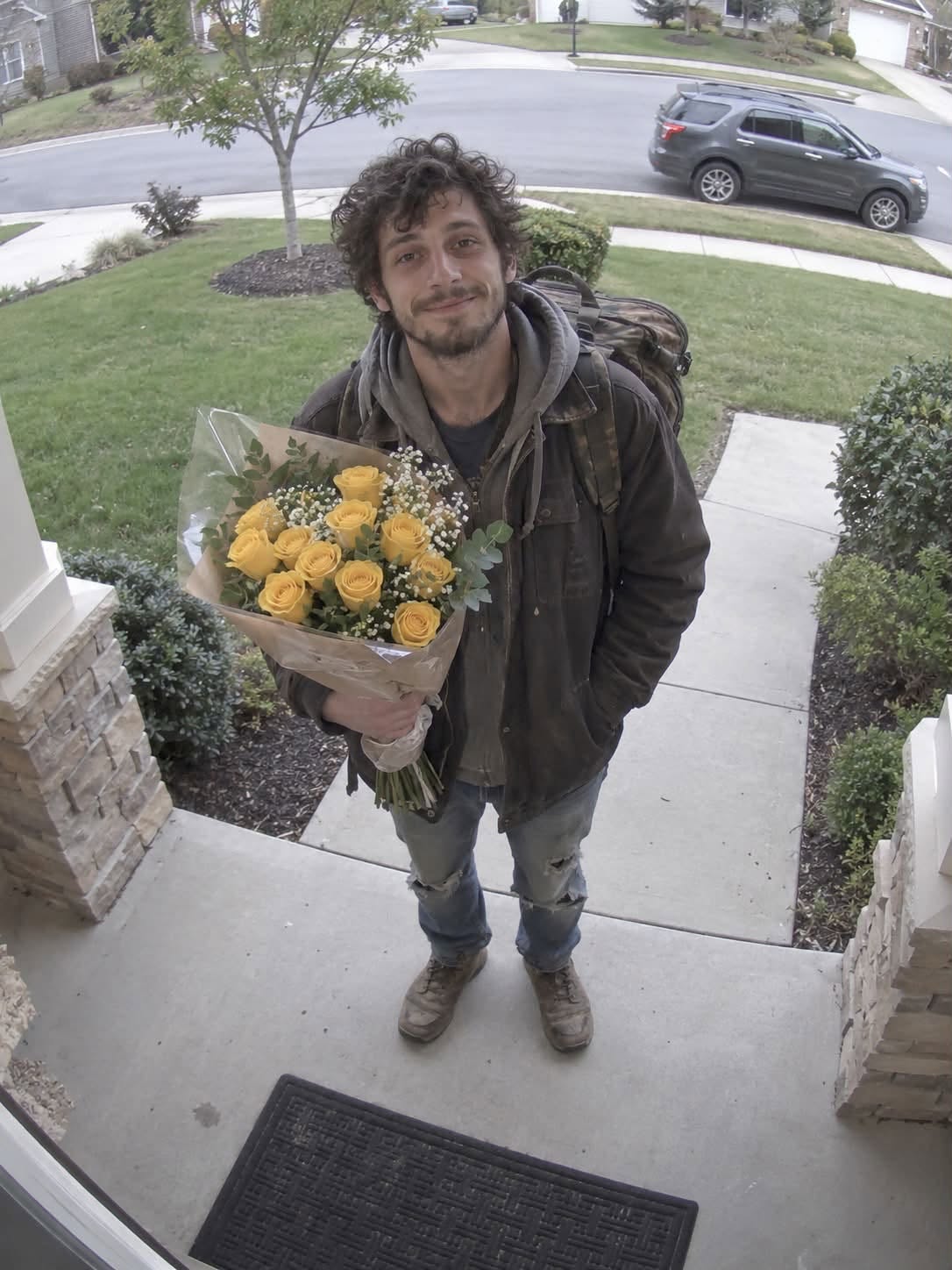
    He was holding a bouquet of yellow roses.

    Twelve of them. Wrapped in cellophane. With a little white ribbon. From the grocery store. Still had the price tag on the plastic.

    $11.99.

    “I’m sorry to interrupt,” he said. “I just wanted to give her these. I won’t stay.”

    Mom came to the door behind me.

    She saw him. She saw the roses.

    She put her hand over her mouth.

    “Yellow,” she whispered. “Edwin always got me yellow.”

    “I know,” Ethan said. “You told me. In November. You said he got you yellow roses every birthday for forty-six years. You said nobody’s gotten you flowers since he died.”

    He held them out.

    “Happy birthday, Mrs. Kemper,” he said.


    Mom cried.

    Right there in the doorway. Holding the roses against her chest. With cake on her fingers.

    She hugged him. Ethan stood very still. Like he didn’t know what to do with his arms. Then, slowly, he hugged her back.

    “Come in,” Mom said. “Please. Have some cake.”

    “I don’t want to intrude.”

    “Ethan,” Mom said. Her teacher voice. The voice that made fifteen-year-olds apologize. “Come in and have some cake.”

    He came in.

    He sat at the end of the table. He ate one slice of cake. He said almost nothing.

    Glenn stared at him the whole time.


    I later learned he’d spent his last money on them.

    I found out by accident. Two weeks later. I drove past the old bookstore on Queen Street. I saw Ethan in the alcove by the back door. Sitting on a piece of cardboard. Counting change in his palm.

    I pulled over. I don’t know why.

    I walked up.

    He looked up. He saw me. He closed his hand.

    “Susan,” he said. “Is your mom okay?”

    “She’s fine,” I said. “I was just driving by.”

    I looked at his closed hand.

    “Ethan,” I said. “Those roses. On her birthday. How much money did you have?”

    He didn’t answer.

    “How much?”

    He looked at the ground.

    “Twelve dollars,” he said. “And forty cents.”

    “That’s all you had?”

    He shrugged.

    “I had a job for a while,” he said. “At a car wash on Lincoln Highway. They let me go in February. That was the last of my pay.”


    “Why would you do that?” I asked.

    I meant it. I genuinely didn’t understand.

    Twelve dollars. His last twelve dollars. On flowers for a woman he’d known for five months. Who had a house and a pension and two children and grandchildren.

    Ethan shrugged.

    “She deserved flowers on her birthday,” he said.

    That was all.


    I drove home and sat in my driveway for a long time.

    I’d been watching him for six months. Checking Mom’s bank statements. Waiting for him to ask for something.

    He’d spent his last twelve dollars on yellow roses because my father used to buy her yellow roses.

    I went inside. I told Tom.

    Tom was quiet for a while.

    “Maybe,” he said finally, “he’s exactly who he looks like.”


    Over the following months, Mom grew terribly fond of him.

    That’s the only way to say it.

    She lit up on Thursdays. She’d call me on Wednesday nights and say, Ethan’s coming tomorrow. I’m making pot roast. Or I’m teaching Ethan to make pie crust. Or Ethan’s fixing the kitchen faucet.

    She knitted him a scarf. Navy blue. He wore it every day.

    She taught him to make her pie crust. He was terrible at it. She laughed so hard she had to sit down.

    She found out he’d dropped out of high school at seventeen. She sat with him at the kitchen table every Thursday and helped him study for his GED. Like she was teaching home ec again.

    He passed it in August.

    She framed the certificate. She hung it in the hallway. Next to my college diploma. And Glenn’s. And Claire’s.

    “Mom,” I said. “That’s his. Not ours.”

    “I know,” she said. “He doesn’t have a wall.”


    Then, one Sunday in September, she said something that left me speechless.

    We were sitting at her kitchen table. After church. Drinking coffee. Folgers. The kind she kept for me.

    She set her cup down.

    “Susan,” she said. “I need to tell you something.”

    “Okay.”

    “I asked Ethan to marry me.”


    I nearly dropped my coffee.

    I actually did spill some. On the tablecloth. The one with the strawberries she’d had since 1978.

    “Mom!” I said. “He’s fifty-six years younger!”

    She smiled sadly.

    “I know,” she said.

    “Mom, what—how—why?”

    She looked out the kitchen window. At Dad’s garden. Empty now. She hadn’t planted tomatoes since he died.

    “I wanted him to have a home,” she said quietly. “And someone to look after him.”

    “You could’ve just given him a room. You have three empty bedrooms.”

    “I tried,” Mom said. “He won’t take it. He says he doesn’t want charity.”

    “So you asked him to marry you?”

    “If he married me,” Mom said, “he’d have this house when I’m gone. He’d have my pension. Survivor benefits. Health insurance. Edwin’s Social Security. Everything.” She looked at me. “He’d never have to sleep behind a bookstore again.”


    I stared at my mother.

    Eighty years old. Five foot one. In her church dress and her pearls. Calmly explaining that she’d proposed marriage to a twenty-four-year-old homeless man so he could inherit her Social Security.

    “What did he say?” I asked finally.

    Mom smiled.

    “He laughed,” she said. “At first. He thought I was joking. Then he saw I wasn’t.”

    “And?”

    “And he got very quiet,” she said. “And he looked at me for a long time. And he said no.”

    “Thank God.”

    “He said,” Mom said slowly, “Mrs. Kemper, I wouldn’t marry you for a roof over my head. Not you. Not anybody.”

    She paused.

    “And then he said something I didn’t understand,” she said.

    “What?”

    Mom looked at her coffee cup.

    “He said, Especially not you.”


    I didn’t think anything of it at the time.

    I thought he meant especially not you, because you’re eighty.

    I didn’t know what he really meant.

    Not then.


    Mom didn’t bring up marriage again.

    But something changed after that Sunday. I could feel it.

    She was different with him. Gentler. Like she was holding something carefully. Like a teacup you’re afraid to drop.

    She started calling him sweetheart.

    She’d never called anybody sweetheart except Claire.


    Three months later, Mom passed away peacefully in her sleep.


    It was a Thursday.

    December fourteenth.

    Ethan found her.

    He came at two o’clock like always. He knocked. Nobody answered. He had a key now. She’d given him one in October. He let himself in.

    She was in her bed. Under the wedding-ring quilt she’d made in 1964. With her reading glasses still on and a library book open on her chest. Little Women. She’d read it every December since she was nine.

    The doctor said she’d gone sometime in the early morning. Her heart. Quietly. She hadn’t felt anything.

    Ethan called me at 2:11.

    I’ll never forget his voice.

    “Susan,” he said. “I’m so sorry. I’m so sorry. She’s gone.”


    By the time I got there, he’d called 911. He’d called her doctor. He’d called Father Michael at St. Anthony’s.

    He was sitting on the floor next to her bed. Holding her hand. With his back against the wall.

    He’d taken off her reading glasses. He’d closed the book. He’d folded her hands on top of the quilt.

    He’d put a yellow rose in them.

    From the vase on her dresser. The last one left from her birthday. Nine months old. Dried and faded to the color of old paper.

    She’d kept them. All twelve. Hung upside down in the pantry to dry.


    He didn’t say anything when I came in.

    He just looked up at me. His face was wet.

    He stood up. He let go of her hand.

    “I’ll go,” he said. “You should be with her.”

    “Ethan—”

    “It’s okay,” he said. “She was your mom.”

    He picked up his green backpack.

    He walked out.

    I didn’t stop him.

    I should have.


    While arranging her funeral, I found a handwritten note.

    It was in her desk. In the little room off the kitchen she used as an office. In the top drawer. In an envelope. With my name on the front.

    Susan.

    Inside, on her lavender stationery, in her neat, slanted, home-ec-teacher handwriting:


    Susan,

    When Mr. Feldman reads my will, please make sure Ethan is there.

    He won’t want to come. Make him.

    Tell him I said so. Use my teacher voice. You know the one.

    Love,
    Mom

    P.S. Don’t let Glenn talk you out of it.


    I read it three times.

    Don’t let Glenn talk you out of it.

    Why would Glenn try to talk me out of it?

    I thought she’d probably left Ethan a little money. A few thousand dollars. Maybe Dad’s tools. Maybe the peacoat.

    That would be like her.


    So I tracked him down.

    It took me three days.

    He wasn’t at the bookstore on Queen Street. Somebody had boarded up the alcove. There was a NO TRESPASSING sign.

    I went to the shelter on South Prince Street. They hadn’t seen him.

    I went to the soup kitchen at St. James. A volunteer named Doris said he’d been there for lunch on Tuesday. She said he looked terrible.

    I went to the public library on Duke Street.

    He was there.

    In the back. At a table in the reference section. With the navy blue scarf Mom knitted wrapped around his neck. Reading.

    Little Women.


    I sat down across from him.

    He looked up. He didn’t seem surprised.

    “Susan,” he said.

    “I’ve been looking for you for three days.”

    “I’m sorry.”

    “Where have you been sleeping?”

    He didn’t answer.

    “Ethan.”

    “Under the King Street bridge,” he said. “They closed the bookstore.”

    I looked at the book in his hands.

    “She read that every December,” I said.

    “I know,” Ethan said. “She told me. She read it to me. Last year. Out loud. On Thursdays.” He swallowed. “She got to the part where Beth dies and she couldn’t finish. She cried too hard.”

    He closed the book.

    “I wanted to know how it ends,” he said.


    “The reading of her will is Tuesday,” I said. “At two o’clock. Mr. Feldman’s office. On East King Street.”

    Ethan shook his head.

    “That’s for family.”

    “She asked for you.”

    “Susan—”

    “She left a note,” I said. “She said, He won’t want to come. Make him. Use my teacher voice.”

    Ethan almost laughed. It came out broken.

    “She did not.”

    I took out the note. I slid it across the table.

    He read it.

    He put his hand over his mouth.

    “Use my teacher voice,” he whispered.

    “Will you come?”

    He looked at the note for a long time.

    Then he looked at me.

    “Do I have to wear a tie?” he asked.


    He arrived at the lawyer’s office wearing a borrowed jacket.

    Navy blue. Wool. Two sizes too big. It hung on his shoulders. The sleeves came down past his wrists.

    He’d borrowed it from Doris at the soup kitchen. It was her late husband’s.

    He’d shaved. He’d combed his hair. He was wearing the navy blue scarf.

    And he was clutching the same worn green backpack. With the duct tape on the strap.

    He stood in the doorway of Mr. Feldman’s conference room like he was afraid somebody was going to tell him to leave.


    My brother looked furious.

    Glenn was sitting at the conference table next to his wife, Patricia. In a gray suit. A Rolex. His reading glasses pushed up on his head.

    He’s forty-nine. Three years younger than me. He owns Kemper Construction in Lititz. Forty employees. Big houses. Commercial buildings. He’s done well.

    He saw Ethan in the doorway.

    His face went red.

    Then white.

    “Why is he here?” Glenn said.


    “Because Mom wanted him here,” I said.

    “Mom wanted a homeless guy at the reading of her will?”

    “She left a note,” I said. “She asked for him specifically.”

    Glenn stood up.

    “This is a family matter,” he said. “He’s not family.”

    Ethan flinched.

    I’d never seen him flinch before. Not at Glenn’s stares at the birthday party. Not when I asked him what he wanted from my mother. Not when he told me he’d spent his last twelve dollars on roses.

    But he flinched at he’s not family.

    “Glenn,” I said. “Sit down.”


    Mr. Feldman cleared his throat.

    He’s seventy-four. White hair. Bow tie. He’d been my parents’ lawyer since 1981. He’d handled Dad’s will. He’d handled the house.

    “Mr. Kemper,” he said to Glenn. “Your mother was very specific. She asked that Mr. Lowell be present.”

    Mr. Lowell.

    I’d never heard Ethan’s last name.

    Glenn went very still.

    “What did you say?” he said.

    “Mr. Lowell,” Mr. Feldman said again. He gestured at Ethan. “Ethan Lowell. Your mother asked that he be here.”

    Glenn stared at Ethan.

    He sat back down.

    Slowly.

    Like his legs had stopped working.


    I didn’t understand.

    I looked at Glenn. His face had gone gray. His hands were flat on the conference table. Patricia was looking at him.

    “Glenn?” she said. “What’s wrong?”

    He didn’t answer.


    Ethan sat down. In a leather chair at the end of the table. As far from Glenn as possible.

    He put his backpack on the floor between his feet.

    He folded his hands in his lap.

    He didn’t look at anybody.


    The lawyer opened a thick folder.

    He read through the usual inheritance arrangements.

    My mother’s savings. Split between me and Glenn. Her car, a 2008 Buick with forty-one thousand miles, to Claire. Her jewelry to me. Her sewing machine and fabric to Claire. Dad’s watch to Glenn’s oldest son. Dad’s fishing rods to Glenn’s youngest.

    Small bequests. Five hundred dollars to St. Anthony’s. Five hundred to the Lancaster Public Library. Two hundred and fifty to the soup kitchen at St. James.

    The usual things.

    Glenn didn’t move. He was staring at the table.


    Then Mr. Feldman stopped.

    He took off his reading glasses.

    “The house,” he said.


    “Your mother made a change to her will,” Mr. Feldman said. “On October third. Of last year. Regarding the house on Chestnut Street.”

    I looked at Glenn. He didn’t look up.

    “Her previous will,” Mr. Feldman said, “left the house to be sold and the proceeds divided equally between Susan and Glenn.”

    He turned a page.

    “Her current will,” he said, “leaves the house at 418 Chestnut Street, and all its contents not otherwise specified, to Ethan Lowell.”


    The room was silent.

    I looked at Ethan.

    He hadn’t moved. He was staring at his hands.

    “What?” Patricia said.

    Mr. Feldman read it again. Slowly.

    “I leave my home at 418 Chestnut Street, Lancaster, Pennsylvania, together with all furnishings and contents not otherwise bequeathed, including my husband Edwin’s tools, to Ethan Lowell. So he will always have somewhere to come home to.”


    Glenn didn’t say anything.

    That was the strangest part.

    My brother, who’d argued with Mom for two years about the stupid homeless kid. Who’d stared at Ethan through her whole birthday party. Who’d said he’s not family not ten minutes earlier.

    He just sat there. Staring at the table. Gray-faced.

    He didn’t say anything at all.


    “There’s one final instruction,” Mr. Feldman said. “Concerning Ethan.”

    Ethan lowered his eyes.

    Mr. Feldman reached beneath his desk.

    He produced a small wooden box.


    It was about the size of a shoebox. Dark wood. Walnut, maybe. Old. With brass corners and a brass latch. A little keyhole.

    I knew that box.

    I’d seen it my whole childhood. On the top shelf of my father’s closet. Behind his hats.

    Dad’s box.

    He called it his important things box. Glenn and I weren’t allowed to touch it. We used to dare each other to climb up and look inside. We never did.

    After Dad died, I’d assumed Mom threw it away. Or put it in the attic.


    My brother suddenly stood up.

    His chair scraped back so hard it almost tipped over.

    “Wait,” Glenn said. “What box?”

    His voice was strange. High. Tight.

    “That’s Dad’s,” he said. “That’s Dad’s box. Where did you get that? Mom said—Mom told me she got rid of it—”

    “Your mother brought it to me on October third,” Mr. Feldman said. “The same day she changed her will. She asked me to keep it. And to give it to Mr. Lowell. Along with this.”

    He held up a tiny brass key.

    On a faded red ribbon.

    He handed it to Ethan.


    Ethan stared at it.

    He held it in his palm. The little brass key on its red ribbon.

    His hand was shaking.

    “Glenn,” Patricia said. “What’s going on? What’s in the box?”

    Glenn didn’t answer.

    He was staring at the key in Ethan’s hand.


    Mr. Feldman set the box down on the table. In front of Ethan.

    Ethan looked at it for a long time.

    He put the key in the lock.


    Then my brother lunged toward the box.

    “Don’t open that!”

    He came around the table. Fast. Faster than I’d ever seen him move. His chair crashed over behind him.

    Tom grabbed his arm. My husband. Sixty-one years old. He grabbed Glenn’s arm and held on.

    “Glenn,” Tom said. “Sit down.”

    “Let go of me! He can’t—that’s Dad’s! He has no right—”

    “Mom gave it to him,” I said. “She left it to him. He has every right.”

    “You don’t understand,” Glenn said. His voice broke. “Susan, you don’t understand. Please. Don’t let him open it.”


    But Ethan had already turned the key.


    The lock clicked.

    It was such a small sound.

    My brother stopped fighting. He went limp in Tom’s grip.

    Ethan slowly lifted the lid.

    And reached inside.


    The first thing he took out was a photograph.

    Small. Square. Faded. The colors had gone orange and brown the way photos from the early two-thousands do.

    He looked at it.

    His hand started to shake.

    He set it down on the table.

    I leaned over. I looked.


    It was my father.

    Dad. Edwin Kemper. In his sixties. In his old green cardigan. Sitting on a park bench. In Long’s Park, I think. I recognized the pond behind him.

    And in his arms, wrapped in a blue blanket, was a baby.

    Tiny. A few weeks old. Red-faced. Asleep.

    My father was looking down at the baby with an expression I’d seen only a few times in my life. At my wedding. When Claire was born.

    On the back, in my father’s blocky handwriting:

    E.J. — 3 weeks — Long’s Park — April 2002.


    “Who is that?” I whispered.

    Nobody answered.

    Ethan reached back into the box.

    He took out a stack of envelopes. Rubber-banded together. Thick. Yellowed.

    He slid off the rubber band.

    The top envelope was addressed in a woman’s handwriting. Round. Loopy. A high school kid’s handwriting.

    Mr. Edwin Kemper. 418 Chestnut Street. Lancaster, PA.

    Return address: T. Lowell. 22 Rockland St., Apt. 3B. Lancaster, PA.

    Postmarked March 2002.


    Ethan opened it.

    He unfolded the letter inside.

    He read it silently.

    Then he put it down on the table. He put his face in his hands.


    I picked it up.

    I read it.


    Dear Mr. Kemper,

    Thank you for coming to the hospital. I didn’t think anybody from Glenn’s family would come. He hasn’t called since I told him. He sent me $2,000 in an envelope with a note that said “Take care of it.” I don’t know what that means. I think he means get rid of it. I didn’t.

    His name is Ethan. Ethan James. James was my dad’s name. He’s 7 pounds 4 ounces. He has dark hair and Glenn’s chin.

    Thank you for the diapers and the formula. And the blanket. You didn’t have to.

    I won’t ask Glenn for anything. I know he’s getting married in June. I know he doesn’t want this. I’m not going to make trouble.

    But you said you’d like to see him sometimes. If that’s okay with Mrs. Kemper. I’d like that too. He doesn’t have a grandpa. My dad died last year.

    Thank you for being kind to me. Nobody else was.

    — Tammy


    I put the letter down.

    I looked at my brother.

    Glenn was standing by the fallen chair. Tom had let go of his arm. Glenn wasn’t fighting anymore.

    He was staring at the floor.

    Patricia had stood up. She was staring at her husband.

    “Glenn,” she said. Very quietly. “Who is Tammy?”

    He didn’t answer.

    “Glenn.”

    “A girl,” he said finally. His voice was barely a whisper. “In 2001. Before the wedding. She was a waitress. At the Rocky Springs diner. She was nineteen.”

    Patricia put her hand over her mouth.

    “I was twenty-five,” Glenn said. “We were engaged. You were in Pittsburgh for that internship. All summer. And I—”

    He couldn’t finish.

    “She got pregnant,” he said. “She told me in October. I gave her two thousand dollars. I told her to take care of it.”

    He looked at Ethan.

    For the first time.

    “I didn’t know she kept it,” he whispered.


    Ethan lifted his head.

    He looked at my brother.

    “Her,” he said quietly.

    Glenn stared at him.

    “Not it,” Ethan said. “Her. My mother. Tammy. She kept me.”


    The room was silent.

    I looked from my brother to the young man in the borrowed jacket at the end of the table.

    Dark hair. Brown, deep-set eyes. A scar through his left eyebrow.

    And his chin.

    Square. Stubborn. With a little dent in the middle.

    My brother’s chin.

    My father’s chin.

    That was what I’d seen in my mother’s kitchen. That first day in December. When he turned around from the sink.

    Something familiar.


    “Dad knew,” I said slowly. “Dad knew. Dad went to the hospital.”

    Ethan nodded.

    He reached back into the box. He took out more envelopes. More photographs.

    Dad holding a toddler on the carousel at Dutch Wonderland. 2004.

    Dad and a little boy in a Phillies cap at a Lancaster Barnstormers game. 2007.

    Dad and a boy of about eight standing next to a tomato plant. In a garden. Not our garden. A tiny patch of dirt behind an apartment building. 2010.

    E.J. — first tomatoes!


    “He came every month,” Ethan said quietly. “My grandfather. Edwin. When I was little. He’d pick me up on Saturdays. He’d take me to the park. Or the ballgame. Or the library. He brought my mom groceries. He paid our rent when she couldn’t.”

    He picked up the tomato photo.

    “He taught me to grow tomatoes,” he said. “Behind our building on Rockland Street. In a little patch of dirt by the dumpsters. He brought the plants. Better Boys.”

    My throat closed.

    Dad grew Better Boys. Every summer. For forty years.

    “He told me he was my grandpa,” Ethan said. “When I was six. He said it was a secret. He said there were reasons. He said someday I’d understand.”

    He looked at Glenn.

    “He never told me who my father was,” Ethan said. “He said that was my father’s job. He said my father would come someday. When he was ready.”


    Glenn made a sound.

    Something between a sob and a gasp.

    He sat down. On the floor. Right where he was standing. Next to the fallen chair. In his gray suit and his Rolex.

    He put his face in his hands.


    “What happened?” I asked Ethan. Gently. “After Dad died?”

    Ethan looked at the photographs.

    “I was ten,” he said. “He stopped coming. My mom didn’t know why. She called this house once. Somebody said he passed away. She didn’t know what to do. She didn’t go to the funeral. She didn’t think she was allowed.”

    He swallowed.

    “The money stopped,” he said. “The groceries. The rent help. Mom was working at a Sheetz. Night shift. It wasn’t enough. We got evicted when I was eleven.”

    He was quiet for a long moment.

    “She started drinking,” he said. “Then pills. She tried. She really tried. She went to rehab twice. When I was thirteen I went into foster care. Then back with her. Then foster care again.”

    “Where is she now?” I asked.

    Ethan looked at me.

    “She died when I was seventeen,” he said. “An overdose. In a motel on Lincoln Highway.”

    I put my hand over my mouth.

    “I dropped out of school,” Ethan said. “I aged out of foster care at eighteen. I’ve been on my own since.”


    He reached into the box one more time.

    He took out a small envelope. White. Newer than the others.

    On the front, in my mother’s handwriting:

    Ethan.


    He held it for a long time.

    His hands were shaking so badly he couldn’t open it.

    “Do you want me to?” I asked.

    He looked at me. He nodded.

    He handed it to me.

    I opened it.

    I read it out loud.


    My dear Ethan,

    If you’re reading this, I’m gone. And Mr. Feldman has given you Edwin’s box. And you’ve opened it. And Glenn has probably made a scene.

    Let him. He’s earned it.

    I want to tell you how I found out. Because I don’t want you to think I knew all along. I didn’t. I swear to you I didn’t.

    After Edwin died, I found this box on the top shelf of his closet. I opened it. I read every letter. I looked at every photograph. I sat on the floor of his closet for six hours.

    I learned that my husband of forty-six years had a grandson I’d never met. That he’d been visiting you every month for ten years. That he’d been paying your mother’s rent out of his pension. That he never told me.

    I was so angry, Ethan. At Edwin. For keeping it from me. At Glenn. For what he did. At myself, for not seeing it.

    I tried to find you. I went to the apartment on Rockland Street. You’d moved. I called the number on your mother’s letters. Disconnected. I hired a man to look for you. He found nothing.

    I put the box back on the shelf. I told Glenn I’d thrown it away. I don’t know why. I think I was ashamed. Of all of us.

    Then, fourteen years later, I dropped my groceries in a parking lot.


    I had to stop reading.

    I couldn’t see the paper.

    Ethan was crying. Silently. With his hands over his face.

    Tom took the letter from me. Gently.

    He kept reading.


    You picked up my tea bags one at a time. You wiped my pill bottle on your sweatshirt. You put my milk in your backpack and walked me home in the rain.

    I didn’t know who you were. Not then. I just knew you were kind.

    It was the steps.

    When you fixed the porch steps. In November. You went into the garage to get Edwin’s tools. And you didn’t ask me where anything was.

    You walked straight to the pegboard. You took down the circular saw. The tape measure. The square. The level. You knew exactly where every one of them was.

    And then you said, “He always kept the level on the left. He said it was the most important tool, so it gets the first hook.”

    Ethan, Edwin said that. Every time. To Glenn. To Susan. To anyone who’d listen. “The level gets the first hook.”

    You said it like you’d heard it a hundred times.

    That night, I went to the closet. I took down the box. I looked at the photographs. At the little boy on the bench in Long’s Park.

    He had a scar through his left eyebrow. From falling off the carousel at Dutch Wonderland in 2004. Edwin wrote it on the back of the photo. “E.J. — 2 stitches — brave boy.”

    You have a scar through your left eyebrow.


    Tom stopped.

    He looked at Ethan.

    Ethan reached up and touched his eyebrow. The little white line through it.

    “Two stitches,” he whispered. “He held my hand the whole time.”

    Tom kept reading.


    I didn’t say anything. For weeks. I watched you. I listened to you. I wanted to be sure.

    Then, in September, I asked you to marry me.

    I know. I know. Susan probably told you I’d lost my mind.

    I hadn’t. I was testing you. I wanted to see if you’d say yes. If you’d take the house and the pension and the Social Security. If you were the kind of person who’d marry an eighty-year-old woman for a roof.

    You weren’t.

    You said, “I wouldn’t marry you for a roof over my head. Not you. Not anybody.”

    And then you said, “Especially not you.”

    And I looked at you. And I knew that you knew.

    I asked you. Right there. At my kitchen table. “Ethan. Who are you?”

    And you told me.

    You told me about Edwin. About the park and the ballgames and the tomatoes behind the apartment building. About your mother. About the motel on Lincoln Highway.

    You told me you’d found my address in an old letter of your mother’s. That you’d walked past my house a hundred times. That you’d sat on the bench across the street and watched me sweep the porch. That you were too ashamed to knock.

    You said, “I didn’t want you to think I wanted something. I didn’t want anything. I just wanted to know what my grandpa’s house looked like. I just wanted to see his wife.”

    You said you were standing outside the CVS that day because you’d seen me go in. You’d followed me. You said you were trying to work up the courage to say hello.

    And then my bag broke.

    And you finally had a reason.


    Tom couldn’t keep going.

    He set the letter down on the table. He took off his glasses. He wiped his eyes.

    The room was silent except for my brother.

    Glenn was still on the floor. By the fallen chair. Sobbing into his hands.

    Patricia was standing over him. Not touching him. Just looking down at him.


    I picked up the letter.

    There was one more page.

    I read it.


    I made you promise not to tell Susan or Glenn. That was wrong of me. I was protecting Glenn. Again. Like I’ve always done. Like Edwin did.

    We protected him from consequences his whole life. And look what it cost you.

    So here is what I want.

    The house is yours. Edwin’s house. Edwin’s tools. The pegboard with the level on the first hook. The garden where he grew Better Boys for forty years. It’s yours, Ethan. Not because you need it. Because you’re his. And because you’re mine.

    You’re my grandson.

    I’m sorry I only got to be your grandmother for fourteen months.

    And Glenn.

    If you’re reading this over Ethan’s shoulder, and I know you are:

    You have a son. He’s twenty-four years old. He has your chin and your father’s hands and the kindest heart I’ve ever known. He spent his last twelve dollars on yellow roses for a woman he’d known for five months because his grandfather used to buy them for her.

    He slept behind a bookstore while you built houses in Lititz.

    I don’t know if you can ever make that right. I don’t know if he’ll let you try.

    But I know your father would want you to. He kept this box for ten years waiting for you to be ready.

    Be ready, Glenn.

    It’s long past time.

    — Mom

    P.S. Ethan, sweetheart. Plant the tomatoes this spring. Better Boys. Edwin would want them in the garden again.


    I folded the letter.

    I put it back in the envelope.

    I set it on the table in front of Ethan.

    He didn’t pick it up.

    He just looked at it.


    Then Glenn stood up.

    Slowly. Holding onto the table. Like an old man.

    He looked at Ethan.

    Ethan looked back.

    They stood there across the conference table. My brother in his gray suit and his Rolex. And his son in a dead man’s borrowed jacket. With a green backpack at his feet.

    The same chin.


    “I didn’t know,” Glenn said. His voice was destroyed. “I swear to God. I didn’t know she kept you. I gave her the money. I told her to take care of it. And I never asked. I never called. I never—”

    He stopped.

    “I got married in June,” he said. “Patricia and I. We had the boys. I built the company. I never once thought about—”

    He couldn’t finish.

    “Dad knew?” he whispered. “The whole time?”

    Ethan nodded.

    “He never told me,” Glenn said. “Never. He never said a word.”

    “He said it was your job,” Ethan said quietly. “He said you’d come when you were ready.”

    Glenn put his hand over his mouth.

    “And then he died,” Ethan said. “And you never came.”


    Glenn looked at the box. At the photographs spread across the conference table. Dad on the park bench. Dad at the ballgame. Dad by the tomato plant behind the dumpsters.

    Dad with his grandson.

    “I knew about the box,” Glenn said. “I found it. After the funeral. I was cleaning out his closet. I opened it.”

    I stared at my brother.

    “You knew?” I said.

    “I read the first letter,” Glenn said. “I saw the picture. On the bench. I knew right away.”

    “And you did nothing?”

    “I was terrified,” Glenn said. “Patricia. The boys. The company. Everybody in Lititz. I closed it. I put it back on the shelf. I told Mom to throw it out. I told her it was just Dad’s old tax papers.”

    He looked at Ethan.

    “You were ten,” he said. “You were ten years old. And your grandfather had just died. And I knew where you were. Rockland Street. It was right there on the envelope.”

    He started crying again.

    “I could’ve driven there,” he said. “In fifteen minutes. And I didn’t.”


    Patricia turned and walked out of the conference room.

    She didn’t say anything.

    She just left.

    We heard the elevator ding down the hall.

    Glenn didn’t go after her.

    He stood there looking at his son.


    “I’m sorry,” Glenn said. “I know that’s nothing. I know it doesn’t mean anything. Twenty-four years. Your mother. The motel. The bookstore. I know sorry is nothing.”

    Ethan didn’t say anything.

    “I don’t expect you to forgive me,” Glenn said. “I don’t deserve it. I just…” He swallowed. “I just wanted you to know that I know. Now. What I did. What I didn’t do.”


    Ethan looked at him for a long time.

    Then he bent down.

    He unzipped his green backpack.

    He reached inside.

    He took out something small. Wrapped in a paper towel.

    He unwrapped it.

    It was a yellow rose. Dried. Faded. Brittle.

    The last one. From Mom’s birthday. The one he’d put in her hands the day she died.

    He’d taken it back. Before the funeral home came. He’d kept it in his backpack.

    He held it out.

    Not to Glenn.

    To me.

    “She’d want you to have this,” he said quietly. “You’re her daughter.”


    I took it.

    My hands were shaking.

    “Ethan,” I said. “You’re her grandson.”

    He looked at the rose in my hands.

    “I know,” he said. “I know that now. But I only got fourteen months.”

    He looked at Glenn.

    “I didn’t come here for the house,” he said. “I didn’t know about the house. I didn’t know about the box. I came because Susan said Grandma used her teacher voice.”

    Then, very quietly:

    “I don’t want anything from you,” he said to my brother. “I never did. I just wanted to know who my father was.”

    He picked up his backpack.

    “Now I know,” he said.


    He walked out.

    He left the box on the table. The photographs. The letters. The key on its red ribbon.

    He left the house keys Mr. Feldman had set out for him.

    He just walked out of the conference room in the borrowed jacket. With his green backpack. Down the hall.

    The elevator dinged.


    Nobody moved.

    Then Glenn picked up the photograph.

    Dad on the bench in Long’s Park. With the baby in the blue blanket.

    E.J. — 3 weeks — April 2002.

    He looked at it for a long time.

    Then he looked at me.

    “Where does he sleep?” Glenn asked. “Now. Tonight. Where will he sleep?”

    “Under the King Street bridge,” I said.

    My brother closed his eyes.


    He went to the King Street bridge that night.

    At ten o’clock. In the rain. In his gray suit and his Rolex. With a sleeping bag from his garage.

    He told me later.

    He found Ethan under the bridge. On a piece of cardboard. With the navy blue scarf wrapped around his neck. Reading Little Women by the light of a streetlamp.

    Glenn stood there in the rain for ten minutes before Ethan noticed him.

    Ethan looked up.

    He didn’t say anything.

    Glenn didn’t either.

    He just sat down. On the wet concrete. In his gray suit. Next to his son.

    He put the sleeping bag down between them.

    They sat there until three in the morning.

    Glenn told me they didn’t say much. Ethan read. Glenn listened to the rain.

    At three, Ethan closed the book.

    “Beth dies,” he said.

    “I know,” Glenn said. “Mom read it to us every December. Susan cried every year.”

    “Grandma cried too,” Ethan said. “She couldn’t finish it. When she read it to me.”

    Glenn didn’t say anything.

    “I finished it for her,” Ethan said. “At the library. After she died.”

    He looked at Glenn.

    “I wanted to know how it ends,” he said.

  • My Elderly Mother Returned From a Seven-Day Visit Looking Half Her Size, and the Suitcase She Carried Wasn’t Hers

    My Elderly Mother Returned From a Seven-Day Visit Looking Half Her Size, and the Suitcase She Carried Wasn’t Hers

    My mother had always been a cheerful, slightly overweight woman.

    That’s how I’d describe her if you asked. Round face. Soft arms. A laugh that came from somewhere deep in her stomach and filled up every room she walked into. She wore cardigans with pockets full of tissues and butterscotch candies. She smelled like vanilla extract and Jergens lotion.

    She loved baking. Cinnamon rolls every Saturday. Apple pie every Sunday. Banana bread whenever a banana got a single brown spot, because she couldn’t stand to waste anything.

    And she never missed Sunday dinner.

    Never. Not once in my whole life. Not when my father had his heart attack in 2009. Not when she broke her wrist in 2016. Not during the pandemic, when we did it over FaceTime with her propping her iPad up against the gravy boat.

    Every Sunday at four o’clock. Pot roast or roast chicken or meatloaf. Mashed potatoes. Green beans with bacon. Rolls from scratch. Pie.

    So when she announced in October that she was spending a week with her childhood friend Margaret, I was happy for her.

    I really was.


    “Margaret?” I said. “Margaret from Erie?”

    We were sitting at her kitchen table on a Sunday afternoon. After the pot roast. Before the pie. She was cutting the pie into eight perfect slices with the same knife she’d used since 1971.

    “Margaret Feeney,” Mom said. “We grew up together. On Plum Street. We were best friends from first grade until…” She paused. The knife stopped. “Until we weren’t. For a while. Then we were again.”

    “I remember her,” I said. “She came to Dad’s funeral, didn’t she?”

    Mom set the knife down.

    “No,” she said quietly. “That was her sister. Margaret couldn’t make it.”

    “When’s the last time you saw her?”

    Mom thought about it.

    “Twenty years,” she said. “Maybe a little more.”

    “And she just called you? Out of the blue?”

    Mom picked the knife back up. She started cutting again.

    “Something like that,” she said.


    Margaret lived three hours away. In Erie, Pennsylvania. Up on the lake.

    Mom said she’d take the train. Amtrak. The Lake Shore Limited. From Cleveland to Erie. It would take two and a half hours.

    “I can drive you, Mom.”

    “Annie, you work. You have the kids. You have Dave. I’m eighty, not dead. I can sit on a train.”

    “For a whole week?”

    “Seven days,” Mom said. “Monday to Monday. Margaret has a guest room. She said I can stay as long as I like.”

    She smiled.

    “We have a lot to catch up on,” she said.


    My name is Annie Cole. I’m fifty-four years old.

    I’m a dental hygienist in Lakewood, Ohio. Just west of Cleveland. I’ve been married to Dave for twenty-nine years. He manages a Home Depot. We have two kids. Tyler’s twenty-six and lives in Columbus. Grace is twenty-two and just started nursing school at Kent State.

    My mother is June Abernathy.

    She lives alone in the little white Cape Cod on Hilliard Road in Rocky River where I grew up. Seven minutes from my house. My father, Bill, died in 2009. They were married forty-four years.

    She’s eighty years old. She drives to the grocery store. She volunteers at the library on Wednesdays. She goes to Mass at St. Christopher’s every Saturday at five. She plays bridge on Thursdays with three women she’s known for fifty years.

    She’s never been anywhere without telling me first.


    I drove her to the Amtrak station in downtown Cleveland on a Monday morning at five a.m.

    She had one bag. A small blue travel bag. Hard-sided. With wheels. I bought it for her in 2018 when she went to visit my aunt in Florida. It had a little pink ribbon tied to the handle so she could find it on the baggage carousel.

    She was wearing her good navy coat. And a cardigan underneath. Gray. Too big for her. I noticed that. I remember noticing it.

    “New sweater?”

    “Old one,” she said. “From the back of the closet.”

    It hung on her. The shoulders were too wide.

    I didn’t think anything of it.


    At the station, she kissed my cheek.

    “Call me when you get there,” I said.

    “I will.”

    “And call me every night.”

    “Annie.”

    “Every night, Mom. I mean it. You’re eighty.”

    She smiled.

    “I’ll call you every night,” she said.

    She went through the door to the platform. Pulling her little blue bag with the pink ribbon.

    She didn’t look back.


    She called the first night.

    She sounded tired. She said the train was fine. She said Margaret’s house was lovely. She said they’d stayed up late talking.

    “What did you talk about?”

    “Old times,” Mom said.

    She called the second night. Shorter. Tired again. She said they’d gone for a walk by the lake. She said she was going to bed early.

    She called the third night. Very short. Two minutes. She said she was fine. She said she loved me.

    She didn’t call the fourth night.

    I called her. It went to voicemail.

    I called again. Voicemail.

    I almost drove to Erie.

    Then at eleven p.m., she texted. Sorry, sweetheart. Phone died. All fine. Love you.

    Mom never texts. She hates texting. She says her thumbs are too old.


    She didn’t call the fifth night either.

    Or the sixth.

    She texted both nights. Short texts. Fine. Tired. Love you.


    Seven days later, I picked Mom up at the train station.

    Monday afternoon. Four-ten p.m. The Lake Shore Limited, arriving from the east.

    I stood on the platform with a cup of hot chocolate for her. Her favorite. From the Starbucks in the station. Extra whipped cream.

    The train pulled in. People got off. Business travelers. College kids. An old man with a cane.

    And then her.


    I barely recognized her.

    I mean that. For about three full seconds, I looked right at her and didn’t know who she was.

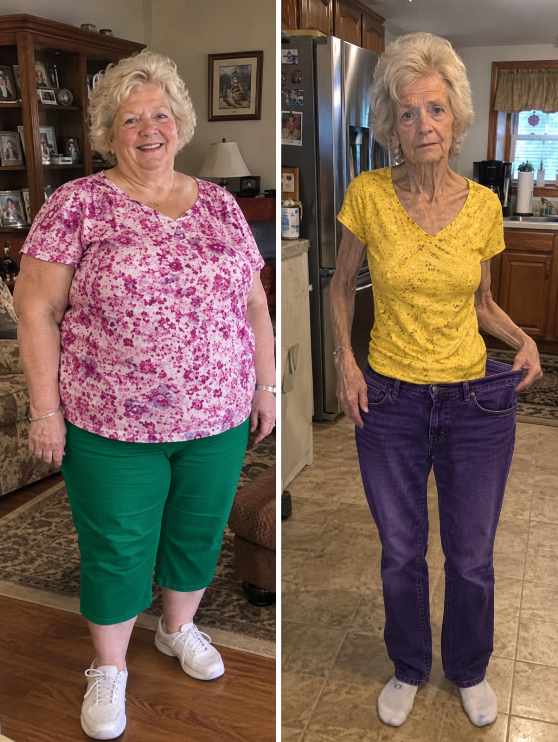
    A small old woman in a navy coat. Stepping carefully down from the train with one hand on the rail. Her clothes hung loosely from her shoulders. The coat that used to fit snug across her middle was hanging on her like a tent. Her gray cardigan underneath was swimming on her.

    Her cheeks were sunken. The round face I’d known my whole life was gone. Her cheekbones stood out like I’d never seen them. There were hollows under her eyes. Dark circles. Her skin looked gray.

    Her hands were bony. Her wrists were thin.

    She’d lost so much weight. In seven days.

    And she was dragging an enormous black suitcase.


    I dropped the hot chocolate.

    It splattered on the platform. I didn’t care.

    I ran to her.

    “Mom,” I said. “Mom, what happened to you?”

    She looked up at me.

    She forced a smile.

    It didn’t reach her eyes. Her eyes were red. Swollen. Like she’d been crying for days.

    “Just a little stomach trouble, sweetheart,” she said.


    “Stomach trouble?” I put my hands on her arms. I could feel the bones through her coat. “Mom, you’ve lost twenty pounds. Thirty. You look sick. You look like you haven’t eaten in a week.”

    “I haven’t been very hungry,” she said.

    “We’re going to the hospital. Right now.”

    She pulled her arm away.

    “No,” she said.

    “Mom—”

    “No, Annie.” Her voice was sharp. She never uses a sharp voice with me. “I don’t need a hospital. I need to go home.”

    “You look like you’re dying.”

    “I’m not dying,” Mom said. “Please. Just take me home.”


    Then I noticed the suitcase.

    Black. Huge. The kind of hard-shell suitcase that costs four hundred dollars at Macy’s. With four spinner wheels and a telescoping handle and a brushed metal finish. Expensive. Nothing my mother would ever buy.

    Mom had left home with a small blue travel bag. With a pink ribbon.

    “Mom,” I said. “Where’s your luggage?”

    She gripped the black handle. Tighter. Her knuckles went white.

    “Margaret gave me this one,” she said. “Mine broke.”


    I drove her home.

    She sat in the passenger seat with the black suitcase in the back. She didn’t say anything. She looked out the window at Lake Erie as we drove west on the Shoreway. Gray water. Gray sky.

    I kept glancing at her.

    At her hands in her lap. Thin. Shaking a little.

    At her face. Gaunt. Older than I’d ever seen it.

    “Mom,” I said. “Did something happen? At Margaret’s?”

    She didn’t answer.

    “Mom.”

    “I’m tired, Annie,” she said. “I’ll tell you later. I promise. Not now.”


    At home, Mom carried the suitcase straight into her bedroom.

    She didn’t let me help. She dragged it up the front steps by herself. Through the living room. Down the hall.

    Into her bedroom.

    And she locked the door.


    My mother has never locked a door in her life.

    Not the bathroom. Not the front door, most nights. I yell at her about it. She says she’s lived on Hilliard Road for fifty-four years and nobody’s ever broken in.

    She locked her bedroom door.

    I stood in the hallway and listened.

    I heard the suitcase unzip.

    Then nothing.

    Then, very quietly, through the door, I heard my mother crying.


    I knocked.

    “Mom? Can I come in?”

    “Not right now, sweetheart.”

    “Mom, please. You’re scaring me.”

    “I’m fine,” she said through the door. Her voice was thick. “I just need some time. Go home, Annie. Go home to Dave. I’ll call you tomorrow.”

    “I’m not leaving you like this.”

    “Please,” she said. “Please, honey. I’m begging you. Just give me one night.”


    I didn’t go home.

    I sat in her living room. On her floral couch. Under the framed photo of my parents on their wedding day in 1965.

    I called Dave. I told him what happened. He said he’d keep dinner warm.

    Then I sat there for a long time.

    Thinking.


    Margaret gave me this one. Mine broke.

    We have a lot to catch up on.

    Twenty years. Maybe a little more.


    That evening, I called Margaret.

    Mom had given me the number before she left. Written on a Post-it note. In her neat Catholic-school handwriting. Margaret Feeney and a phone number with an 814 area code. Erie.

    I’d stuck it on my refrigerator.

    I’d brought it with me in my purse. I don’t know why. Just in case.

    I dialed it.

    It rang four times.

    A man answered.

    “Hello?”

    Older. Gruff. Like a man who’d been watching TV and didn’t want to be interrupted.

    “Hi,” I said. “I’m sorry to bother you. I’m looking for Margaret Feeney. This is June Abernathy’s daughter. My mother’s been staying with her this week.”

    There was a pause.

    “Who?”

    “Margaret Feeney,” I said again. “She’s an old friend of my mother’s. My mom gave me this number.”

    He went quiet.

    A long, strange quiet.

    Then he said:

    “Ma’am, Margaret hasn’t lived here for eight years.”


    My stomach dropped.

    “What?”

    “Margaret Feeney,” he said slowly. “She was my mother-in-law. She lived in this house. She passed away in 2018. My wife and I bought the house from the estate. We kept the phone number.” He paused. “I’m sorry. Nobody’s asked for her in a long time.”

    I couldn’t speak.

    “Ma’am?” he said. “Are you okay?”

    “She died?” I whispered. “Eight years ago?”

    “March of 2018,” he said. “Cancer. She’s buried at Calvary Cemetery. Up on Peach Street.”

    “And nobody’s been staying there? This week? An eighty-year-old woman? June Abernathy?”

    “No, ma’am,” he said. “It’s just me and my wife. Nobody’s stayed here.”


    I hung up.

    I checked the number again. On the Post-it note. In my mother’s handwriting.

    It was the same one.

    The same one Mom had given me before leaving.


    I sat on my mother’s couch with the Post-it note in my hand and stared at her bedroom door.

    Margaret Feeney had been dead for eight years.

    My mother had known her since first grade. Of course she knew.

    She’d lied to me.

    For seven days.


    I didn’t knock again.

    I didn’t go home either.

    I fell asleep on the couch around one in the morning.


    The next morning, I found her asleep in her armchair.

    In the living room. The old blue recliner by the window that used to be Dad’s. She must have come out of her bedroom sometime during the night.

    She was wrapped in a quilt. Still wearing the gray cardigan. Her head was tipped to the side. Her mouth was a little open. She was breathing softly.

    In the morning light, she looked even thinner.

    I stood over her and watched her sleep.

    Then I looked down.


    Beside her, on the little side table, lay a train ticket.

    An Amtrak ticket. Printed. Folded in half.

    I picked it up.

    ERIE, PA (ERI) to CLEVELAND, OH (CLE).

    No.

    Wait.

    I looked again.

    PITTSBURGH, PA (PGH) to ERIE, PA (ERI).

    Dated Friday. Three days before her supposed return.

    She hadn’t been in Erie on Friday.

    She’d been in Pittsburgh.

    Then she’d traveled from Pittsburgh to Erie on Friday. And from Erie to Cleveland on Monday.

    What was in Pittsburgh?


    And underneath the ticket was a luggage tag.

    Leather. Brown. The kind that buckles around a suitcase handle. It had been unbuckled and laid flat.

    I turned it over.

    There was a little plastic window. And a card inside. Typed.

    Not Margaret’s name.

    Not my mother’s.

    SAMUEL J. REINER
    1847 Beechwood Blvd.
    Pittsburgh, PA 15217


    I’d never heard that name in my life.


    I put the ticket and the luggage tag back exactly where I found them.

    I looked at my mother. Still sleeping.

    Then I went down the hall.

    Her bedroom door was open now. Just a crack.

    I pushed it open.

    The black suitcase was on the floor at the foot of her bed. Zipped closed.

    I knelt down next to it.

    I’d never in my life gone through my mother’s things. Not her purse. Not her drawers. Not her mail. She’d raised me better than that.

    I quietly opened the black suitcase.


    Inside were neatly folded clothes.

    My mother’s clothes. Her nightgowns. Her underwear. Her two pairs of slacks. Her good blouse. Her toiletry bag.

    Folded perfectly. The way she folds everything. In thirds.

    But also something else.

    A sweater. On top. Not hers. A man’s sweater. Navy blue wool. Old. Soft. Worn at the elbows.

    It smelled like a man’s aftershave. Old Spice, maybe. And something else. Something like a hospital.

    Underneath the sweater, there was a sealed brown envelope.

    Manila. Thick. Sealed with tape.

    Nothing written on the front.

    And next to it, an old-fashioned digital camera.

    A little silver Canon. The kind everybody had in 2006. With a wrist strap.


    I switched it on.

    The screen lit up. A little battery icon blinked red in the corner.

    The battery was almost dead.

    I pressed the button to view the pictures.

    There were only four photographs.


    I opened the first.


    It was taken in a hospital room.

    I could tell. The beige walls. The window with the vertical blinds. The IV pole. The rolling tray table. The little whiteboard on the wall where nurses write their names.

    There was a man in the bed.

    Sixty, maybe. Thin. Very thin. Bald. Pale. Wearing a hospital gown. An IV in his arm. A tube under his nose.

    And sitting in a chair next to the bed, holding his hand, was my mother.

    She was wearing the gray cardigan.

    They were both crying.

    Not small crying. Faces crumpled. Tears running down. My mother had her free hand pressed against her mouth. The man had his eyes squeezed shut.

    They were holding hands so tight their knuckles were white.


    I stared at it.

    Then I looked at the second.


    The same hospital room. Same man. Same bed.

    This time, he was holding something. In his lap. Spread out across the hospital blanket.

    A baby blanket.

    Small. Knitted. Yellow. Faded almost to cream. With a white border. And a little pattern of ducks around the edges.

    I knew that pattern.

    I knew it the second I saw it.

    My mother knits. She’s knitted my whole life. Sweaters. Scarves. Mittens. Afghans for every couch in the family. Baby blankets for every grandchild.

    Every baby blanket she’s ever made has the same pattern around the border.

    Little ducks.

    She learned it from her grandmother in 1955. She told me once. She said it was the first thing she ever knitted. She said she’d made one baby blanket with ducks when she was seventeen, a long time ago, and she’d put a little of herself into every one since.

    The man in the hospital bed was holding a yellow baby blanket with ducks around the border.

    And it was old.

    Very old.

    Older than me.


    My hands were shaking.

    I clicked to the third photograph.


    It was a family.

    Standing around the same hospital bed. The man in the middle. A woman next to him. His age. Gray hair. Kind face. A younger woman, thirty-something, with two little kids. A boy and a girl. Maybe six and eight.

    And my mother.

    Standing at the end of the bed. In her navy coat. Looking small and tired and sad.

    But the little girl had her arms around my mother’s waist.

    Hugging her.

    And my mother had her hand on the little girl’s head.


    I sat back on my heels.

    I looked at the man in the hospital bed.

    At his face. Thin and pale and bald.

    At his eyes.

    Dark. Deep-set. A little crooked when he smiled.

    My mother’s eyes.

    My eyes.


    I clicked to the fourth photograph.

    The final one.


    It was just him.

    The man in the hospital bed. Alone. Sitting up against the pillows. Looking straight at the camera.

    He was holding a piece of paper. A sheet of printer paper. Held up in front of his chest with both hands. Like a sign.

    Written on it, in black marker, in big shaky letters:

    HI ANNIE.
    I’M SAM.
    I’M YOUR BROTHER.
    I’D REALLY LIKE TO MEET YOU.

    ROOM 612
    UPMC SHADYSIDE
    PITTSBURGH

    (PLEASE HURRY)


    The camera went dark.

    The battery died.

    I sat on my mother’s bedroom floor with a dead camera in my hand.

    And I knew exactly where I needed to go.


    But I didn’t grab my car keys.

    Not yet.

    First, I went back into the living room.

    My mother was awake.

    She was sitting up in the blue recliner. Wrapped in the quilt. Looking at me.

    Looking at the camera in my hand.

    Her face crumpled.

    “You found it,” she said.


    “Who is he?” I said.

    My voice was shaking. My whole body was shaking.

    Mom didn’t answer.

    “Mom. Who is Samuel Reiner? Who is the man in the hospital bed holding a sign that says he’s my brother?”

    She closed her eyes.

    “Sit down, Annie,” she said quietly. “Please. Sit down.”

    “I don’t want to sit down.”

    “Please,” she said. “I can’t tell you if you’re standing over me. I can’t. I need you to sit.”


    I sat.

    On the floral couch. Across from her. With the dead camera in my lap.

    Mom looked at her hands for a long time.

    “His name was Michael,” she said finally. “When he was born. I named him Michael. After my father.”

    I didn’t say anything.

    “He was born on March 3, 1963,” Mom said. “At St. Brigid’s Home for Unwed Mothers in Erie, Pennsylvania. At four-fifteen in the morning. He weighed seven pounds, two ounces.”

    She looked up at me.

    Tears were running down her sunken cheeks.

    “I was seventeen,” she said.


    I couldn’t breathe.

    “His father was a boy named Danny Reilly,” Mom said. “From Plum Street. Three houses down from mine. We’d known each other since we were little. We were going to get married.”

    She swallowed.

    “He enlisted in the Navy in the summer of 1962,” she said. “He was eighteen. He shipped out to Norfolk in August. He didn’t know I was pregnant. I didn’t know yet either.”

    “What happened to him?”

    Mom closed her eyes.

    “His ship was the USS Thresher,” she said. “A submarine. It sank in April of 1963. Off Cape Cod. During a test dive. A hundred and twenty-nine men. Nobody survived.”

    She opened her eyes.

    “Michael was five weeks old,” she said. “Danny never knew he had a son.”


    I put my hand over my mouth.

    “My parents found out I was pregnant in October,” Mom said. “My mother cried for three days. My father didn’t speak to me for a month. Then they sent me away.”

    “To St. Brigid’s.”

    “To St. Brigid’s,” Mom said. “In Erie. Run by the Sisters of Mercy. I told everybody on Plum Street I was going to stay with an aunt in Buffalo. That’s what all the girls said. An aunt in Buffalo. Or an aunt in Pittsburgh. Everybody knew. Nobody said anything.”

    She wiped her eyes with the corner of the quilt.

    “That’s where I met Margaret,” she said.


    “Margaret Feeney was there too,” Mom said. “She was sixteen. From Erie. She had a little girl in February. Three weeks before Michael.”

    “Margaret wasn’t your childhood friend,” I said slowly. “From Plum Street.”

    “No,” Mom said. “I lied about that too. I met her at St. Brigid’s. In the laundry room. We folded sheets together. Every day. For five months. She was the only one who knew. The only one in my whole life.”

    She looked at me.

    “She was my best friend, Annie,” she said. “We wrote letters for fifty-five years. Every month. Until she died.”


    “They let me keep him for three days,” Mom said.

    Her voice was very quiet now.

    “That was the rule. Three days. Then the adoptive family came. The sisters said it was better that way. A clean break. They said if you held them too long, you’d never be able to let go.”

    She was crying harder now.

    “I held him for three days,” she said. “I fed him. I changed him. I sang to him. I wrapped him in the blanket I’d knitted. Yellow. With ducks. I’d been knitting it the whole time I was pregnant. In the laundry room. Margaret helped me with the border.”

    She put her hand over her mouth.

    “And on the third day,” she whispered, “Sister Agnes came and took him out of my arms. And I never saw him again.”


    I was crying now too.

    I didn’t know when I’d started.

    “The adoptive family was from Pittsburgh,” Mom said. “That’s all they told me. A good Catholic family. A doctor and his wife. They couldn’t have children. They’d been waiting four years.”

    “Reiner,” I said.

    “Reiner,” Mom said. “I didn’t know that until this spring.”


    “I went home,” Mom said. “In April. Two weeks after Danny’s ship went down. My parents told everybody I’d had a nice time in Buffalo. Nobody asked any questions.”

    She looked at the framed wedding photo on the wall. Her and Dad. 1965.

    “I met your father the next year,” she said. “At a church dance. He was the kindest man I’d ever met.”

    “Did he know?”

    Mom nodded.

    “I told him before he proposed,” she said. “I thought he’d leave. I sat in his car outside my parents’ house and told him everything. Danny. St. Brigid’s. Michael.”

    “What did he say?”

    Mom smiled. Through her tears.

    “He said, June, that’s the bravest thing I’ve ever heard. And then he asked me to marry him. Right there. In the car.”


    “And then you were born,” Mom said. “In 1971. After two miscarriages. You were my miracle.”

    She looked at me.

    “I never told you,” she said. “I’m so sorry, Annie. I never told you. I thought about it a thousand times. When you were sixteen. When you got married. When you had Tyler. When Daddy died.”

    “Why didn’t you?”

    Mom looked down at the quilt in her lap.

    “Because I was ashamed,” she said quietly. “Because in 1963, girls like me were a disgrace. My mother told me so. The sisters told me so. The priest at St. Brigid’s told me so every Sunday. You’ve sinned. You’ve shamed your family. The best thing you can do for that baby is disappear from his life forever.”

    She shook her head.

    “I believed them,” she said. “For sixty years. I believed that if anybody ever found out, they’d look at me differently. You’d look at me differently.”

    “Mom,” I whispered.

    “I didn’t want to be the girl from St. Brigid’s,” she said. “I wanted to be your mother. Just your mother. Who makes pie on Sundays.”


    “So what happened?” I said. “This spring?”

    Mom took a shaky breath.

    “A letter came,” she said. “In April. To my house. From a woman named Carol Reiner. In Pittsburgh.”

    “His wife.”

    “His wife,” Mom said. “She said her husband had been adopted. She said he’d always wondered about his birth mother but never looked because he didn’t want to hurt his adoptive parents. They’re both gone now. His father died in 2011. His mother in 2020.”

    She swallowed.

    “Carol said their daughter, Jenna, did one of those DNA tests last Christmas. Ancestry. For fun. And she got a match.”

    Mom looked at me.

    “You did one too,” she said. “Remember? Three years ago. Tyler bought you one for your birthday.”

    I went cold.

    I remembered. I’d spit in a tube and mailed it off and looked at my pie chart of ethnicities for about ten minutes. Irish, Polish, a little German. I’d never logged in again.

    “Jenna matched with you,” Mom said. “As a close relative. A first cousin or a half-aunt. Carol said they couldn’t figure out how. You weren’t on any family tree they knew.”

    “So they found you.”

    “They found Margaret first,” Mom said. “Margaret’s daughter. The one Margaret gave up in 1963. She’d done a DNA test too. She and Margaret found each other in 2014. Margaret told her everything. About St. Brigid’s. About her friend June who had a baby boy three weeks after her.”

    She shook her head.

    “Margaret’s daughter remembered my name,” Mom said. “June Kowalski. My maiden name. Carol Reiner found me from that.”


    “Carol’s letter said Sam had always known he was born at St. Brigid’s,” Mom said. “His adoptive mother told him when he was twelve. She gave him the only thing that came with him.”

    She looked at the dead camera in my lap.

    “The blanket,” she said. “Yellow. With ducks. She kept it for sixty years. She gave it to him when she was dying.”


    “And the letter said something else,” Mom said.

    Her voice broke completely.

    “It said Sam had leukemia.”


    I stopped breathing.

    “Acute myeloid leukemia,” Mom said. “Diagnosed in February. He’d had chemotherapy. Two rounds. It didn’t work. The doctors said the only chance was a bone marrow transplant. A stem cell transplant.”

    “And they need a donor.”

    “They need a match,” Mom said. “They searched the registry. Be The Match. Millions of people. Nobody matched him well enough. He’s mostly Irish and Polish. That’s harder, they said. Fewer donors.”

    She looked at me.

    “His best chance,” she said, “is a sibling.”


    The room went completely silent.

    I looked at the dead camera in my lap.

    HI ANNIE. I’M SAM. I’M YOUR BROTHER.

    (PLEASE HURRY)


    “Carol’s letter asked if I had any other children,” Mom said. “She said even a half-sibling has a chance. One in four, maybe. The doctors said it was worth trying.”

    “Mom,” I said. “That was April.”

    “I know.”

    “It’s October.”

    “I know,” Mom whispered.

    “Six months. You knew for six months. That I might be a match. For my brother. Who’s dying.”

    She put her face in her hands.

    “I couldn’t,” she said through her fingers. “I couldn’t tell you. I tried. A hundred times. Every Sunday at dinner. I’d sit there and look at you across the pot roast and open my mouth. And nothing would come out.”

    She was sobbing now.

    “Sixty-three years,” she said. “Sixty-three years I kept it. I couldn’t say the words. Annie, you have a brother. I gave him away. He’s dying. He needs you. I couldn’t. I just couldn’t.”


    “So I wrote back to Carol,” Mom said. “In May. I told her I had a daughter. I told her your name. I told her I’d talk to you.”

    “And you didn’t.”

    “I didn’t,” Mom said. “I wrote to Carol every week. I wrote to Sam. He wrote back. Long letters. About his life. About his parents. About his work. He’s a high school chemistry teacher. Did you know that? Thirty-five years. At Taylor Allderdice in Pittsburgh.”

    She smiled. Through her tears.

    “He has my handwriting,” she said. “Isn’t that strange? He writes his Js just like I do. Big loop at the bottom.”


    “And every week,” Mom said, “Carol would write and ask. Have you talked to Annie yet? Have you asked her? And I’d write back and say not yet. Soon. I’m trying.”

    She looked at me.

    “And I stopped eating,” she said quietly.

    I stared at her.

    “I couldn’t,” she said. “Every time I sat down to eat, I thought about him. In a hospital bed. In Pittsburgh. Waiting. While I sat in my kitchen with my pot roast. Too much of a coward to tell my daughter.” She shook her head. “I couldn’t swallow. It was like something was stuck in my throat.”

    “Since May?”

    Mom nodded.

    “That’s why the sweaters,” I said slowly. “The big cardigans. In the summer. That’s why you’ve been wearing Dad’s old sweaters.”

    “I didn’t want you to notice,” Mom said. “I’ve lost forty-one pounds since May, Annie. I hid it under Daddy’s sweaters.”


    I put my hand over my mouth.

    Forty-one pounds.

    Every Sunday. Every single Sunday since May. I’d sat across the table from my mother at Sunday dinner. I’d watched her cut the pie into eight perfect slices.

    I’d never once watched her eat it.


    “And then in September,” Mom said, “Carol called. On the phone. For the first time. She said Sam was getting worse. She said the doctors at UPMC Shadyside were saying weeks, maybe. Not months. She said if there was any chance at all, they needed to test you now.”

    She took a breath.

    “And she said Sam had asked for something,” Mom said. “Before it was too late.”

    “What?”

    Mom looked at me.

    “He asked to meet me,” she said. “His birth mother. Just once. To say hello. And thank you. And goodbye.”


    “So I told you I was going to visit Margaret,” Mom said. “Because she was the only one who ever knew. I thought if I said her name, it would give me courage. Like she was coming with me.”

    She almost smiled.

    “I gave you her old phone number,” she said. “I didn’t think you’d call. I’m sorry. That was cruel.”

    “Where did you go, Mom? Really?”

    “I took the train to Erie,” Mom said. “On Monday. Like I told you. I went to St. Brigid’s first. It’s not a home anymore. It’s apartments now. Senior apartments. I stood outside on the sidewalk for an hour.”

    She closed her eyes.

    “Then I went to Calvary Cemetery,” she said. “To Margaret’s grave. I sat there all afternoon. I told her I was going to meet him. I told her I was scared.”

    She opened her eyes.

    “Then I took the bus to Pittsburgh,” she said. “That night. And Carol picked me up at the station.”


    “I met him on Tuesday,” Mom said. “In Room 612. At eleven in the morning.”

    She was crying again. Quietly.

    “I walked in the door,” she said. “And he was sitting up in bed. And he looked at me.”

    She put her hand over her heart.

    “And he said, Hi, Mom.”


    I couldn’t speak.

    “Sixty-three years,” Mom whispered. “Sixty-three years since Sister Agnes took him out of my arms. And he looked at me and said Hi, Mom. Like he’d been waiting his whole life to say it.”

    “What did you say?”

    “Nothing,” Mom said. “I couldn’t. I just sat down. And held his hand. And we both cried for an hour.”

    She looked at the dead camera.

    “Carol took that picture,” she said. “The first one. I didn’t know she was taking it.”


    “I stayed six days,” Mom said. “At Carol’s house. In their guest room. I sat with him every day. From eight in the morning until the nurses made me leave at nine at night. I slept in the chair next to his bed two nights.”

    “You didn’t eat,” I said.

    “I couldn’t,” Mom said. “I was so happy, Annie. And so sad. All at the same time. I’d look at him and think, I have my son back. And I’m going to lose him again.”

    She swallowed.

    “He told me everything,” she said. “His whole life. His parents. Good people. Dr. and Mrs. Reiner. He said they loved him so much. He said he never once felt unwanted.” Her voice cracked. “He said his mother used to tell him, every night when he was little, Somebody loved you very much before we ever met you. She knitted you a blanket with ducks.”

    She put her face in her hands.

    “His mother,” she said through her fingers. “His adoptive mother. Told him every night that I loved him. For sixty years. I never knew.”


    “He showed me the blanket,” Mom said. “On Wednesday. Carol brought it from home. It was in a box. Wrapped in tissue paper. He’d kept it in his closet his whole life.”

    She looked up at me.

    “The ducks were still there,” she said. “Every one. Margaret helped me with them. In the laundry room. Fifty-five years ago. Every stitch.”


    “On Thursday, he asked about you,” Mom said.

    She looked at me.

    “He asked what you were like,” she said. “I told him everything. That you’re a dental hygienist. That you’re married to a good man named Dave. That you have two children. That you call me every night. That you’re stubborn and bossy and kind and you never let me get away with anything.”

    She almost laughed.

    “He said, She sounds like me,” Mom said. “He said Carol says he’s stubborn and bossy too.”

    “And then?”

    “And then he asked if he could meet you,” Mom said quietly. “Not for the transplant. Not just for that. He said even if you weren’t a match. Even if you didn’t want to be tested. He said he’d just like to meet his sister. Once. Before.”


    “So on Friday, I left,” Mom said.

    “You took the train from Pittsburgh to Erie.”

    Mom nodded.

    “I was going to come straight home and tell you,” she said. “Friday night. I bought the ticket. I had it all planned out what I was going to say.”

    “But you didn’t come home Friday.”

    “I got as far as Erie,” Mom said. “And I got scared. I couldn’t get on the train to Cleveland. I just couldn’t.”

    She looked down.

    “I stayed in a motel in Erie for three nights,” she said. “Near the station. The Red Roof Inn. I sat in that room and tried to figure out how to say it. I wrote it out on the motel notepad. Forty times. Every version. None of them sounded right.”

    “That’s why you didn’t call,” I said. “Thursday, Friday, Saturday, Sunday. You just texted.”

    “I couldn’t hear your voice,” Mom said. “If I heard your voice, I’d have told you on the phone. And I didn’t want you to find out on the phone.”


    “And the suitcase?” I asked.

    Mom looked down the hall. Toward her bedroom.

    “My blue bag broke,” she said. “On Thursday. In Sam’s room. The zipper split. Carol gave me one of theirs. Sam’s. He used to take it to science teacher conferences.”

    She smiled faintly.

    “Sam put the camera in it,” she said. “And the envelope. Before I left. He said, Give these to Annie. If you can’t find the words, maybe these will help.”


    I picked up the brown envelope.

    It was still sealed.

    I looked at my mother.

    She nodded.

    I opened it.


    Inside were two things.

    The first was a medical kit. A small cardboard box. With a printed label.

    UPMC HILLMAN CANCER CENTER
    HLA TYPING — SIBLING DONOR TEST KIT
    Patient: SAMUEL J. REINER
    Potential donor: ANNE ABERNATHY COLE

    Inside were four long cotton swabs. In sealed plastic tubes. And an instruction sheet. And a prepaid FedEx envelope.

    Swab inside of both cheeks for 30 seconds each. Return within 24 hours.

    The second thing was a letter.

    Handwritten. On lined notebook paper. In blue ink.

    The Js had big loops at the bottom.


    Dear Annie,

    I’m sorry to meet you this way. In a letter. In a suitcase. Through Mom.

    That’s what I’ve been calling her this week. Mom. I hope that’s okay. I know she’s your mom. I know you’ve had her your whole life, and I’ve had her for six days. But I’ve had a mom my whole life too, and she always told me that somewhere out there was another one who loved me first. So now I have two. I’m a lucky man.

    I don’t know how much Mom’s told you. Probably not much. She’s been trying to tell you since April. She says she can’t find the words. I understand. I’ve been trying to find them for sixty-three years.

    Here are the facts. I’m sixty-three. I teach high school chemistry in Pittsburgh. I’ve been married to Carol for thirty-eight years. We have a daughter, Jenna, and two grandkids, Lucy and Max. I like the Steelers and the Pirates and bad science fiction movies. I’m bald now from the chemo, but I used to have dark curly hair. Mom says you do too.

    I have leukemia. AML. The doctors say I need a stem cell transplant. They’ve searched the whole national registry. No good match. My best chance is a sibling.

    You’re the only sibling I have.

    I know that’s a lot to put on a stranger. You don’t owe me anything. You didn’t know I existed a week ago. If you don’t want to do the test, I understand completely. Please don’t feel guilty. Please don’t let Mom feel guilty. She’s carried enough guilt for one lifetime.

    But here’s the thing I really wanted to say.

    Even if you’re not a match. Even if you don’t want to be tested. I’d still like to meet you.

    Just once. Just to say hello. Just to see my sister’s face.

    I always wanted a sister. When I was little, I used to ask my mother for one every Christmas. She’d laugh and say, “Maybe someday, Sammy.”

    Turns out she was right.

    Room 612. UPMC Shadyside. I’m not going anywhere. Well. Not yet.

    Your brother,
    Sam

    P.S. The camera has four pictures. I asked Carol to take the last one. I figured if Mom couldn’t say it, I would.


    I put the letter down.

    I looked at my mother.

    She was sitting in Dad’s blue recliner. Wrapped in the quilt. Forty-one pounds lighter than she was in May. Her sunken face wet with tears.

    “I’m sorry, Annie,” she whispered. “I’m so sorry. For lying to you. For Margaret. For sixty-three years. For not being brave enough to—”

    I got up off the couch.

    I knelt down in front of the recliner.

    I put my arms around my mother.

    She was so small. I could feel every bone in her back.

    “Mom,” I said into her hair. “Stop. Stop apologizing.”

    “I gave him away,” she sobbed. “I gave him away and I never told anybody and now he’s dying and—”

    “You were seventeen,” I said. “You were seventeen and scared and your boyfriend was dead at the bottom of the ocean and everybody told you that you were a sinner. You did what they told you. You knitted him a blanket. You held him for three days. You loved him.”

    I pulled back. I held her face in both my hands.

    “You loved him so much,” I said, “that his mother told him about you every night for sixty years. That’s not something to be ashamed of, Mom. That’s the most beautiful thing I’ve ever heard.”


    My mother looked at me.

    And for the first time in five months, something in her face let go.

    She cried. Really cried. In my arms. In Dad’s recliner. Sixty-three years of it.

    I held her.


    Then I stood up.

    I picked up the test kit.

    I went into her bathroom. I washed my hands. I opened the first sealed tube.

    I swabbed the inside of my left cheek for thirty seconds. Then my right. Then the second swab. Then the third. Then the fourth.

    I sealed them in the plastic tubes. I put them in the FedEx envelope.

    I came back out.

    Mom was watching me from the recliner.

    “Annie,” she whispered. “You don’t have to—”

    “Yes, I do,” I said.


    Then I grabbed my car keys.

    “Get your coat, Mom,” I said.

    She stared at me.

    “Where are we going?”

    “Pittsburgh,” I said. “Room 612. I want to meet my brother.”


    We stopped at the FedEx on Detroit Road on the way. I overnighted the swabs to UPMC Hillman. Priority. Seven-dollar extra for Saturday delivery.

    Then I called Dave.

    “I’m driving Mom to Pittsburgh,” I said.

    “Pittsburgh? What’s in Pittsburgh?”

    I looked over at my mother. In the passenger seat. Wrapped in her navy coat. Holding the yellow baby blanket in her lap. She’d taken it out of the black suitcase. Sam had sent it home with her. He wanted me to see it.

    “My brother,” I said.

    Dave was quiet for a long time.

    “I’ll pack a bag,” he said. “I’ll meet you there tomorrow.”


    It’s two hours and fifteen minutes from Rocky River to Pittsburgh. I-80 to I-76. Through Youngstown. Into the hills of western Pennsylvania.

    Mom didn’t talk much.

    About an hour in, she said, “Annie.”

    “Yeah, Mom.”

    “I’m hungry,” she said.

    I looked over at her.

    She was looking out the window. At the trees. At the hills. The leaves were turning. Red and gold and orange.

    “I haven’t been hungry since May,” she said quietly. “I’m hungry.”

    I pulled off at the next exit.

    There was a Cracker Barrel.

    I bought her chicken and dumplings and mashed potatoes and biscuits. And a slice of apple pie.

    She ate all of it.

    Every bite.

    She cried the whole time.


    We got to UPMC Shadyside at four-fifteen.

    Room 612.

    Mom walked in first. Slowly. With the yellow blanket.

    I stood in the doorway.

    He was sitting up in bed. Bald. Pale. Thin. An IV in his arm. A tube under his nose.

    Carol was in the chair next to him. She stood up when she saw us. Her hand went to her mouth.

    And Sam looked past Mom.

    He looked at me.


    I can’t describe it.

    I’ve tried. Since then. To Dave. To my kids. To my friends at work.

    I can’t describe what it’s like to look at a stranger’s face and see your own.

    His eyes were mine. Dark. Deep-set. A little crooked.

    His nose was mine. His chin. The way his mouth turned down at the corners before he smiled.

    He looked at me for a long time.

    Then he smiled.

    Crooked.

    Like mine.

    “Hi, Annie,” he said.


    I walked across the room.

    I don’t remember doing it. I just remember being in the doorway, and then being next to the bed.

    I didn’t know what to say.

    I’d driven two hours and fifteen minutes and I didn’t know what to say.

    So I said the only thing I could think of.

    “I always wanted a brother.”

    Sam laughed. Then he started crying.

    “I asked for a sister every Christmas,” he said. “Every single year. For sixty-three years.”

    “I know,” I said. “I read your letter.”

    He held out his hand.

    The one without the IV.

    I took it.

    His hand was cold and thin.

    It was the same shape as mine.


    Carol took a picture.

    I didn’t see her do it. She told me later.

    It’s on my refrigerator now. Me and Sam. In Room 612. Holding hands. Both crying. Both smiling the same crooked smile.

    And behind us, in the chair by the window, our mother. In her navy coat. Holding a yellow baby blanket with ducks around the edges.

    Watching both of her children.

    For the first time.

    In the same room.


    The test results came back nine days later.

    Dr. Patel called me at work. I was cleaning a patient’s teeth. I had to take my gloves off and step into the hallway.

    “Mrs. Cole,” she said. “I have your HLA typing results.”

    I leaned against the wall.

    “There’s about a twenty-five percent chance a full sibling is a perfect match,” Dr. Patel said. “For a half-sibling, it’s lower. Much lower. We don’t usually see it.”

    “I understand,” I said. My voice was shaking. “I’m not a match. That’s okay. I knew it was a long shot—”

    “Mrs. Cole,” Dr. Patel said. “You’re a ten out of ten.”


    I slid down the wall.

    All the way to the floor. In the hallway of Lakewood Family Dentistry. In my scrubs.

    “A ten out of ten,” I whispered.

    “A perfect match,” Dr. Patel said. “Every single marker. I’ve been doing this for nineteen years. I’ve seen it with half-siblings maybe twice.” She paused. “Your brother is a very lucky man.”


    The transplant was on December twelfth.

    I spent two days at Hillman Cancer Center getting injections to boost my stem cells. Then four hours hooked up to a machine that drew out my blood, separated the stem cells, and put the rest back in.

    It didn’t hurt much. My bones ached. I was tired.

    Mom sat next to me the whole time. Knitting.

    A baby blanket. Yellow. With ducks.

    “Who’s that for?” I asked.

    She smiled.

    “Lucy’s going to have a baby,” she said. “In June. Sam’s granddaughter. My great-granddaughter.”

    She kept knitting.

    “Margaret would want me to do the ducks,” she said.


    They gave Sam my stem cells the next morning.

    They come in a bag. Like a blood transfusion. Dark red. They hung it on an IV pole and dripped it into his chest catheter.

    It took an hour.

    I sat on one side of his bed. Mom sat on the other. Carol stood at the window.

    Sam watched the bag drip.

    “That’s you,” he said to me. “That’s actually you. Going into me.”

    “That’s me.”

    He looked at me.

    “Sixty-three years,” he said. “Sixty-three years I didn’t know you existed. And now part of you is going to be inside me for the rest of my life.”

    “However long that is,” I said.

    “However long that is,” he agreed.

    He reached over and took my hand.

    He reached over with the other hand and took Mom’s.

    And we sat there, the three of us, holding hands, watching the bag drip.


    It’s been ten months.


    Sam’s in remission.

    His blood type changed. Did you know that happens? After a stem cell transplant? He was O positive. Now he’s A positive.

    Like me.

    “I’ve got your blood,” he told me on the phone in March. “Literally. My doctor says I’m basically half Annie now.”

    “God help you,” I said.

    He laughed.


    His hair grew back in April.

    Dark. Curly.

    Like mine.


    Mom’s gained back thirty-two of the forty-one pounds.

    She’s baking again. Cinnamon rolls every Saturday. Apple pie every Sunday. Banana bread whenever a banana gets a brown spot.

    She wears her own cardigans again. The ones that fit. Not Dad’s old sweaters.

    She hasn’t missed a Sunday dinner since November.


    And now, every other Sunday, there are more chairs at the table.


    Sam and Carol drive up from Pittsburgh. Two hours and fifteen minutes. They come for Sunday dinner. Pot roast or roast chicken or meatloaf.

    Sometimes Jenna comes too. With Lucy and Max. Lucy’s baby was born in June. A boy. They named him Daniel.

    After Danny Reilly. The boy from Plum Street who went down with the Thresher in 1963 and never knew he had a son.

    Mom held him at the christening. In the yellow blanket with the ducks.

    She cried so hard Father Mike had to wait.


    Dave and Sam watch the Steelers-Browns game together. They yell at each other. They’re both terrible losers.

    Tyler and Jenna figured out they’re both into the same podcast about true crime. They text constantly.

    Grace, my daughter, the nursing student, asked Sam if she could interview him for a paper. About being a stem cell recipient. She got an A.


    And Mom sits at the head of the table.

    In her own cardigan. Pink. With pockets full of tissues and butterscotch candies.

    With both of her children.

    And she cuts the pie.

    Ten slices now. Not eight.

    She always gives Sam the biggest one.

    “You were the first,” she says. “First one gets the biggest slice.”

    I don’t mind.

    I’ve had fifty-four years of the biggest slice.


    Last Sunday, after dinner, after the pie, after Dave and Sam went into the living room to yell at the football game, Mom and I washed dishes together at her kitchen sink.

    She was washing. I was drying. Like always.

    “Annie,” she said.

    “Yeah, Mom.”

    “Do you know what I thought about? In the motel? In Erie? For those three nights?”

    I shook my head.

    “I thought about Sister Agnes,” Mom said. “Taking him out of my arms. On the third day. And I thought about what she said to me.”

    “What did she say?”

    Mom stopped washing. She held a plate under the running water.

    “She said, June, the kindest thing you can do for this boy is let him go and never look back. Pretend he never happened. It’s better for everyone.”

    She turned off the water.

    “I believed her for sixty-three years,” Mom said. “I pretended he never happened. I never looked back. Not once. Not even when I wanted to so badly I couldn’t breathe.”

    She looked at me.

    “And it wasn’t better for everyone,” she said quietly. “It was worse. For me. For him. For you. For all of us.”

    She picked up a dish towel. She dried her hands.

    “Secrets don’t protect anybody, Annie,” she said. “They just make everybody lonely.”


    I put the plate I was drying in the cupboard.

    I looked out the kitchen window. At the backyard. At Dad’s old maple tree. At the bird feeder.

    “Mom,” I said. “Can I ask you something?”

    “Anything.”

    “Why Margaret?” I said. “Of all the lies you could have told me. Why did you say you were visiting Margaret?”

    Mom was quiet for a long time.

    “Because she was the only one who was there,” she said finally. “In the laundry room at St. Brigid’s. Folding sheets. Knitting ducks. Crying together every night.” She swallowed. “She was the only person in my whole life who knew both of my children existed.”

    She looked at me.

    “And I thought, if I said her name,” Mom said, “if I told you I was going to see Margaret, it would be the truth. In a way. Because I was going to see the only other person she ever knew about.”

    She smiled.

    “I wanted her to come with me,” Mom said. “Even though she was gone. I wanted my best friend there when I finally met my son.”


    I keep the black suitcase in my closet now.

    Sam told me to keep it. He said he’s not going to any more science teacher conferences. He retired in June. He says he wants to spend the time he has left getting to know his family.

    The leather luggage tag is still on the handle.

    SAMUEL J. REINER.

    But underneath, Mom tied something else to it.

    A little pink ribbon.

    The same pink ribbon from her blue bag. The one that broke. In Room 612. On the day she found her son.

    She said she wanted it on the suitcase that brought her home.


    And in the bottom of the suitcase, wrapped in tissue paper, is the little silver Canon camera.

    I charged the battery.

    There are more than four pictures on it now.

    There’s Sam’s first Sunday dinner. Sam and Dave yelling at the TV. Sam holding baby Daniel in the yellow blanket. Sam and me at the Hillman Cancer Center on transplant day, both bald-headed in solidarity, because I shaved my head the night before. Mom laughing so hard she had to sit down.

    But I still look at the first four sometimes.

    Mom and Sam in Room 612. Holding hands. Crying.

    The yellow blanket with ducks.

    The family around the bed. A little girl hugging my mother’s waist.

    And the last one.

    HI ANNIE. I’M SAM. I’M YOUR BROTHER. I’D REALLY LIKE TO MEET YOU.

    (PLEASE HURRY)


    I did hurry.

    It took me two hours and fifteen minutes and a stop at Cracker Barrel.

    It took my mother sixty-three years.

    But we both got there.


    People ask me sometimes how I feel about it. About my mother lying to me. About keeping a brother secret for my entire life. About Margaret. About the black suitcase.

    They expect me to be angry.

    I tell them the truth.

    My mother was seventeen years old. Her boyfriend was dead at the bottom of the Atlantic. Everybody she knew told her she was a disgrace. They took her baby out of her arms on the third day and told her to pretend he never existed.

    So she did.

    For sixty-three years, she carried it alone. Under her sweaters. Under her pie crusts. Under her Sunday dinners.

    And when she finally found him again, and he needed her, she was so scared she stopped eating for five months.

    She lost forty-one pounds hiding the truth from me.

    And then a man she’d held for three days in 1963 put a camera in a borrowed suitcase and said, If you can’t find the words, maybe these will help.


    She couldn’t find the words.

    So her son found them for her.

    HI ANNIE.

    I’M SAM.

    I’M YOUR BROTHER.
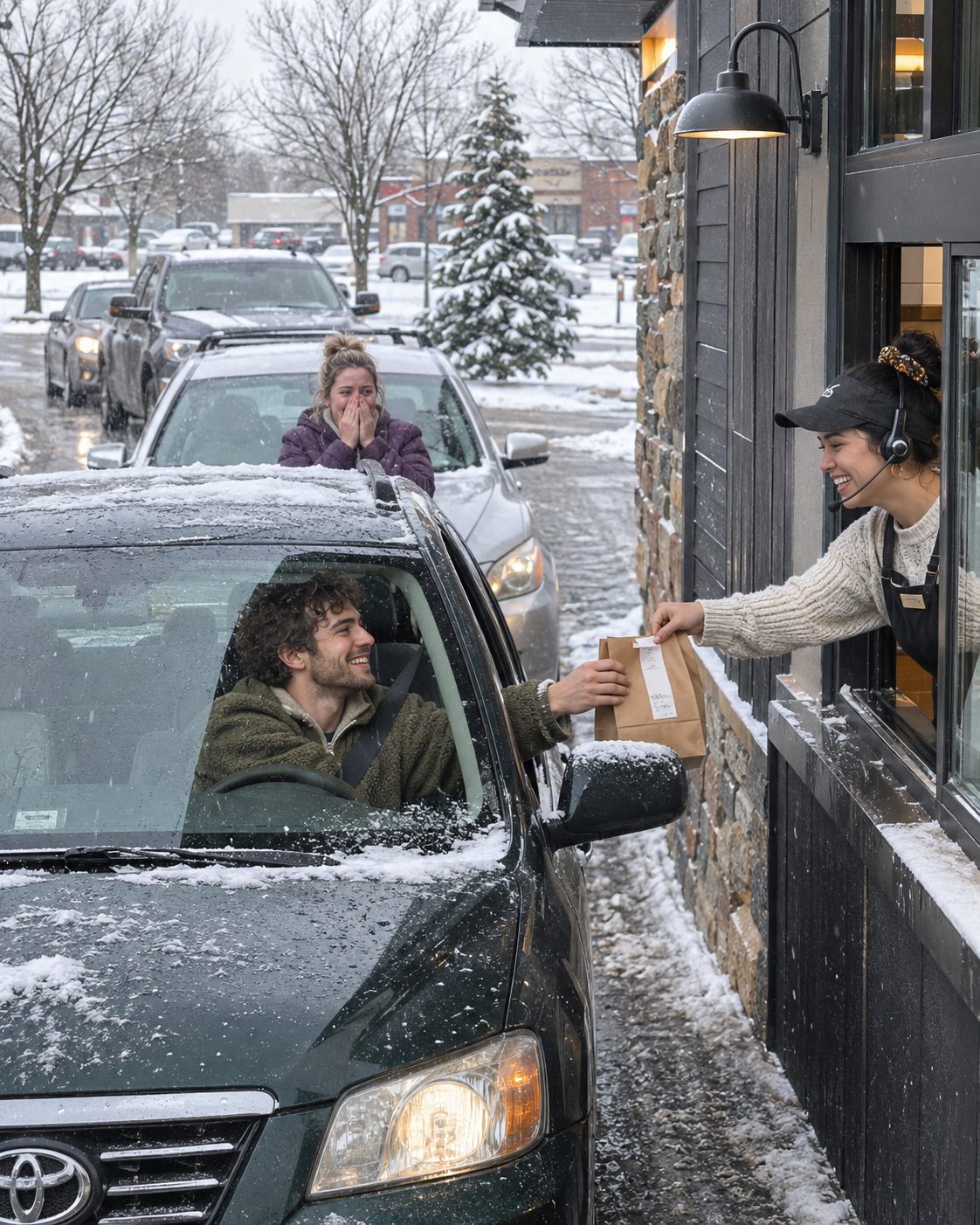
  • My Family Refused to Pick Me Up From the Airport After My Husband’s Funeral, Then They Saw Me on the Evening News

    My Family Refused to Pick Me Up From the Airport After My Husband’s Funeral, Then They Saw Me on the Evening News

    No Problem

    When the plane touched down at Portland International Airport, the tires hit the runway with a scream so loud that the woman next to me grabbed her armrest.

    I didn’t move.

    I had stopped flinching at things three days earlier.

    My name is Amelia. I’m thirty-five years old. And that morning, in a little village in northern Portugal, I buried my husband, James, in soil that didn’t belong to either of us.

    I turned my phone on before the plane even reached the gate. The flight attendant gave me a look. I didn’t care.

    My fingers were shaking.

    Not from the cold.

    From hope. Some small, stupid, desperate part of me still believed my family would be waiting.

    I opened our family group chat. It was called The Brandts with a little house emoji. My mother had named it. It had my mom, my dad, my older brother Troy, his wife Kelsey, and me.

    I typed:

    My flight arrives at 5:00 p.m. Can someone please pick me up?

    I hit send before I could change my mind.

    The three typing dots appeared almost right away.

    For a second, I felt something loosen in my chest. Someone was answering. Someone was coming.

    Then Troy’s message popped up.

    Troy: We’re overwhelmed today. Just get an Uber.

    I read it once. Then again.

    A few seconds later, my mother answered.

    Mom: Why didn’t you plan this more carefully? You know Tuesdays are difficult for everyone.

    I stared at the screen until the words went blurry.

    Plan more carefully.

    As if I had scheduled my husband’s brain aneurysm.

    As if his death had been something I could have put on the family calendar a few weeks ahead, between Kelsey’s book club and Dad’s dentist appointment.

    The plane jerked to a stop at the gate. All around me, people stood up and started pulling bags out of the overhead bins. Somebody’s elbow hit my shoulder. A man behind me was on the phone telling someone, “Yeah, babe, just landed, I’ll see you outside in ten.”

    I looked down at my phone again.

    I didn’t argue.

    I didn’t remind them that for the past five days, I’d identified James’s body in a cold room in a foreign hospital. That I’d signed forms in a language I didn’t speak, with a translator who kept apologizing. That I’d chosen a coffin by pointing at a picture in a binder. That I’d stood alone at his grave that morning while an old priest said words I didn’t understand.

    I just typed two words.

  • My Boss Asked Me to Take His 18-Year-Old Daughter to Prom — Then She Revealed the Real Reason He’d Chosen Me

    My Boss Asked Me to Take His 18-Year-Old Daughter to Prom — Then She Revealed the Real Reason He’d Chosen Me

    When my boss asked me to take his eighteen-year-old daughter to prom, I thought I was doing him a simple favor. But halfway through the evening, she showed me a text revealing that her father had secretly turned the night into a test for a promotion I knew nothing about.

    I was nineteen and worked for Sheldon at his food-packaging company. My mother, Denise, was raising my younger sister, Janelle, alone, so I helped pay household bills. When Sheldon offered extra money for accompanying Georgia to prom after her original date supposedly canceled, I quickly agreed.

    On prom night, I arrived in my uncle’s noisy old car wearing my only suit. Sheldon seemed unusually excited, straightened my tie, and reminded me to stay calm if anything unexpected happened. Georgia barely spoke during the drive. Once we arrived, she showed me a message from her father: “Remember our agreement. Don’t make things too easy for him.”

    Confused, I asked what she meant. Georgia explained that her father had been secretly evaluating my patience and problem-solving abilities. He wanted her to make unreasonable demands to see whether I’d lose my temper. She thought the arrangement was unfair and decided I deserved to know the truth.

    Instead of getting angry, I laughed. Georgia began jokingly demanding impossible things, including a northwest-facing chair and even the moon. We danced, ate cupcakes, and enjoyed ourselves. Eventually, she revealed that her father was opening another warehouse and considering me for its management position.

    On Monday, Sheldon admitted everything. He explained that he’d noticed my reliability, dedication, and ability to handle difficult situations. He offered me a training opportunity that could lead to managing the new location. I accepted but reminded him that honest communication was better than secret tests. He agreed.

    Six months later, I completed my training and officially became the new warehouse manager. My mother cried when I told her. We finally replaced our broken washing machine, and I could help my family without constantly worrying about money.

    Georgia remained my friend. She even gave me a framed prom photograph with the caption: “Employee of the Month: Survived Three Cupcakes and a Very Strange Boss.” That experience taught me that sometimes others recognize our potential before we recognize it ourselves. But true leadership means earning trust through honesty, respect, and opportunity—not secret experiments.

  • JFK Jr. was found 116 feet underwater as new haunting detail about his body emerges

    JFK Jr. was found 116 feet underwater as new haunting detail about his body emerges

    John F. Kennedy, Jr. and his wife Carolyn Bessette Kennedy attend the “Brite Nite Whitney” Fundraising Gala March 9, 1999 at the Whitney Museum of American Art in New York City. July 16, 2000 marks the one-year anniversary of the plane crash off the coast of Martha’s Vineyard in Massachusetts that killed Kennedy, his wife, and her sister Lauren Bessette. (Photo by Arnaldo Magnani/Liaison)

    One more day might have left the Kennedys without a final goodbye. More than 27 years after the crash that killed John F. Kennedy Jr., his wife and her sister, the search commander’s account raises a haunting possibility. He says Kennedy was found outside the wreckage, where another day could have meant losing him forever to the Atlantic’s curr… Continues…On July 16, 1999, Kennedy, 38, was piloting a Piper Saratoga toward Martha’s Vineyard with Carolyn Bessette Kennedy, 33, and Lauren Bessette, 34, aboard. Their disappearance triggered an enormous search before sonar located the wreckage approximately 116 feet underwater. Retired Coast Guard Capt. W. Russell “Russ” Webster told the New York Post that Kennedy’s body lay about 10 feet outside the aircraft, while the sisters were inside. His account differs from contemporary reporting and suggests currents might have carried Kennedy away had recovery been delayed.

    John F. Kennedy Jr. and Carolyn Bessette (Photo by Ron Galella/Ron Galella Collection via Getty Images)
    A Piper PA-32R-301 Saratoga II, similar to the one involved in the accident / Wikipedia Commons / FlugKerl2

    Investigators determined that Kennedy lost control during a nighttime descent over water because of spatial disorientation. Webster and his wife, maritime historian Theresa Mitchell Webster, revisit the search in their book, The Last Flight, following years of research. Their account shifts attention from decades of speculation to the people who searched—and to two grieving families whose loved ones were finally brought home.

    John F. Kennedy, Jr. editor of George magazine, gives his wife Carolyn a kiss on the cheek during the annual White House Correspondents dinner May 1, 1999 in Washington, D.C. July 16, 2000 marks the one year anniversary of the plane crash which killed Kennedy, his wife and sister-in-law. (Photo by Tyler Mallory/Liaison)
  • Can You Spot the Hidden Man

    Can You Spot the Hidden Man

    Someone is hiding in this peaceful landscape, and he is closer than you think. Beyond the rocks and the drifting canoe, a man’s face waits for the moment your eyes stop trusting the obvious. Some viewers spot him immediately, while others search for minutes, but the claim about what that means for your brain hides another surprising little sec… Continues…

    The vintage-style illustration turns an ordinary waterside scene into a clever visual puzzle. A man wearing a hat emerges not from behind a tree, but from the arrangement of rocks, shadows, and open spaces. The two people in the canoe are simply a distraction from the larger hidden image. To find it, step back, soften your focus, and study how separate shapes might connect into a forehead, nose, cheeks, and chin.

    That sudden flash of recognition is the real reward: the scenery stays unchanged, yet your interpretation shifts completely. The effect draws on our tendency to recognize faces in ambiguous patterns, often called pareidolia. Despite suggestions attached to the puzzle, spotting the man quickly is not a scientifically validated sign of a younger brain, greater intelligence, or better brain health. Whether recognition comes instantly or after patient searching, this is entertainment—not an assessment. Enjoy the discovery without turning the stopwatch into a verdict.